Industry 1.0 and 2.0 – The Mechanization and Mass Production Revolution
The First Industrial Revolutions: From Early Machines to the Assembly Line.
In recent years, there has been widespread use of the term Industry 4.0. I decided to deviate from my usual practice and engage in a historical review of the various stages of industrial development from its beginning, even before we reached the latest revolutions.
It’s important to remember that even before the industrial era, people produced products like horseshoes or weapons, but production was based on craftsmen and not industrial on a large scale.
Industry 1.0 – Mechanization Comes to Production.
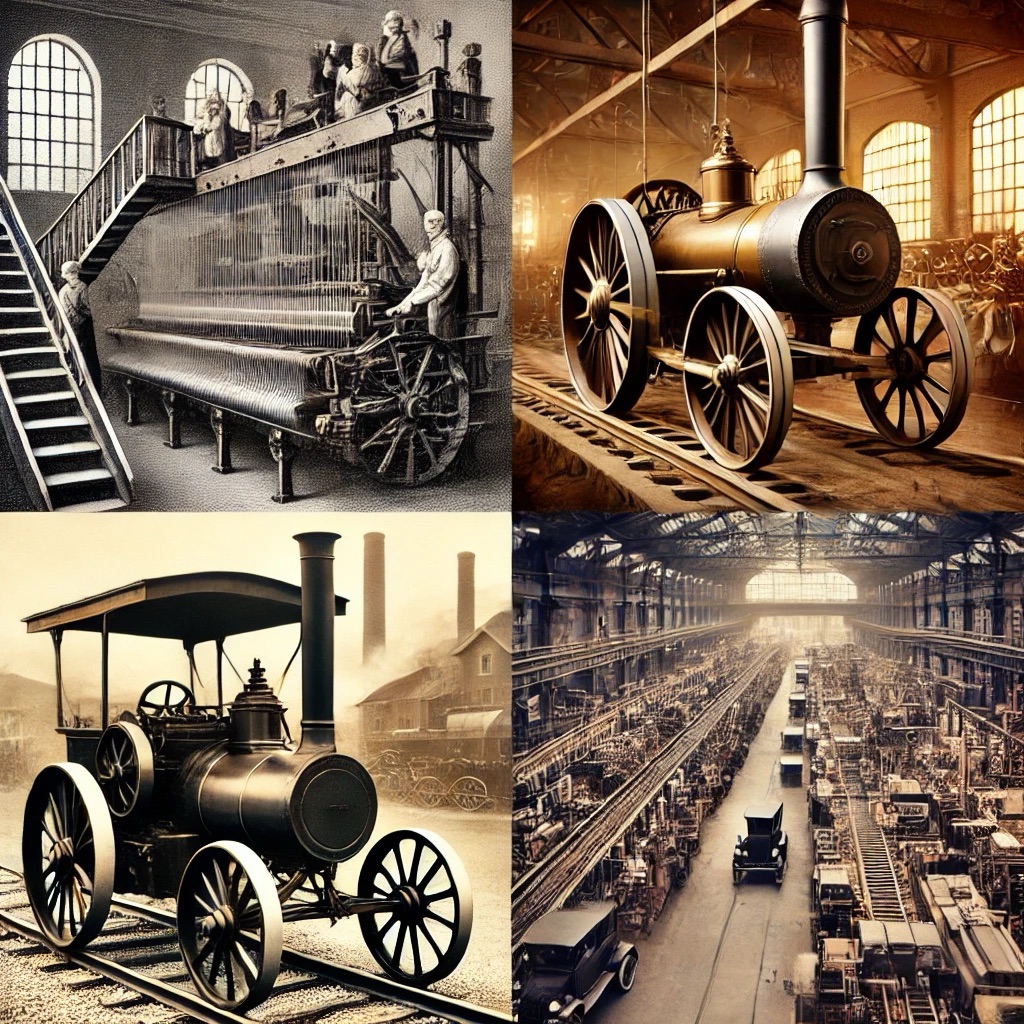
The first industrial revolution in the 18th century brought about a dramatic change. Instead of manual production, machines began to take part in the process. A prominent example is Edmund Cartwright’s power loom, which enabled faster production of fabrics.
Steam engines were the basis for the first factories. Industry also influenced transportation, with the production of locomotives and railways, allowing faster and more efficient transportation of goods and people. The result was economic prosperity and a profound change in social structure.
Industry 2.0 – Mass Production Comes into Play.
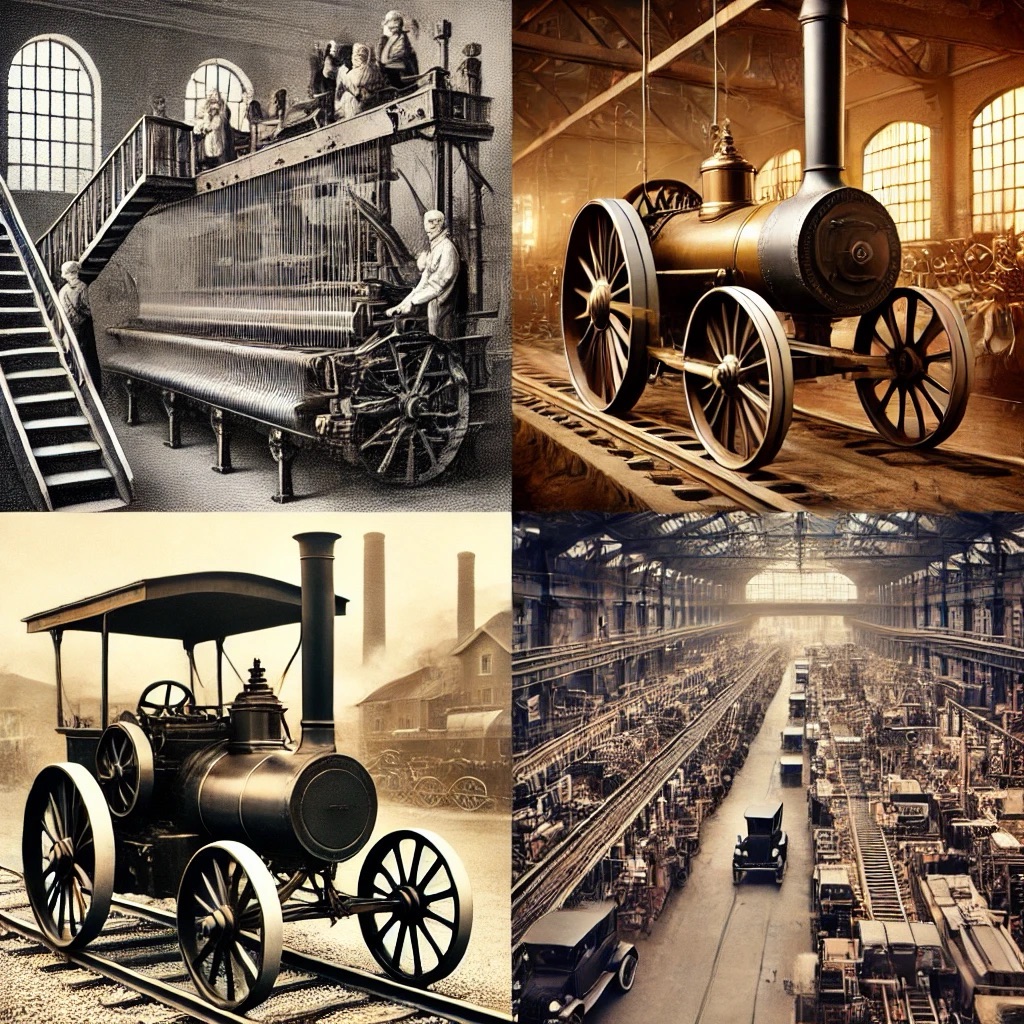
At the end of the 19th century, with the development of electricity and the invention of production lines, the world saw another revolution. An iconic example is the Ford Model T, the first car produced on a mass production line. Production lines led to cheaper manufacturing and made the car accessible to broader classes. In addition, urban growth was made possible thanks to industrial and transportation developments. Industry 2.0 created the ability to produce enormous quantities of products and change the global economic and social structure.
In the next post, we’ll talk about Industry 3.0 and 4.0.
Did you like it? I’d love to hear your feedback.
And for more interesting posts, follow the Heart of Management page.
 Heart of Management
Leave a comment