Author: Heart of Management

  • The courage to speak up… smells very different when you do it right

    Following last week’s post

    the one about how the opposite of courage isn’t fear, but avoidance

    today we’re diving into the first kind of courage.

    There are moments in management

    when the room feels filled with the distinct scent of

    “I want to say something… but maybe this isn’t the right time.”

    It’s a familiar smell.

    A subtle mix of lukewarm coffee,

    an air conditioner working a little too hard,

    and papers shuffling not because anyone needs them,

    but just to fill the silence.

    And then the classic lines appear:

    “Well… only if that’s okay…”

    “I don’t want to interrupt, but…”

    “I just have a small point… really small…”

    (And if you’re anything like me,

    you recognize those sentences in yourself too.

    Yes, I’m looking at you. And at me.)

    And here comes the truth,

    the kind that sometimes stings

    like a metal chair in a conference room:

    The courage to speak up isn’t about raising your volume.

    It’s about raising your intent.

    You don’t need to shout.

    You don’t need to demand.

    You don’t need to give a speech.

    Sometimes courage sounds like a short sentence,

    said calmly,

    at the exact moment everyone was hoping

    someone would be willing to say

    what everyone else was already feeling.

    And sometimes courage sounds like this instead:

    “Let’s talk about this one-on-one.”

    Because here’s the truth:

    the courage to speak up isn’t about

    who spoke the loudest,

    but about who chose the right arena.

    When you say the right thing,

    in the right way,

    to the right person,

    in the right room

    your message passes through layers of defense

    as if they were a thin curtain,

    not a fortified wall.

    And then something beautiful happens:

    Your team doesn’t just hear you.

    They feel you.

    In their chest. In their gut.

    In the place where real change is born.

    And this

    this is the first kind of courage

    that separates

    a manager who gets work done

    from a leader who actually moves people.

    Before you scroll on, pause for a moment and ask yourself:

    If today you removed just one

    “only if that’s okay…”

    and replaced it with one clear sentence of truth

    what would you talk about?

    (Don’t answer me.

    Answer yourself.

    That’s where the courage muscle starts to grow.)

    Next post, we’ll move on to the second kind of courage:

    the courage to trust.

    The one that decides whether you keep holding

    357 tasks by yourself,

    or finally start building a team

    that actually walks with you.

    (Hint: it takes more courage than it looks.)

  • 💔 Turns out the opposite of courage… isn’t fear at all

    (Yes, and I learned this from a woman with a tattoo.)

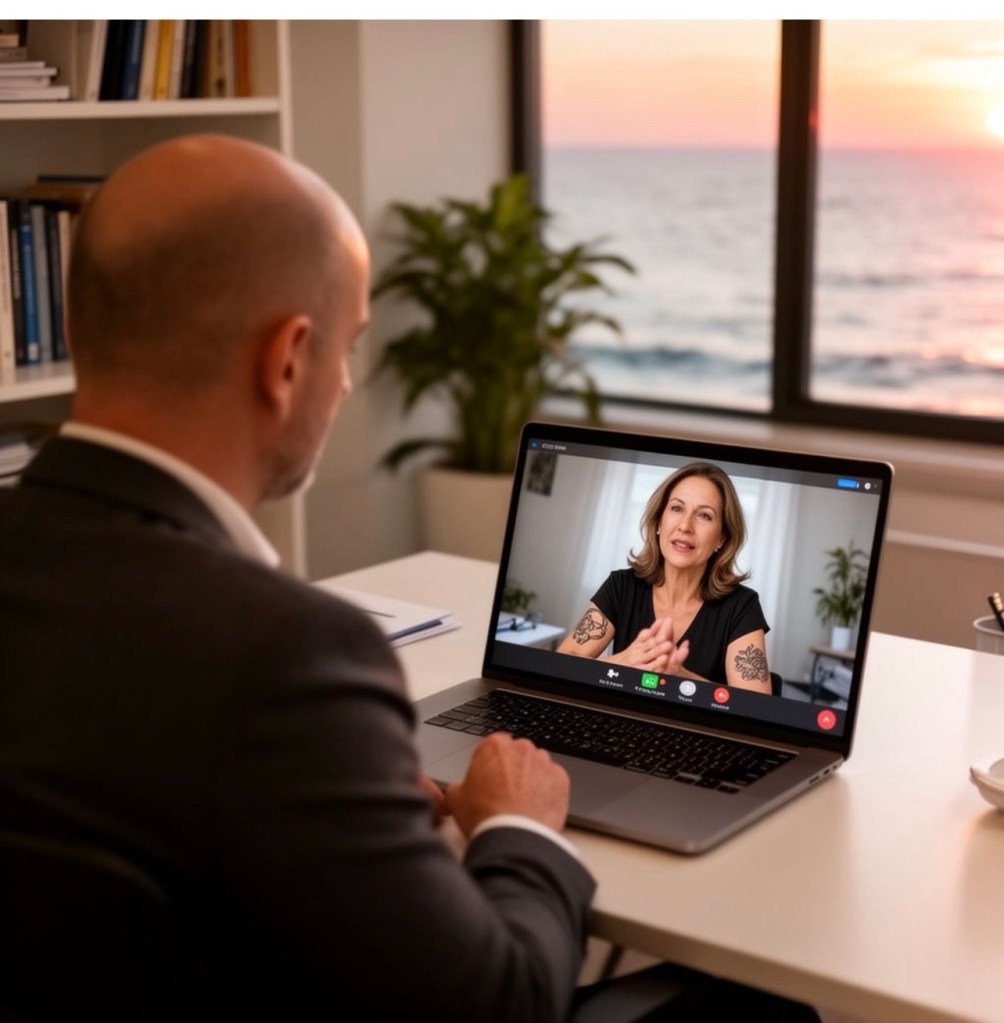
    The Zoom call started like any other one.

    Camera on.

    Hot coffee in hand.

    And then she appeared on screen.

    A senior education leader.

    Responsible for the professional development of over 6,000 teachers.

    And from the very first moment, it was clear:

    this was someone you couldn’t ignore.

    Sharp presence. Big smile.

    A tattoo on her arm (and that’s where I paused, I didn’t ask what it said).

    And a feeling in the room like

    someone had just opened a window after a very long day.

    She didn’t raise her voice.

    But she was the kind of person who walks into a room

    and the noise instinctively pulls up a chair.

    We talked about leadership. About change.

    About what actually holds people together from the inside.

    And then she said something simple:

    “The opposite of courage?

    It’s not fear.

    It’s avoidance.”

    One of those sentences that makes you stop mid-sip.

    Fear is loud.

    You can feel it. You can name it.

    Avoidance is quiet.

    It slips under the radar.

    It doesn’t shout, it whispers.

    And it shows up in a manager’s life

    long before they realize what’s happening…

    stealing years of growth and effectiveness along the way.

    Then she added one more thing:

    “There are three kinds of courage.”

    And that’s where the connection became mine.

    Managerial.

    Deep.

    She only named them.

    My mind filled in the rest:

    🩵 The courage to speak up

    Truth. Authenticity. Navigating organizational politics

    without paying unnecessary prices.

    🩵 The courage to trust

    Letting go. Delegating.

    Stopping yourself from holding 357 tasks with two hands.

    🩵 The courage to experiment

    Innovation. Mistakes. Learning. Change.

    Actually moving reality—not just moving the cursor.

    And suddenly it all snapped into focus:

    “Managerial stuckness” isn’t personality.

    It’s not workload.

    It’s not character.

    It’s usually one form of courage

    that’s been left unattended for too long.

    So before you scroll on

    Do a quick internal audit:

    Which kind of courage

    are you most actively avoiding?

    Because right there

    exactly there

    your next big leadership shift begins.

    📌 Next week, I’ll open up the first one: the courage to speak up.

    And I promise it will change how you see your team, your boss,

    and yourself.

    📌 And by the way… there’s one more kind of courage.

    Just as deep.

    The courage to change.

    That one deserves a post of its own.

    (Hint: it’s the habits managers pay the highest price for.)

  • How to tell your trigger has kicked in, before it starts running you

    I’m going to say something that might be uncomfortable to hear.

    But if you stay with me until the end, you’ll understand why this is pure managerial gold.

    Most people think a trigger means anger, hurt feelings, being offended.

    But honestly?

    Your trigger shows up long before you notice it.

    It starts in your body language, your tone, your eyes, your breathing—

    before your thought even fully forms.

    And then this thing happens:

    It’s not what you’re expressing.

    It’s what you’re trying to hide.

    And that’s the part the room picks up first.

    That’s why you say, “I’m calm,”

    and the team hears, “I’m about to blow.”

    That’s why you smile politely,

    and the feeling in the room is, “Something’s boiling underneath.”

    And that’s why you’re trying to be professional, measured, statesmanlike

    while your pulse is screaming,

    “Don’t tell me how to do my job.”

    I remember a conversation with a senior executive who told me:

    “I’m calm. Everything’s fine. I’m just stating a fact…”

    And her tone said everything except “calm.”

    It was like watching a whistling kettle say:

    “I’m not boiling it’s just steam. Relax.”

    So how do you catch a trigger in real time?

    1) Pay attention to your body—it reacts before you do

    Shoulders tighten.

    Breathing gets shallow.

    Eyes narrow by a millimeter.

    Hands move just a little too fast.

    The body doesn’t know how to lie.

    2) Notice the “acceleration moment”

    Right before you speak,

    there’s that split second when your mind starts racing ahead.

    That’s the second to catch.

    It’s the difference between a manager who reacts

    and a leader who leads.

    3) Listen to the voice in your head

    “How dare he?”

    “I won’t rest until…”

    “Not this again…”

    These aren’t thoughts.

    They’re sirens.

    Why does this matter so much?

    Because managers don’t fail because of mistakes.

    They fail because of automatic reactions.

    The trigger itself doesn’t wreck you.

    The unnoticed trigger does.

    And the moment you learn to catch that second before

    you’re not just seen as calmer, clearer, more confident, more influential.

    You become the person

    the room trusts.

    Without you having to say a word.

  • 💊 When There’s No Meaning, Compassion Gets Stuck in the System

    A little while ago, I went through a minor medical procedure.

    Nothing dramatic until the pain showed up.

    And it didn’t just visit… it moved in.

    I asked for painkillers.

    “No problem,” they said.

    They just needed to open a file, get the doctor’s signature,

    have the nurse approve it

    and make sure all the stars in the universe lined up.

    My wife fierce as a lioness went to the reception desk.

    But the clerk wasn’t there.

    She called her name a few times.

    When she finally came, she was in the middle of a chat with a friend.

    “I’m busy for a moment,” the clerk said.

    My wife, gentle but firm, the kind of gentle that comes

    from watching someone you love twist in pain

    insisted she finish the call and open my file.

    From there, it turned into a pilgrimage of signatures,

    forms, approvals, and waiting.

    Almost an hour until I finally got something

    to take the edge off the pain.

    An hour that never should’ve happened.

    I lay there

    not angry, not complaining

    just thinking.

    If that clerk only realized

    that for her it was “just another file,”

    but for me it was another unnecessary sting of pain

    everything would have looked different.

    Not because she didn’t care,

    but because no one ever explained

    what helping really means.

    And it’s exactly the same in organizations.

    When people don’t understand the meaning behind their actions,

    they stop seeing the person and start seeing the procedure.

    Because when there’s no meaning,

    compassion gets stuck in the system.

    So tell me

    in your team,

    do they understand the procedures,

    or the people behind them?

    Because real leadership begins right there

    in that moment you realize

    that behind every “just another request,”

    there’s someone waiting to be seen.

  • 🌧️ “Managers define the what. Leaders define the why.”

    He sat across from me

    white shirt, sleeves rolled up,

    eyes tired from leading,

    but long disconnected from why he was doing it.

    The office smelled like coffee after an all-nighter.

    The whiteboard behind him was covered with arrows, charts, goals

    all pointing upward.

    Except him.

    “I’m pushing the team hard,” he said.

    “If I don’t, they don’t move.”

    His voice was firm,

    but something in his eyes trembled.

    So I asked quietly

    the way you hold up a mirror to someone

    who hasn’t looked at themselves in a while:

    “Tell me… are they really running toward the goal,

    or just running away from you?”

    Silence.

    Even the fan seemed to stop spinning,

    as if it didn’t want to interrupt.

    Then came a small, tired smile

    the kind that admits the truth

    without saying a word.

    It took him a while,

    but eventually he stopped measuring success by speed

    and started measuring it by meaning.

    Not how much they achieved,

    but why it mattered.

    And slowly…

    the office filled again

    with laughter,

    with the scent of creativity,

    with that quiet rhythm

    of people who have a reason to wake up in the morning.

    Because pressure might move people,

    but inspiration makes them want to move.

    And that’s the difference

    between someone who manages

    and someone who leads.

    💭 So tell me

    when you set goals for your team,

    do they feel pressure… or purpose?

  • 🌌 Luke Skywalker Wasn’t Born a Jedi

    (and you don’t have to be born a manager either)

    Imagine Luke Skywalker trying to save the galaxy…

    without ever meeting Yoda.

    He’d still be a nice farm kid with a big dream

    and a lightsaber with no batteries 😅

    but absolutely no idea how to use the Force.

    And honestly?

    The world of management isn’t that different.

    I still remember my early days as a manager

    motivation sky-high, a team around me,

    and a heart that wanted to make a difference.

    But…

    no real understanding of what it meant to lead.

    How do you build trust?

    How do you set boundaries without breaking people?

    How do you handle conflict without burning bridges?

    No one really teaches you that.

    You just get thrown into the deep end

    and hope you don’t run out of oxygen.

    Then one day, it hit me

    leadership isn’t magic.

    It’s not “natural charisma.”

    It’s a system.

    And a system?

    You can learn.

  • Management Is a Masterclass in Letting Go

    You know what’s the most frustrating thing about being a manager?

    Even when you’re right it doesn’t always help. 😅

    Because management isn’t about control.

    It’s a lifelong practice in letting go.

    Not the chaotic kind

    but the kind that’s built on trust.

    And don’t say no one warned you…

    There were days when I delegated a task

    and everything went exactly as I imagined.

    (Yes, it happens like a solar eclipse once a decade.)

    And there were other days

    when delegation felt like a science experiment gone wrong.

    Papers everywhere, phones ringing,

    and me staring at the screen,

    smelling the virtual smoke of a burning deadline.

    But then there are the surprising moments

    when I delegate, thinking I know exactly how it should look,

    and the team takes it somewhere completely different.

    Not like mine. Not by the book.

    But… better.

    That mix of relief and pride?

    It’s like taking your hands off the wheel

    and realizing the car keeps going straight.

    Here’s something no leadership course will tell you:

    Real leadership is about releasing control wisely.

    Not to everyone, not all the time.

    But to the right person, for the right task,

    and then giving them room to breathe.

    Because when a manager tries to control everything,

    they eventually lose control of themselves.

    But when a leader gives trust,

    they discover the world keeps moving

    even when they stop holding on so tightly.

    💡 Manager’s Tip

    Next time you delegate, leave a little room for surprise.

    Someone on your team might just show you a better way.

    👀 Your turn:

    How much space do you leave

    for others to surprise you

    not your way,

    but theirs?

  • “The Ethical Code That’s Never Written Down”

    Everyone has an ethical code.

    Not written.

    Not signed.

    But felt in every move you make.

    I walked into the room.

    Silence.

    All eyes on me.

    No one said a word,

    even if they’ve never put it into words.

    but the test had already begun.

    Am I living up to what I said I would?

    Does what I said yesterday match what I’m doing right now?

    That’s when it hit me

    everyone has an ethical code,

    It’s not a legal document.

    It’s not in your contract.

    It’s the quiet agreement between you

    and the people who are watching you.

    And it shows up in the smallest moments:

    how you share credit,

    how you react when someone makes a mistake,

    how you treat the person on your team who has the least power.

    Because in the end,

    people don’t remember your presentations.

    They remember the little things,

    the signals,

    the tone,

    the look on your face before you spoke.

    So here’s the real question:

    What’s the unwritten code that walks ahead of you?

    Is it the code of “You can count on me”?

    The code of “I see you”?

    Or maybe the code of “I talk big, but don’t always follow through”?

    And you

    which unwritten code showed up most clearly in you this week?

  • How Not to Become Your Team’s Personal Tech Support Line

    Let’s be honest,

    if every little question keeps bouncing back to you,

    you’re not managing…

    you’re basically a walking version of Google.

    (Just without the search engine or Incognito mode 😅)

    But here’s a simple practice

    that can break that loop once and for all:

    Next time someone comes to you with a question,

    instead of firing off an instant answer,

    try one of these three responses:

    “What do you think we should do?” “What options do you see?” “What did you learn from this for next time?”

    These three questions work like magic.

    They put the ball back in your employee’s court,

    get them thinking,

    and send a clear signal:

    I trust you to figure this out.

    At first, it’ll take some restraint.

    (Feel free to bite your lip or sip your coffee slowly

    especially if you’re mid-Zoom call 😉)

    But soon enough,

    you’ll notice a shift.

    They’ll start showing up with solutions,

    not just problems.

    And you?

    You’ll finally feel like you’re managing people

    not running the company’s help desk.

    So tell me

    which of these three questions

    are you going to try first thing tomorrow morning?

  • How to Measure Your Impact as a Manager (Even When You Didn’t Move a Single Screw)

    Ever have one of those days?

    Everyone around you seems busy.

    Typing away, making calls, checking boxes.

    And you?

    You head home after a day full of meetings,

    kick off your shoes,

    and ask yourself:

    “What did I actually do today?”

    Here’s a little trick:

    At the end of each day, ask yourself three simple questions:

    What direction did I set or help clarify today? What obstacle did I remove for my team? Who walked away from a conversation with me feeling more energized or confident than before?

    Write it down, in a notebook, an app, wherever.

    Give it a name.

    Even just one line.

    You’ll be surprised how quickly you start to see

    that your contribution is no less real

    than the person who finished another spreadsheet or tightened a few bolts.

    It’s just a different kind of work.

    Management isn’t about what you did.

    It’s about what you enabled others to do.

    So tell me,

    when tomorrow ends,

    what’s one small win you’ll write down for yourself?