Value Stream Mapping is a tool for mapping and understanding the flow of materials and information in the production process. The goal is to identify waste and improve efficiency and value in the process. VSM integrates with the PDCA cycle in all its stages: In planning, the need for value stream mapping is identified and an action plan is prepared. In execution, the mapping is carried out and the data is analyzed. In checking, changes are evaluated and results are measured. In action: decisions are made on the changes required for continued improvement.
For example, in a manufacturing plant, a team may identify a problem in the production process where there is waste and downtime. In planning, they will prepare a plan for value stream mapping and identify the stations where there are issues. In execution, they will perform the mapping and collect data on the flow of materials and information. In checking, they will analyze the data and identify waste. In action, they will prepare a plan to improve the process and implement the necessary changes.
Just-In-Time is a tool for managing the flow of materials and production in an organization precisely and efficiently. The goal is to produce and supply products exactly when needed, to minimize inventory and waste. JIT integrates with the PDCA cycle at all stages: In planning, the need for precise timing is identified and a plan for implementing JIT is prepared. In execution, the plan is implemented and the flow of materials and production is managed. In checking, changes are evaluated and results are measured. In action, decisions are made on the changes required to continue implementing JIT.
Additionally, it’s important to understand the principles of the seven wastes in lean management, also known as the eight wastes. The wastes include:
Waiting – Waiting time for workers, equipment, or materials.
Transportation – Unnecessary movements of materials or products.
Over-processing – Performing steps in the process that don’t add value.
Inventory – Storing excess inventory.
Unnecessary motion – Unnecessary body movements of workers.
Defects – Defective products requiring repair or replacement.
For example, in a manufacturing plant, a team might identify a problem with excessive inventory causing waste of space and resources. In planning, they would prepare a plan to implement JIT and reduce inventory. In execution, they would manage the flow of materials precisely. In checking, they would measure the improvement in performance and inventory. In action, they would establish procedures to maintain precise timing and minimize inventory.
Kanban is a tool for managing workflow in the production process. The method uses cards to manage and control workflow, and incorporates lean management principles. Kanban integrates with the PDCA cycle at all stages: In planning, the need to improve workflow is identified and a plan for implementing Kanban is prepared. In execution, the method is implemented and the flow of cards is managed. In checking, changes are evaluated and results are measured. In action, decisions are made on the changes required to continue implementing Kanban.
For example, in a manufacturing plant, a team might identify a problem in the production process where there are delays and long queues at various workstations. In planning, they would prepare a plan to implement Kanban and reduce queues. In execution, they would manage the flow of cards precisely and ensure each station receives cards on time. In checking, they would measure the improvement in performance and queue times. In action, they would establish procedures to maintain precise and efficient workflow.
Kaizen is one of the central tools in lean management, focusing on continuous improvement of processes and operations in an organization. The method is based on the principle of small and constant improvements and encourages all employees to take part in the improvement process. Kaizen integrates well with the PDCA cycle according to the following stages: In planning, areas requiring improvement are identified and solutions are planned. In execution, the necessary changes are implemented. In checking, the changes are evaluated and the results are analyzed. In action, decisions are made on the changes needed for further improvement.
For example, in a manufacturing plant, a Kaizen team can identify an area in the factory where time is wasted due to inefficient work processes. In the planning stage, they will analyze the current situation and find solutions for improvement. In execution, they will implement the proposed changes. In checking, they will measure the improvement in performance. In action, they will decide if the improvement is sufficient or if additional changes are needed.
5S is a tool for organizing and arranging the work environment to create an efficient, safe, and clean workplace. The tool includes five stages: Sort, Set in order, Shine, Standardize, and Sustain. 5S integrates with the PDCA cycle in all its stages: In planning, the need for organization and arrangement is identified and an action plan is prepared. In execution, the plan is implemented and the work environment is organized. In checking, the changes are evaluated and the results are measured. In action, decisions are made on the changes needed to maintain order and cleanliness.
For example, in a manufacturing plant, a team can identify an area where there is an overload of unnecessary items causing waste of time in searching for tools and materials. In planning, they will prepare a plan for arranging and removing unnecessary items. In execution, they will organize the area and perform cleaning. In checking, they will measure the improvement in performance and work time. In action, they will establish procedures for maintaining order and cleanliness.
We believe it is important to write about the topic of continuous improvement and lean management. We have created a series of posts on this subject that connect and link the PDCA cycle to all lean management tools.
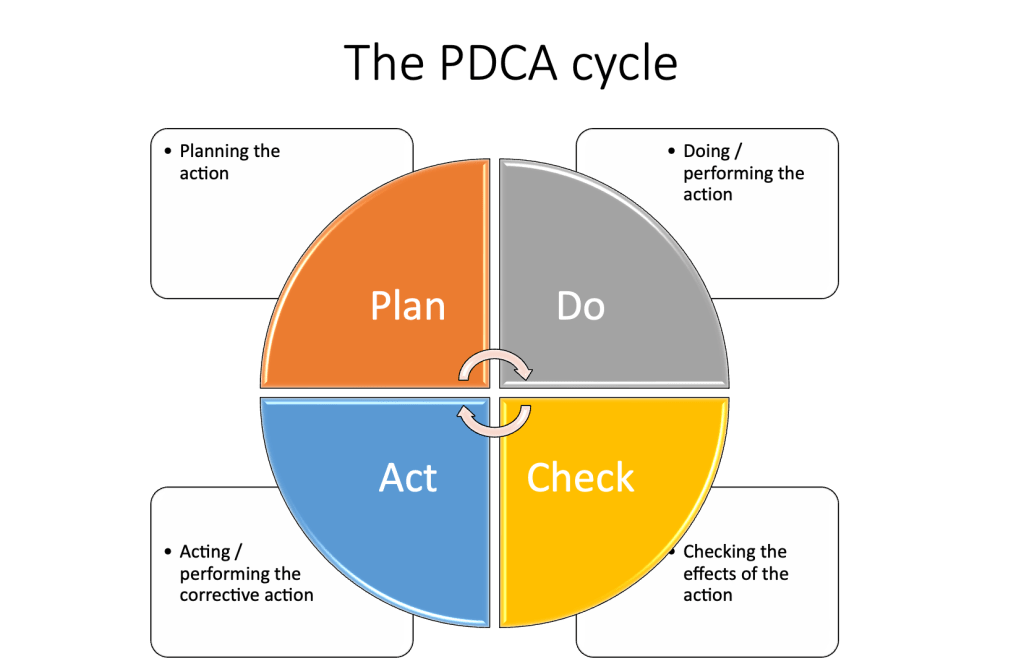
The PDCA cycle for continuous improvement is a powerful management tool designed for continuous improvement in processes and operations within organizations. This cycle consists of four stages:
1. Plan: In this stage, the problem or improvement opportunity is identified, the current situation is analyzed, data is collected, and an action plan is prepared. This is a critical stage where clear goals must be defined and the most suitable solutions chosen.
2. Do: In this stage, the plan created in the planning stage is implemented. It is important to perform the actions in a controlled manner and document the entire process to allow for evaluation and follow-up later.
3. Check: In this stage, the results of the implementation are evaluated. The actual performance is compared to the goals defined in the planning stage, and it is analyzed whether the achieved improvement meets the expectations. It is important to identify both successes and failures to learn from them and improve.
4. Act: In this stage, decisions are made on the next steps based on the findings from the check stage. If the achieved improvement is sufficient, the changes can be embedded as part of the regular process. If not, corrections should be made, and the cycle should be repeated.
For example, a customer service department can use the PDCA cycle to improve response times to customer inquiries. In the planning stage, they would identify the causes of delays, conduct an in-depth analysis, and prepare an improvement plan. In the doing stage, they would implement solutions such as assigning additional staff or changing the work process. In the checking stage, they would measure the new response times and check if the improvement meets the goals. In the acting stage, they would decide whether the changes made are sufficient or if further improvements are needed.
In the upcoming posts, we will discuss additional lean management tools and how the PDCA cycle is applied to them.
Leading with Impact: Essential Steps for Managers Entering New Teams
🌟 A Guide to Building Strong Teams
Stepping into a new team as a manager comes with unique challenges and opportunities. Here’s a summary of four foundational steps that can help any manager build a strong, effective team, regardless of their previous experience:
1. Assessing Team Needs:
Kick off your leadership by gaining a deep understanding of your new team’s dynamics. Use one-on-one interviews, and direct observations to identify strengths, areas needing improvement, and the overall morale. This understanding will be crucial for your tailored approach to team development.
2. Setting Clear Goals:
Articulate clear and specific goals that align with both the organization’s objectives and the identified needs of your team. Employ the SMART criteria to ensure goals are actionable and trackable. These goals will guide your team’s efforts and provide benchmarks for measuring success.
3. Choosing the Right Activities:
Select team-building activities that specifically address the goals and challenges identified. Whether it’s to enhance communication, strengthen collaboration, or build trust, ensure these activities are inclusive and actively involve every team member, maximizing engagement and effectiveness.
4. Fostering Inclusion and Diversity:
Establish a workplace where every team member feels valued and respected. Emphasize the importance of diversity in skills, experiences, and perspectives. Implement inclusive practices and promote open communication, enabling your team to leverage diverse viewpoints for better decision-making and innovation.
Key Takeaways:
– In-depth Understanding and Strategic Planning: Start with a thorough understanding of your team’s current dynamics and use this to inform your leadership strategies.
– Goal-Oriented Approach: Set clear, achievable goals based on your assessment, and use them to steer team activities that promote growth and cohesion.
– Commitment to Inclusivity: Champion an environment that respects and nurtures diversity, which is essential for fostering a creative and collaborative team.
These steps are essential for establishing a solid foundation in your new role. By focusing on these aspects, you will not only enhance team performance but also build a culture that is adaptable and resilient.
Diversity and inclusion are not just corporate buzzwords; they are critical components of successful team management, especially for new managers aiming to build a robust and dynamic team. As a new leader, fostering an inclusive environment where every team member feels valued and heard can drive innovation, improve team performance, and enhance job satisfaction. Here’s how you can effectively promote diversity and inclusion within your team:
Start with Awareness:
Understand your own biases and how they might influence your management style and decisions. Engaging in training or workshops on diversity and inclusion can provide valuable insights and strategies for cultivating an inclusive environment.
Assess Team Composition:
Take a close look at the diversity of your team in terms of race, gender, age, cultural background, and professional experiences. A diverse team brings a wider range of perspectives and ideas, which is crucial for creativity and problem-solving. Identify any areas of homogeneity that could benefit from more diversity.
Promote an Inclusive Culture: Actively work to create a team culture that values and respects individual differences. This can involve establishing team norms that promote respect, encourage open dialogue, and discourage any form of discrimination or exclusion.
Implement Inclusive Policies and Practices:
Ensure that your team’s policies and practices reflect a commitment to diversity and inclusion. This might include flexible working arrangements to accommodate different needs, equitable project assignments, or transparent promotion criteria that offer equal opportunities for advancement.
Encourage and Train on Inclusive Communication:
The way team members communicate can significantly impact feelings of inclusion. Encourage practices such as using inclusive language, being mindful of non-verbal communication, and ensuring all team members have an opportunity to voice their thoughts and opinions in meetings.
Diversify Recruitment and Development Opportunities:
Look for opportunities to diversify your team through recruitment practices that are designed to minimize bias, such as structured interviews and diverse hiring panels. Also, ensure that all team members have access to training and development opportunities that can help them advance their careers.
Facilitate Connections and Mentorship:
Foster networking and mentorship opportunities within your team. Pairing team members from different backgrounds for mentoring relationships can help less represented members feel more included and valued.
Regular Feedback and Engagement:
Continuously seek feedback from your team on the effectiveness of your diversity and inclusion efforts. Engage them in regular discussions about what is working and what can be improved. This ongoing conversation shows your commitment to inclusion and provides a mechanism for making necessary adjustments.
Celebrate Diversity:
Regularly acknowledge and celebrate the diverse backgrounds and achievements of your team members. This can be through team events that honor different cultures, recognition programs that highlight diverse contributions, or simply sharing success stories that underscore the importance of diversity in your team’s success.
Lead by Example:
As a manager, your actions and attitude towards diversity and inclusion will set the tone for your team. Demonstrate your commitment through your everyday actions, decisions, and the way you treat every team member.
Creating an inclusive team environment is a continual process that requires dedication, awareness, and action. As a new manager, by prioritizing diversity and inclusion, you not only enhance your team’s performance and satisfaction but also contribute to a more equitable and respectful workplace.
As a manager of a new team, one of your pivotal roles is to foster a strong, collaborative team. Choosing the right team-building activities can play a significant role in achieving this goal. These activities are not just about having fun; they are strategic tools designed to improve communication, strengthen interpersonal relationships, and enhance team cohesion. Here’s how you can select the most effective team-building activities for your team:
Align Activities with Team Goals:
Before selecting any activity, ensure it aligns with the specific goals you have set for your team. If your objective is to improve communication, choose activities that require team members to articulate strategies and ideas clearly. For building trust, activities that depend on partners or small groups can be particularly effective.
Consider Team Dynamics:
Every team is unique, with its own set of dynamics and interpersonal relationships. Choose activities that cater to the strengths of your team while also addressing any weaknesses. For example, if your team is remote, consider virtual team-building exercises that bring everyone together, such as online escape rooms or collaborative puzzles.
Diversity and Inclusion:
It’s essential to select activities that are inclusive and accessible to all team members, regardless of their physical abilities, cultural backgrounds, or personal preferences. Activities should encourage participation from everyone and celebrate the diversity within your team. This might mean adapting activities to ensure they are suitable for everyone or choosing different activities that cater to different group needs.
Mix of Professional and Social Activities:
A healthy mix of professional development and purely social activities can balance work-related skills with the interpersonal relationships that make your team strong. For instance, a workshop on effective communication might be paired with a casual team dinner or an outing.
Plan for Regularity: Team-building should not be a one-off event. Plan regular activities throughout the year to continuously reinforce and build upon the team dynamics. This regularity helps in creating a sustained change in how your team interacts and works together.
Feedback from Past Activities: If you are stepping into an already existing team, review feedback from past team-building activities. What has worked well? What hasn’t? This information can be invaluable in planning future activities that are more tailored and effective.
Encourage Co-creation:
Involve your team in the planning process. When team members are given a say in the activities chosen, they are more likely to be enthusiastic and engaged. This could be as simple as a vote on several options or soliciting suggestions for activities they feel would benefit the team.
Evaluate and Adapt:
After conducting a team-building activity, evaluate its success based on your objectives and team feedback. Was there a noticeable improvement in the areas targeted? What did the team enjoy or dislike about the activity? Use this feedback to adapt future activities, making them even more effective.
Celebrate Achievements:
During and after team-building activities, take the time to celebrate the achievements made by your team. Recognizing individual and group contributions during these activities can further enhance morale and the overall effectiveness of the team.
As a leader manager, the team-building activities you choose are crucial for setting the tone of your leadership and the future of your team’s dynamics. By thoughtfully selecting these activities, you ensure they provide maximum benefit, helping your team grow stronger and more cohesive, ready to tackle challenges together.
Stepping into a new leadership role brings a host of challenges and opportunities, not least of which is the need to establish clear, actionable goals for your team. As a new manager, defining these objectives not only guides your team’s efforts but also serves as a cornerstone for measuring success and driving performance. Here’s how you can set effective goals that resonate and align with both your team’s and organization’s aspirations:
Understand Organizational Objectives:
Before setting team goals, ensure you have a firm grasp of the broader organizational objectives. Understanding what the company aims to achieve over the next quarter or year can help you align your team’s efforts with these larger goals, ensuring that your contributions are impactful and valued at a higher level.
Engage with Your Team:
Goal setting should be a collaborative process. Engage with your team to get their insights and perspectives. This not only helps in setting realistic and relevant goals but also ensures team members feel valued and involved in the decision-making process, increasing their commitment to achieving these goals.
SMART Goals:
Make your team goals SMART – Specific, Measurable, Achievable, Relevant, and Time-bound. This framework helps to clarify the expectations, provides a way to measure success, and sets a deadline for accountability. For example, instead of setting a goal to “improve customer satisfaction,” a SMART goal would be “increase customer satisfaction scores by 10% within the next 6 months through improved response times and personalized service.”
Break Goals into Manageable Tasks:
Large goals can often seem daunting and unachievable. Break these down into smaller, manageable tasks that can be assigned to different team members. This not only makes the goals more attainable but also helps track progress more effectively.
Set Priorities: Not all goals are created equal. Prioritize your goals based on their impact and urgency. This helps in allocating resources effectively and ensures that your team is focused on tasks that offer the most significant benefits.
Regular Reviews and Adjustments: Setting goals is not a one-time activity. Regularly review these goals with your team to assess progress and make necessary adjustments. This dynamic approach allows you to respond to changes within the team or organization and keeps the team’s efforts aligned with the overall business strategy.
Communicate Clearly and Frequently:
Keep the lines of communication open. Regular updates, whether through meetings, emails, or one-on-one check-ins, ensure everyone is aware of their progress and any changes to the goals. This ongoing communication prevents misunderstandings and keeps the team motivated.
Celebrate Milestones:
Recognizing and celebrating progress is crucial. Celebrate when milestones are reached to acknowledge your team’s hard work and reinforce their commitment to the remaining goals. This can be as simple as a mention in a team meeting or something more formal like a team outing.
Reflect and Learn:
After each goal period, conduct a review session to discuss what worked well and what didn’t. This reflection is not only about accountability but also about learning and growth. Use these sessions to refine your approach to goal setting and management in the future.
As a manager of a new team, setting clear goals is fundamental to your success and that of your team. By taking a structured, inclusive approach to this task, you lay the groundwork for a motivated, focused, and high-performing team. Remember, the right goals can inspire and transform a team, catalyzing incredible achievements and driving organizational success.
Due to the importance of the issue we are going write a long series of posts about team building, this is the first one.
Understanding Team Dynamics
🔍 Step 1 Assess Your New Team’s Needs
As a manager stepping into a new leadership role, one of your first priorities is to understand the unique dynamics of your new team. This is a foundational step, essential not just for immediate team cohesion but also for long-term success. Here’s how you can effectively assess the dynamics and needs of your new team:
Begin with Observation: Spend your initial days actively observing team interactions, both in formal settings like meetings and informally in the workplace. Notice how team members communicate, collaborate, and handle conflict. This will give you insight into the existing team culture and dynamics.
Conduct Individual Interviews: Arrange one-on-one discussions with each team member. These interviews are invaluable for understanding individual aspirations, concerns, and perceptions of the team’s strengths and weaknesses. It’s also a great opportunity to build trust and rapport with each team member.
Review Past Performance Data:
Look into historical performance reviews, project outcomes, and any available feedback on team and individual achievements. This data can highlight areas where the team excels and where improvement is needed.
Evaluate Skills and Competencies:
Assess the skills and competencies of each team member. Understanding who excels in what areas can help you delegate tasks more effectively and identify gaps that might require training or new hires.
Understand Interpersonal Relationships:
Pay attention to how team members relate to one another. Identifying potential areas of friction or strong partnerships can help you manage team dynamics more effectively.
Establish Open Communication:
Create an environment where feedback is encouraged and valued. Let your team know that their input is essential for the team’s success and that you are there to support their professional growth and address their concerns.
Synthesize Your Findings:
After collecting all this information, take the time to synthesize your findings. Identify key themes, opportunities for growth, and potential challenges. This comprehensive understanding will guide your strategy in leading the team forward.
Develop a Plan:
Based on your assessment, develop a tailored plan that addresses the identified needs, leverages the team’s strengths, and supports areas for development. This plan should align with the broader organizational goals and also cater to enhancing team effectiveness.
Communicate Your Observations and Plan:
Finally, share your observations and plans with the team. This transparency not only builds trust but also aligns the team with your leadership goals and expectations. It sets the stage for collective efforts towards improvement and success.
As a manager of a new team, these steps will help you gain a deep understanding of your new team and lay a strong foundation for effective leadership. Remember, the goal is to foster an environment where every team member feels understood, valued, and motivated to contribute their best towards the team’s objectives.
In previous posts, we discussed delegation and other time management techniques. Now, we are going to discuss reducing stress and anxiety in management roles.
1. Set Clear Boundaries
Work-life balance is key in managing stress. Managers should set clear boundaries between their work and personal life, such as specific work hours and a dedicated time to disconnect from work-related communications. This helps in reducing the feeling of being constantly on call and allows for much-needed personal time.
2. Develop Emotional Intelligence
Emotional intelligence plays a significant role in stress management. Managers with high emotional intelligence can better handle interpersonal relationships judiciously and empathetically, recognize their emotional triggers, and respond to workplace stress more constructively.
3. Regular Exercise and Healthy Habits
Physical activity is a proven stress reliever. Managers should try to incorporate regular exercise into their routine, whether it’s a morning jog, a midday gym session, or evening yoga. Additionally, maintaining a healthy diet and getting adequate sleep are fundamental to managing stress levels effectively.
4. Seek Professional Development
Continuous learning and professional development can help managers feel more competent and confident in their roles, which reduces anxiety. Whether it’s attending workshops, webinars, or taking courses relevant to their field, ongoing education is beneficial.
5. Use Relaxation Techniques
Techniques such as mindfulness meditation, deep breathing exercises, or progressive muscle relaxation can be very effective in reducing immediate stress and long-term anxiety. Managers should consider integrating these practices into their daily routine.
6. Build a Support Network
Having a network of peers who understand the unique challenges of management can be incredibly supportive. Whether it’s through formal networks, mentoring, or casual meetups, connecting with others in similar roles provides valuable opportunities to share experiences and advice.
By focusing on these strategies, managers can significantly reduce their stress and anxiety levels, leading to a more balanced and fulfilling career and personal life.









 Heart of Management