The sixth and final post in the series on finding meaning in your managerial role.
Managing with meaning isn’t a destination—it’s an ongoing journey. Throughout this series, we’ve explored discovery, learning, and practical application. In this final post, we’ll provide a brief recap of the steps we’ve covered and offer tools to help you sustain and expand your sense of meaning moving forward.
Series Recap: Key Steps in Your Journey
1. Discovering Your Inner Motivation:
We started by identifying the core values and purpose that drive you in your role.
2. Recognizing Your Moments of Significance:
You learned how to pinpoint the moments, big and small, where you felt most meaningful and connected to your work.
3. Turning Insights Into Daily Actions:
We explored how to translate your discoveries into small, consistent actions that align with your values and goals.
4. Identifying Where Your Impact Is Strongest:
By asking the right questions, you learned to focus on the areas where your efforts create the most value.
5. Turning Challenges Into Opportunities:
We examined how to view difficulties as opportunities for growth, connection, and creating new meaning.
Moving Forward: A Continuous Process of Growth and Reflection
1. Pause for Regular Reflection:
Every few months, take time to ask yourself: Am I still connected to my values? Does the meaning I’ve found still align with my role?
2. Explore New Areas for Impact:
Roles evolve, teams grow, and so do you. Look for new opportunities to create value and meaning in your changing environment.
3. Share Your Journey With Others:
Your sense of meaning can empower those around you. Sharing your values and purpose with your team can foster a more meaningful organizational culture.
4. Celebrate Small Wins:
Daily successes matter. Take time to acknowledge and appreciate them—they’ll keep you grounded and connected to what you do.
To Summarize the Post
This series was designed to give you tools and insights to embark on your journey as a leader with meaning. It’s a personal process, one that evolves with you and the challenges you face along the way.
Remember: The meaning you find in your role is a powerful engine for growth—not just for you, but for your team, your organization, and everyone around you.
Thank you for being part of this journey. Now, it’s time to continue and take action!
After discussing all the advantages and potential dangers of organizational culture, it’s time to ask the most important question – how do we ensure we have an organizational culture that leads to success? A culture that builds strong teams, drives good performance, and improves quality of work life?
1. Clear Definition of Organizational Values
One of the first and most important steps is defining the values that guide the organization. Note – this isn’t about writing nice sentences “because we have to,” but about values that will be expressed in daily life. Let’s take HubSpot as an example – the company defines its values as “HEART” (Humility, Empathy, Adaptability, Remarkability, Transparency) and emphasizes them at every stage of employee life.
2. Transparency and Open Communication
An organizational culture that promotes transparency and openness allows employees to feel they have a voice in the organization. It’s important to keep employees updated about what’s happening and be honest even about difficult decisions or challenging situations. A Harvard Business Review study showed that organizations where employees feel they’re updated with relevant information are more successful in dealing with changes and increasing team engagement.
3. Aligning Processes with Values
Once organizational values are defined, they need to be reflected in work processes. If one of the values is “flexibility,” then ensure that organizational processes are indeed flexible and not rigid. For example, Zappos – the online shoe company, leads its industry by allowing employees to make decisions independently, thus expressing the value of autonomy.
4. Building a Culture of Learning and Development
A learning culture is central to building strong teams. This doesn’t just mean sending employees to courses – it also means encouraging knowledge sharing within the organization, giving feedback, and creating an atmosphere that promotes growth. A LinkedIn study found that employees who feel their organization invests in their personal development tend to be more satisfied and engaged in their work.
5. Eye-Level Leadership
Managers in the organization are role models. When managers themselves implement organizational values, all other employees will act similarly. The “eye-level leadership” approach encourages managers to be accessible, human, and connected to their teams – and this radiates throughout the organization.
One Step Forward – Not Just Talk, But Action
Building a good organizational culture isn’t a one-and-done deal. It’s an ongoing process that requires attention, commitment, and flexibility to changes. Organizational values need to be integrated into daily actions and be present in every decision and process.
Summary
Organizational culture isn’t something you can define and leave behind – it’s living, breathing, and affects every aspect of the organization. Investing in it is an investment in people, performance, and long-term success.
So what’s the deal with organizational culture? It’s a topic that’s talked about a lot, but how does it really affect your organization? Organizational culture isn’t just nice phrases on office walls or on the company website. It’s about what happens day-to-day – how we communicate with each other, how decisions are made, and how we generally conduct ourselves.
So what exactly is organizational culture?
In simple terms, organizational culture is all the values, behaviors, and norms that guide our organization. It sets the tone of the organization, from how we welcome new employees to the way we handle challenges.
Edgar Schein, one of the leading researchers in organizational culture, says that organizational culture consists of three layers:
1. Visible level – This is the part we can see, like office design, dress code, and symbols.
2. Hidden level – Social norms and behaviors that we don’t always see, but we all feel.
3. Basic underlying assumptions – Our deepest perceptions, which are quite difficult to pinpoint, but dictate much of our conduct.
Why is it so important?
When we have a healthy and supportive organizational culture, employees feel they belong and are more connected to their work. They feel they have a place to come up with ideas and express themselves without fear. In fact, a Gallup study found that employees who feel connected to their organizational culture show higher engagement at work, and such engagement increases productivity by about 17%! So yes, it’s quite important.
Examples from the field
Many companies have succeeded thanks to a strong organizational culture. One of them is Netflix, known for its work culture that allows freedom and personal responsibility. Netflix manages to create an atmosphere that leads to excellent results because employees feel they have autonomy and influence.
In the next post in the series, we’ll talk about the hidden factors that shape organizational culture – and how they affect organizational performance.
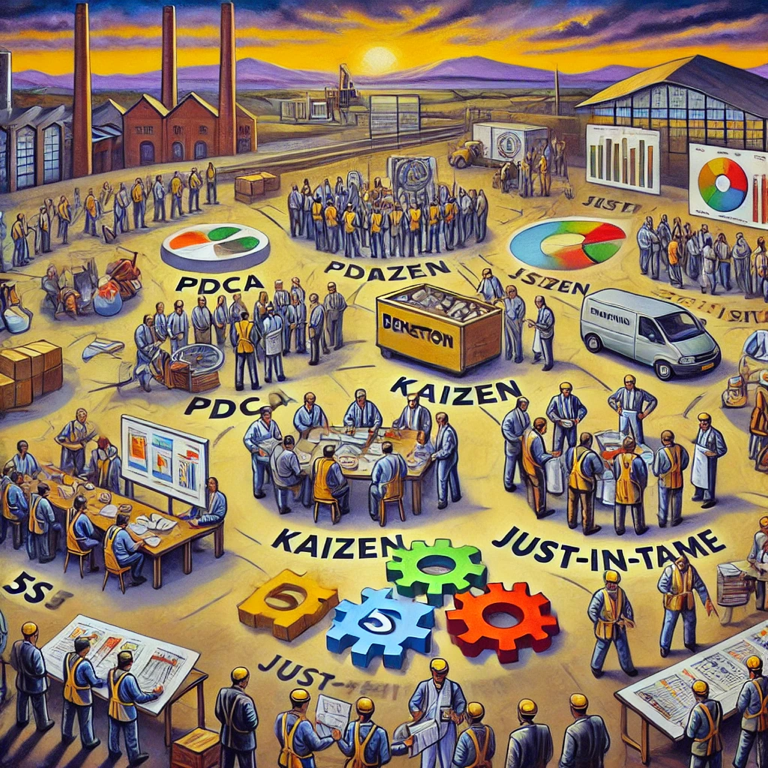
Lean management includes a variety of tools and methods designed to improve efficiency, quality, and value in organizations. Tools such as Kaizen, 5S, Just-In-Time, Kanban, Value Stream Mapping, and A3 all integrate with the PDCA cycle and create a system of continuous improvement.
For example, Kaizen allows employees at all levels to participate in the continuous improvement process by identifying problems and implementing small but significant solutions. 5S helps maintain an organized and clean work environment, contributing to efficiency and safety. Just-In-Time ensures precise production and delivery on time, reducing inventory and waste. By implementing Kanban, organizations can improve workflow and ensure that each station receives the necessary materials on time. Value Stream Mapping identifies waste in the process and allows for continuous improvement. The A3 tool enables organizations to address problems in a structured and focused manner.
By using these tools, organizations can improve the efficiency, quality, and value they provide to their customers. Lean management is based on the principles of continuous improvement, identifying and removing waste, and collaboration between all parts of the organization. When these tools are integrated with the PDCA cycle, an integrated and effective system for continuous improvement is created in all areas of organizational activity.
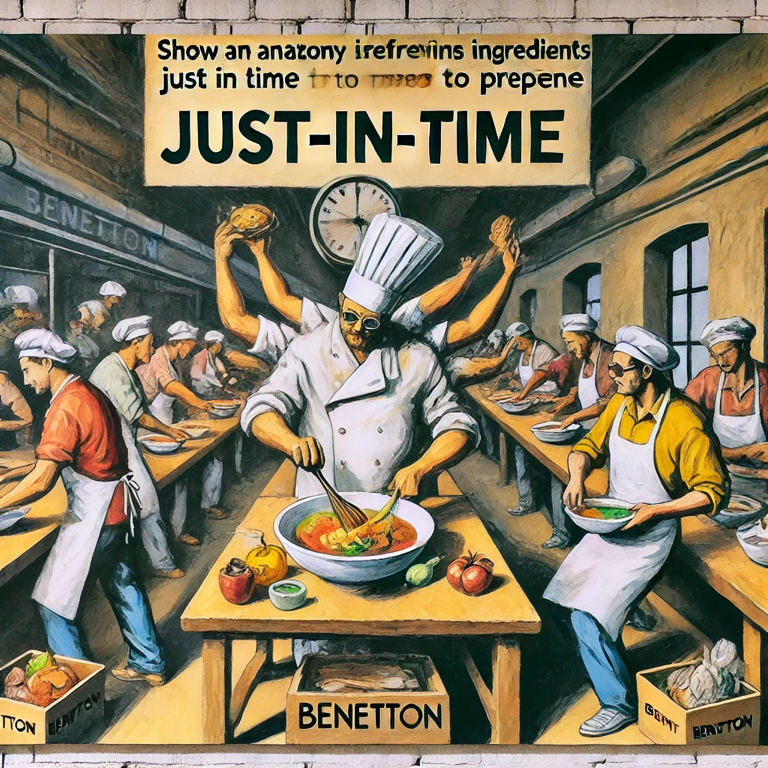
For instance, a clothing manufacturing company can use Kaizen to improve cutting and sewing processes by identifying problems in the process and implementing small but significant solutions. Simultaneously, they can use 5S to organize and clean work stations, contributing to efficiency and safety. Through Just-In-Time, they can ensure that the required materials arrive at exactly the right time, reducing inventory and waste. By implementing Kanban, they can improve workflow and ensure that each station receives the necessary materials on time. Through Value Stream Mapping, they can identify waste in the process and improve the flow and added value for their customers.
Lean management and the PDCA cycle are powerful tools that allow organizations to continuously improve their processes and achieve optimal results. With the right combination of these tools, it’s possible to create a culture of continuous improvement and reach new levels of efficiency and quality.
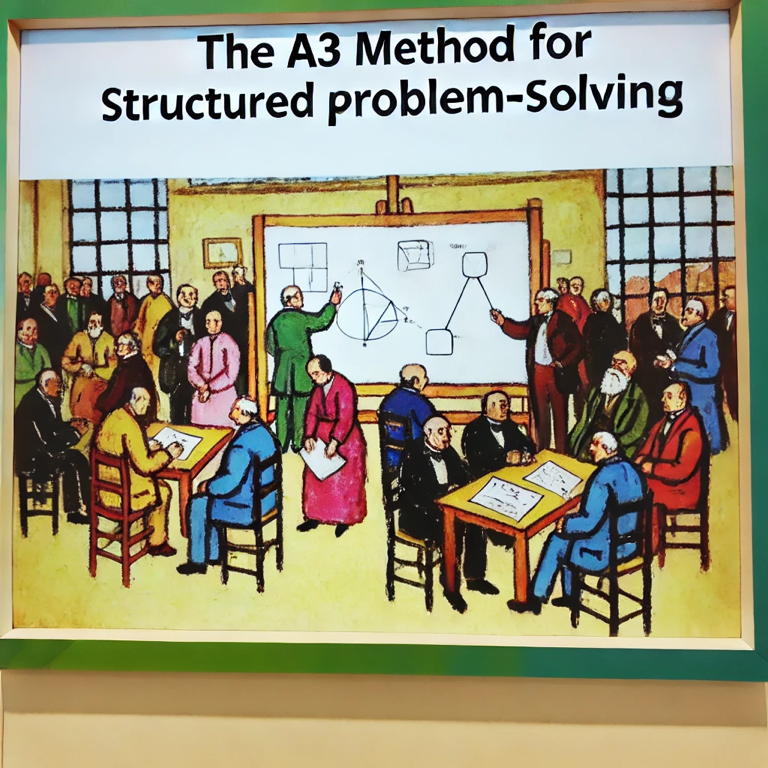
The A3 is a widely used tool in lean management that integrates excellently with the PDCA cycle. A3 is a document or process for problem-solving, continuous improvement, and project planning, named after the paper size used (A3 size). The A3 is structured to contain all stages of the PDCA cycle, making it an efficient tool for continuous improvement in organizations.
In planning, the A3 includes problem description, current state analysis, data collection, and defining improvement goals. In execution, it includes implementing proposed solutions and changes in processes. In checking, the A3 allows for evaluating results and comparing them to defined goals. In action, it enables decision-making on next steps, whether the achieved improvement is sufficient or if additional changes are needed.
For example, a production department can use the A3 tool to address the issue of material waste in the production process. In planning, they will define the problem and analyze the current situation, collect data, and set improvement goals. In execution, they will implement proposed solutions, such as changes in the cutting process or using different materials. In checking, they will evaluate the results and verify if the achieved improvement meets the defined goals. In action, they will decide if the changes made are sufficient or if further improvements are needed.
The A3 allows organizations to address problems in a structured and focused manner, using the PDCA cycle for continuous improvement. It is an effective tool for improving processes, reducing waste, and increasing quality in all areas of organizational activity.
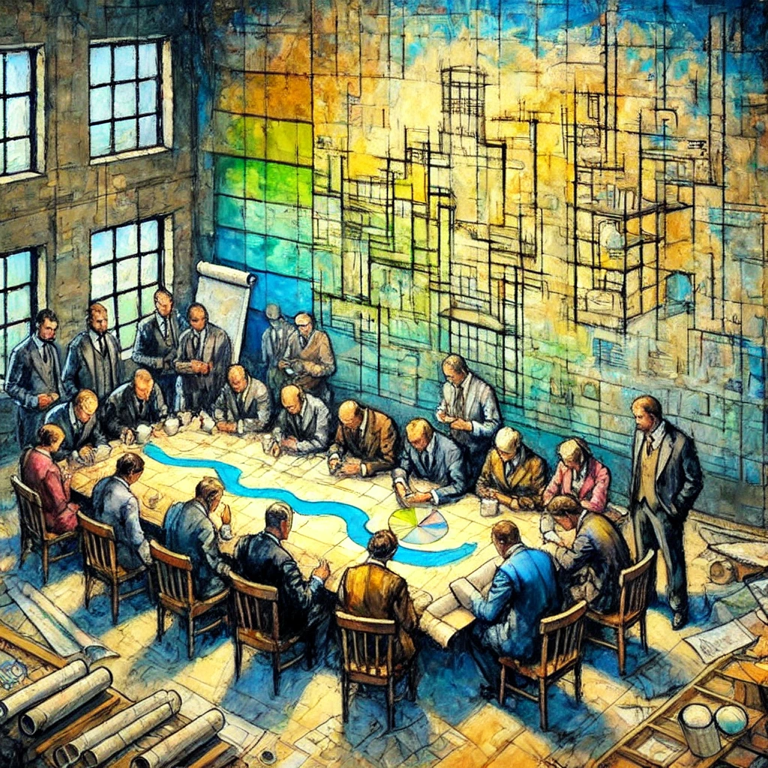
Value Stream Mapping is a tool for mapping and understanding the flow of materials and information in the production process. The goal is to identify waste and improve efficiency and value in the process. VSM integrates with the PDCA cycle in all its stages: In planning, the need for value stream mapping is identified and an action plan is prepared. In execution, the mapping is carried out and the data is analyzed. In checking, changes are evaluated and results are measured. In action: decisions are made on the changes required for continued improvement.
For example, in a manufacturing plant, a team may identify a problem in the production process where there is waste and downtime. In planning, they will prepare a plan for value stream mapping and identify the stations where there are issues. In execution, they will perform the mapping and collect data on the flow of materials and information. In checking, they will analyze the data and identify waste. In action, they will prepare a plan to improve the process and implement the necessary changes.
Just-In-Time is a tool for managing the flow of materials and production in an organization precisely and efficiently. The goal is to produce and supply products exactly when needed, to minimize inventory and waste. JIT integrates with the PDCA cycle at all stages: In planning, the need for precise timing is identified and a plan for implementing JIT is prepared. In execution, the plan is implemented and the flow of materials and production is managed. In checking, changes are evaluated and results are measured. In action, decisions are made on the changes required to continue implementing JIT.
Additionally, it’s important to understand the principles of the seven wastes in lean management, also known as the eight wastes. The wastes include:
Waiting – Waiting time for workers, equipment, or materials.
Transportation – Unnecessary movements of materials or products.
Over-processing – Performing steps in the process that don’t add value.
Inventory – Storing excess inventory.
Unnecessary motion – Unnecessary body movements of workers.
Defects – Defective products requiring repair or replacement.
For example, in a manufacturing plant, a team might identify a problem with excessive inventory causing waste of space and resources. In planning, they would prepare a plan to implement JIT and reduce inventory. In execution, they would manage the flow of materials precisely. In checking, they would measure the improvement in performance and inventory. In action, they would establish procedures to maintain precise timing and minimize inventory.
Kanban is a tool for managing workflow in the production process. The method uses cards to manage and control workflow, and incorporates lean management principles. Kanban integrates with the PDCA cycle at all stages: In planning, the need to improve workflow is identified and a plan for implementing Kanban is prepared. In execution, the method is implemented and the flow of cards is managed. In checking, changes are evaluated and results are measured. In action, decisions are made on the changes required to continue implementing Kanban.
For example, in a manufacturing plant, a team might identify a problem in the production process where there are delays and long queues at various workstations. In planning, they would prepare a plan to implement Kanban and reduce queues. In execution, they would manage the flow of cards precisely and ensure each station receives cards on time. In checking, they would measure the improvement in performance and queue times. In action, they would establish procedures to maintain precise and efficient workflow.
Kaizen is one of the central tools in lean management, focusing on continuous improvement of processes and operations in an organization. The method is based on the principle of small and constant improvements and encourages all employees to take part in the improvement process. Kaizen integrates well with the PDCA cycle according to the following stages: In planning, areas requiring improvement are identified and solutions are planned. In execution, the necessary changes are implemented. In checking, the changes are evaluated and the results are analyzed. In action, decisions are made on the changes needed for further improvement.
For example, in a manufacturing plant, a Kaizen team can identify an area in the factory where time is wasted due to inefficient work processes. In the planning stage, they will analyze the current situation and find solutions for improvement. In execution, they will implement the proposed changes. In checking, they will measure the improvement in performance. In action, they will decide if the improvement is sufficient or if additional changes are needed.
5S is a tool for organizing and arranging the work environment to create an efficient, safe, and clean workplace. The tool includes five stages: Sort, Set in order, Shine, Standardize, and Sustain. 5S integrates with the PDCA cycle in all its stages: In planning, the need for organization and arrangement is identified and an action plan is prepared. In execution, the plan is implemented and the work environment is organized. In checking, the changes are evaluated and the results are measured. In action, decisions are made on the changes needed to maintain order and cleanliness.
For example, in a manufacturing plant, a team can identify an area where there is an overload of unnecessary items causing waste of time in searching for tools and materials. In planning, they will prepare a plan for arranging and removing unnecessary items. In execution, they will organize the area and perform cleaning. In checking, they will measure the improvement in performance and work time. In action, they will establish procedures for maintaining order and cleanliness.
In the next few posts, I plan to write about several issues which are in my opinion, the basis of management.
I believe that trust is the baseline of every relationship, thus, trust is also the basis of every managerial relationship or leadership . It doesn’t matter whether you lead a single person (a one on one connection) or a team, trust is the first thing you’ll have to build, and maintain.
I usually make a distinction between different levels of trust:
1. At the first level stands what I call “Personal trust”, this is the basic level of trust between two people. To achieve this level of trust, people usually should at least know each other enough, so they understand in the most general terms, which common values they share and which they don’t agree upon. The best way to bring people to this level of trust is to make them spend some time together. A good way to speed up the process would be to facilitate a meeting with personal introductions and activities that will make each partner expose more information about himself (his personal life, his family, hobbies, beliefs etc.).
The “Personal trust” is about knowing the other person / people on a personal level and being able to authentically respect at least some of his / her personal traits.
2. At the second level stands what I call “Professional trust”; this is the belief that the other person is capable of performing the task at hand. The best way to build trust to this level is to give the involved parties an opportunity to watch the others perform their tasks. This usually require some time, so that each one has the chance to witness the other performing and getting the job done several times.
The “Professional trust” is about believing that the other person is capable of doing his job.
3. The third level is what I call “Mutual goal trust” or “Mutual mission trust”, this is the belief that the other person is committed to the same goal or mission that I’m committed to, and even better, that we share our views on how to achieve this mutual goal. In order to reach this level of the trust the involved parties should spend time to agree upon and clarify both mission and the path to get it.
Often you’ll meet groups of people that didn’t go through all the above mentioned phases of trust. You might hear a sentence like “He’s a good guy but I’m not sure he’d be capable to help me” – achieved level one of trust but not level two. Or “I don’t trust this guy but he is surely a pro” – level two achieved while level one is missing.
I sincerely believe that in order to get the best possible performance at any given task or mission, whether it’s you with your only subordinate Joe, or a leader with many followers, one must go through all three levels of building trust.
That’s it for today,
HoM (that is “Heart of Management”)