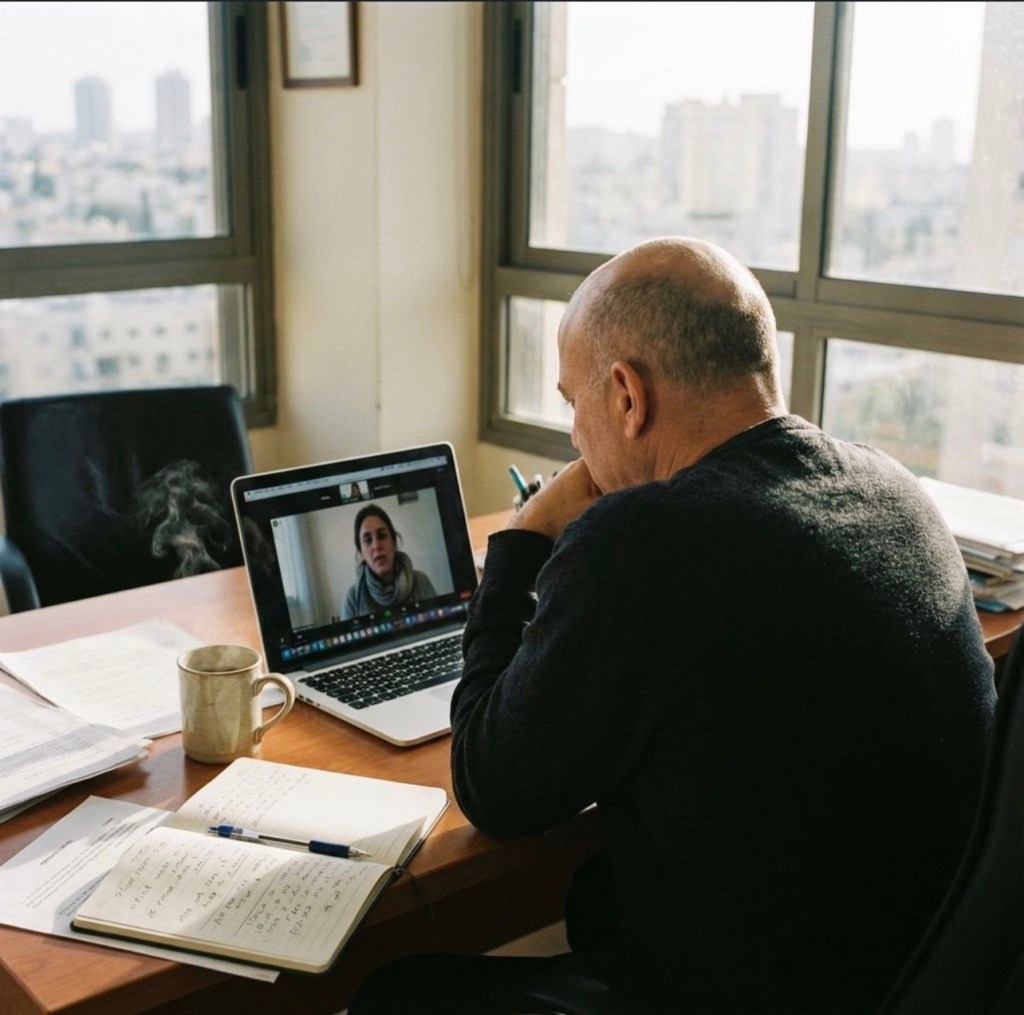
(Or: Why Your Brain Says “Yes, but…” Before You Even Open Your Mouth)
Following the two previous posts about the courage to speak up and the courage to trust,
today we arrive at the third kind.
The one that makes many leaders look like there’s a spring attached to their chair:
they’re moving… just not forward.
The courage to experiment.
Let me start with a moment you probably know well:
A small idea lights up in your mind.
It’s warm. Almost itchy at your fingertips with potential.
You can almost hear it bubbling —
like a kettle just before it starts to whistle.
And then…
something inside you turns down the flame.
Your mind walks into the room with a “let’s not do anything stupid” look on its face,
puts a hand on your shoulder and whispers:
“Wait… why change?
Why complicate things now?
Why try something we’ve never tried before?”
And suddenly the idea cools down.
Like a cup of tea you forgot on the table
until it reaches the temperature of disappointment.
And here’s the paradox:
Everyone says they want innovation.
Everyone says they’re “open to ideas.”
Everyone believes they’re flexible.
But the truth?
Most people aren’t afraid to fail.
They’re afraid to begin.
Because beginning means lifting your foot off the ground.
Losing a moment of stability.
Admitting you don’t exactly know how this will end.
So what actually requires courage?
Not a revolution.
Not technology.
Not big changes.
But the small actions
that ignite something new:
Changing the seating arrangement.
Letting someone younger lead.
Trying a different process.
Exploring a direction before dismissing it.
Allowing yourself to learn something you didn’t plan to.
Choosing “let’s test it” instead of “no, that’s risky.”
It’s not a shout of courage.
It’s a whisper.
But a whisper that creates movement changes everything.
I said this this week to someone who swore that innovation “just isn’t my language”:
Change doesn’t start when everyone agrees.
Change starts when you agree to move
half an inch outside your routine.
Innovation is not a tower of colorful ideas.
It’s not a hackathon.
It’s not a slide deck full of shiny icons.
Innovation is your ability to say:
“I’m not sure — but I’m willing to try.”
That’s it.
As brave as it is simple.
Before you scroll on:
Pause.
Smell your coffee.
Check, is it still warm?
Now ask yourself:
What’s the small thing
you’ve known for months you should try,
but kept postponing?
Because that’s exactly where
the third kind of courage begins.
The kind that separates a manager who preserves what exists
from a leader who builds what’s next.
And next week?
I’ll open the fourth kind of courage
the one everyone wants,
few truly master,
and the one that connects all three before it:
The courage to change.
Not an idea.
Not a one-time action.
But the ability to turn change into a habit,
and repetition into power.
That’s a whole different world.








 Heart of Management