Category: Innovation

  • Fourth and final post in the series on Industry X.0: A Journey Through era’s in the industry and a Perspective on the Future

    The journey through Industries 1.0 to 6.0 reveals how much industry has developed and impacted the world. Each industrial revolution changed not only the way we produce, but also how we live, communicate, work, and use resources. These revolutions not only produced more efficient products, but also reshaped the economy, culture, and society itself.

    Looking Back on Industries 1.0 to 6.0

    Industry 1.0 brought mechanization and factory revolution to the world, ushering in the era of mass production, freeing humans from manual production, and enabling production on a scale previously impossible.

    Industry 2.0 continued the change with electricity and production lines, making products available to the wider public and making the world more connected.

    Industry 3.0 introduced computing and automation, making production more precise and effective.

    Industry 4.0 brought a new era where every machine and product can communicate with each other in real-time. These digital technologies sparked another revolution, especially in the field of data and connectivity.

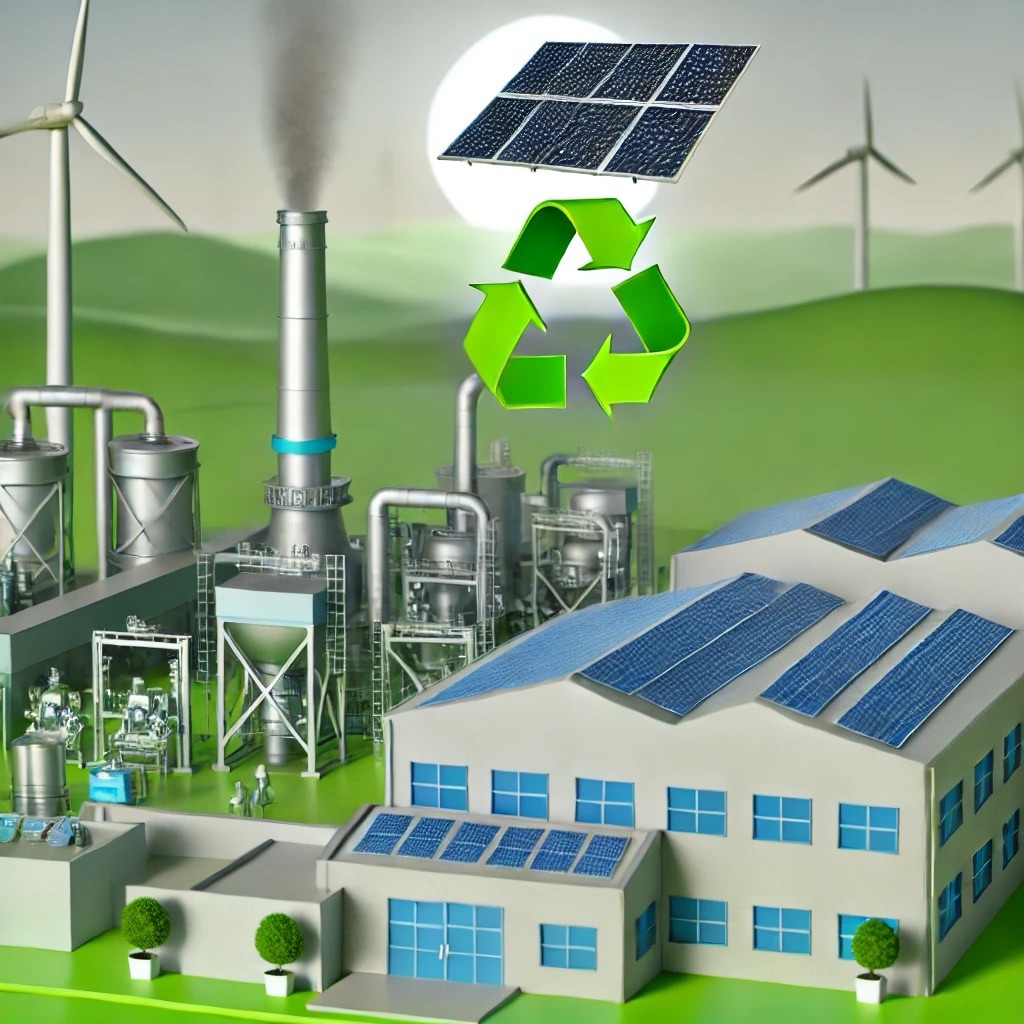
    Industry 5.0 focuses on collaboration between humans and machines, not as a replacement for humanity but as a complement to it. Sustainability is a central pillar, with production focusing not only on efficiency but also on reducing environmental impacts and improving social conditions.

    Industry 6.0, as it appears now, is a forecast for the future that includes innovative technologies such as quantum computing and advanced artificial intelligence, which are still in research and development stages.

    Personal Perspective on Industrial Development

    In my personal opinion, future historians might view Industries 3.0, 4.0, and 5.0 as part of the same broad industrial revolution encompassing automation, computing, and artificial intelligence. Over the years, these technologies have only improved – becoming more efficient, more precise, and more available. The main refinement is not necessarily in new inventions, but in the wider use of existing technologies and making them accessible to all.

    What might be considered the “next industrial revolution” will occur, in my opinion, when we reach full integration between humans and machines. This is a state where humans and machines will work together in such deep collaboration that we won’t be able to distinguish where human thought ends and artificial intelligence begins. This is a vision that evokes excitement and also concern, as it brings with it deep ethical questions about the role of humans in such an industrial future. However, I am not a futurist, and it seems only time will tell how things will actually develop.

    For more interesting posts, follow the Heart of Management page.​​​​​​​​​​​​​​​​

  • Third post in the series on Industry X.0: Industry 5.0 and 6.0 – Collaboration between Humans and Technology.

    Industry 5.0 and 6.0 bring us to a new era where technology and humanity join forces to create innovative solutions and promote sustainability.

    Industry 5.0 – Humans and Machines Collaborate.

    Industry 5.0 focuses on close collaboration between humans and machines, with the goal not only of more efficient production but also an emphasis on environmental and social sustainability. Artificial intelligence and automated technologies function as partners that assist humanity in creating personalized products while considering minimal resources and recycling. An example of this is the Nike By You project (https://www.nike.com/nike-by-you), which allows Mass Customization – personalized production on a large scale while maintaining production efficiency.

    Industry 5.0 aims to create resource-efficient processes, using systems that minimize energy and material use, and incorporate recycling as an integral part of the process. In this generation of industry, which we are only at the beginning of, attempts are also being made to reduce overall environmental impact, while integrating renewable energy and reducing pollutant emissions. Additionally, Industry 5.0 promotes social sustainability, creating a healthier work environment for employees and improving connections with the communities in which it operates.

    Industry 6.0 – Predictions for the Future (Science Fiction).

    Industry 6.0 is still in the realm of futuristic predictions, and forecasts include technologies such as quantum computing, biotechnology, and advanced artificial intelligence, intended to address global challenges such as climate change and resource scarcity. Industry 6.0 aims for a deeper integration between humans, machines, and the environment, but for now, these are just predictions for the future.

    Space Manufacturing – Another Future Vision

    Another interesting direction for Industry 6.0 is space manufacturing. Thanks to unique conditions of low gravity and the ability to utilize external resources such as asteroids and the moon, it’s possible that in the future we’ll be able to produce advanced materials in space that cannot be produced on Earth. Companies like SpaceX and NASA are already conducting experiments on this topic at the International Space Station, aiming to examine these possibilities for manufacturing in different conditions.

    In the next post, I’ll summarize the topic of Industry x.0 and also add my opinion 😊.

    Did you like it? I’d love to hear your feedback.

    For more interesting posts, follow the Heart of Management page.

  • Second post in the series on Industry X.0: Industry 3.0 and 4.0 – The Digital Revolution and Smart Contract Manufacturing.

    Computers and robots are changing the face of industry.

    Industry 3.0 – Computing and Automation Enter Industry

    Industry 3.0, which began in the 1970s, transformed industrial production through computers and robots. An example of this is the Fiat Uno Fire, where robots produced the car engines, marking the beginning of the transition to wider automation. The use of robots allowed for the production of high-quality products on a large scale, while reducing human errors and improving accuracy.

    This revolution also changed the job market. With the need for new technological skills to operate computerized systems and robots, there was a demand for workers skilled in these areas. However, there was a decrease in demand for traditional manual labor.

    Industry 4.0 – Smart and Connected Manufacturing

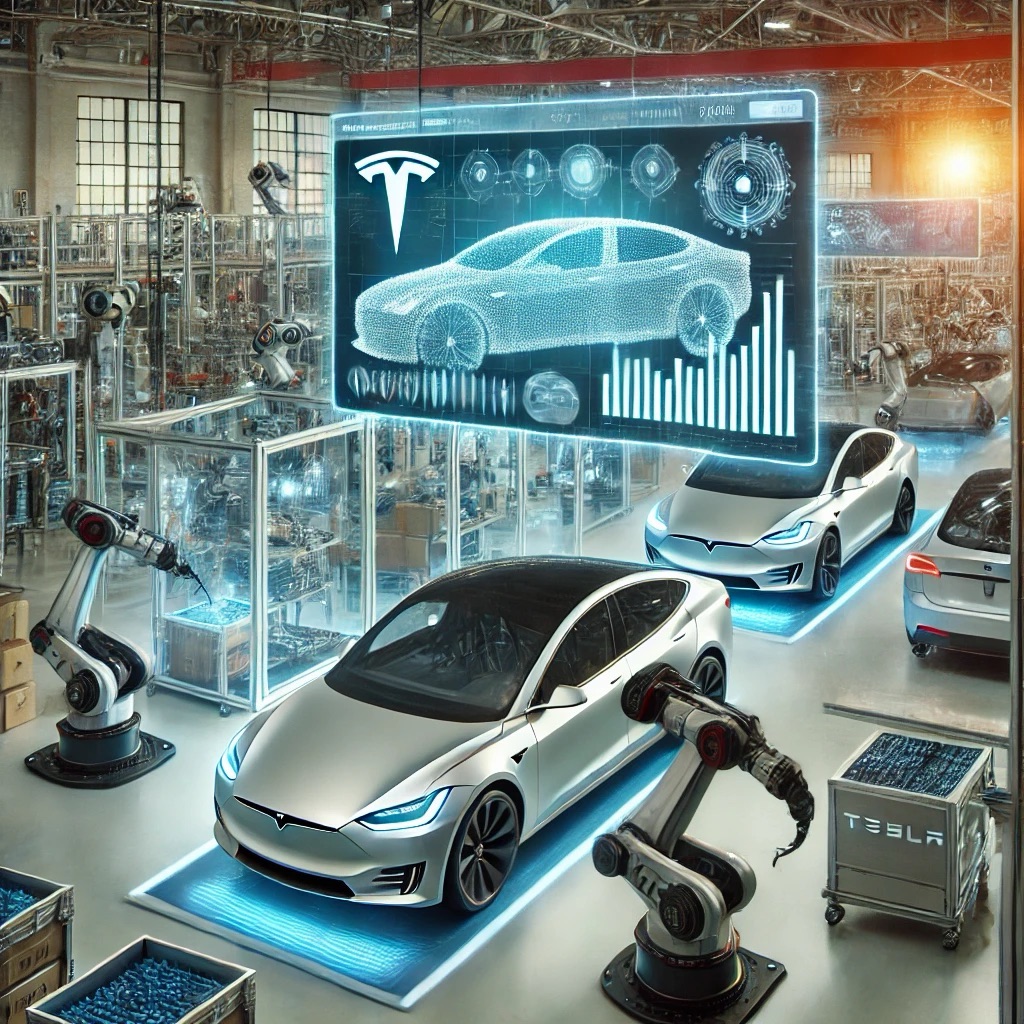
    Industry 4.0, which developed in the early 2000s, brings the world of manufacturing to a new level with the integration of advanced technologies such as the Internet of Things (IoT) and artificial intelligence. Tesla’s smart production line is a prominent example of this: Tesla vehicles are connected to a system that analyzes data in real-time and enables improvement of production processes and reduction of malfunctions.

    Additionally, Industry 4.0 focuses on “smart factories” where computerized systems operate in full synchronization, make automatic decisions, and improve efficiency. This change has improved production capabilities, reduced costs, and increased flexibility to adapt products to changing needs. This impact has also increased the demand for workers with high technological expertise to maintain and develop these systems.

    In the next post, we’ll talk about Industry 5.0 and the forecast for Industry 6.0.

    Did you like it? I’d love to hear your feedback.

    For more interesting posts, follow the Heart of Management page.​​​​​​​​​​​​​​​​

  • First post in a series about Industry X.0:

    Industry 1.0 and 2.0 – The Mechanization and Mass Production Revolution

    The First Industrial Revolutions: From Early Machines to the Assembly Line.

    In recent years, there has been widespread use of the term Industry 4.0. I decided to deviate from my usual practice and engage in a historical review of the various stages of industrial development from its beginning, even before we reached the latest revolutions.

    It’s important to remember that even before the industrial era, people produced products like horseshoes or weapons, but production was based on craftsmen and not industrial on a large scale.

    Industry 1.0 – Mechanization Comes to Production.

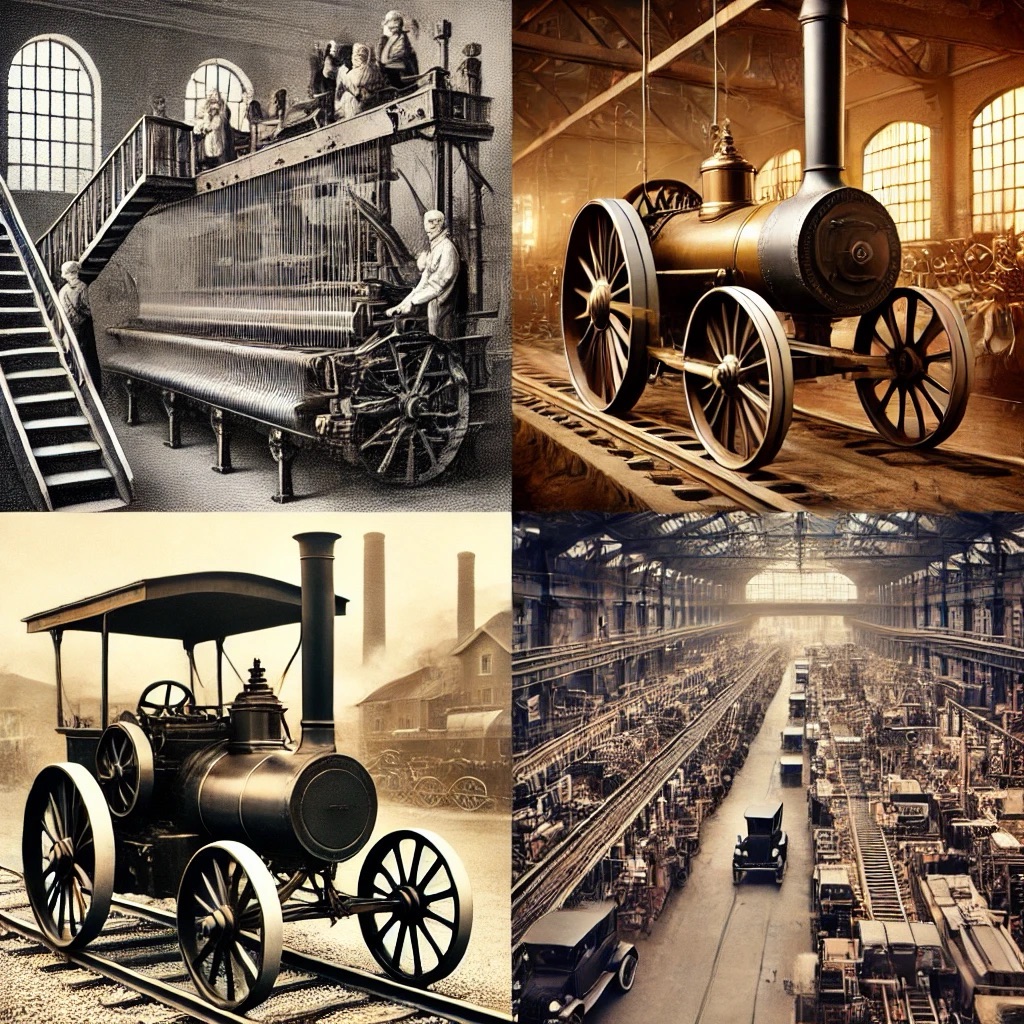
    The first industrial revolution in the 18th century brought about a dramatic change. Instead of manual production, machines began to take part in the process. A prominent example is Edmund Cartwright’s power loom, which enabled faster production of fabrics.

    Steam engines were the basis for the first factories. Industry also influenced transportation, with the production of locomotives and railways, allowing faster and more efficient transportation of goods and people. The result was economic prosperity and a profound change in social structure.

    Industry 2.0 – Mass Production Comes into Play.

    At the end of the 19th century, with the development of electricity and the invention of production lines, the world saw another revolution. An iconic example is the Ford Model T, the first car produced on a mass production line. Production lines led to cheaper manufacturing and made the car accessible to broader classes. In addition, urban growth was made possible thanks to industrial and transportation developments. Industry 2.0 created the ability to produce enormous quantities of products and change the global economic and social structure.

    In the next post, we’ll talk about Industry 3.0 and 4.0.

    Did you like it? I’d love to hear your feedback.

    And for more interesting posts, follow the Heart of Management page.

  • Post number 6 on the topic of continuous improvement and lean management: Lean Management – Additional Tools for Continuous Improvement

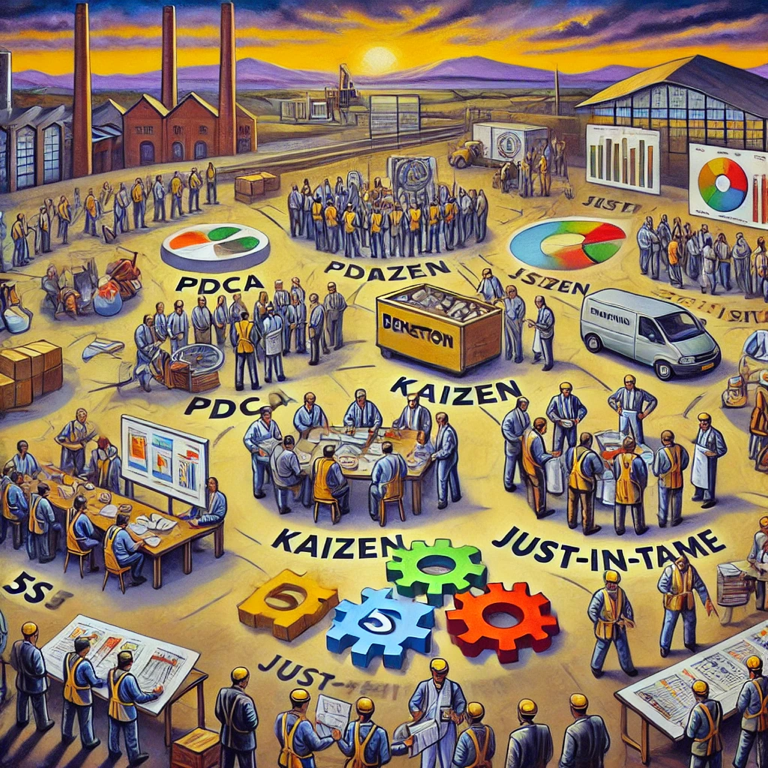
    Lean management includes a variety of tools and methods designed to improve efficiency, quality, and value in organizations. Tools such as Kaizen, 5S, Just-In-Time, Kanban, Value Stream Mapping, and A3 all integrate with the PDCA cycle and create a system of continuous improvement.

    For example, Kaizen allows employees at all levels to participate in the continuous improvement process by identifying problems and implementing small but significant solutions. 5S helps maintain an organized and clean work environment, contributing to efficiency and safety. Just-In-Time ensures precise production and delivery on time, reducing inventory and waste. By implementing Kanban, organizations can improve workflow and ensure that each station receives the necessary materials on time. Value Stream Mapping identifies waste in the process and allows for continuous improvement. The A3 tool enables organizations to address problems in a structured and focused manner.

    By using these tools, organizations can improve the efficiency, quality, and value they provide to their customers. Lean management is based on the principles of continuous improvement, identifying and removing waste, and collaboration between all parts of the organization. When these tools are integrated with the PDCA cycle, an integrated and effective system for continuous improvement is created in all areas of organizational activity.

    For instance, a clothing manufacturing company can use Kaizen to improve cutting and sewing processes by identifying problems in the process and implementing small but significant solutions. Simultaneously, they can use 5S to organize and clean work stations, contributing to efficiency and safety. Through Just-In-Time, they can ensure that the required materials arrive at exactly the right time, reducing inventory and waste. By implementing Kanban, they can improve workflow and ensure that each station receives the necessary materials on time. Through Value Stream Mapping, they can identify waste in the process and improve the flow and added value for their customers.

    Lean management and the PDCA cycle are powerful tools that allow organizations to continuously improve their processes and achieve optimal results. With the right combination of these tools, it’s possible to create a culture of continuous improvement and reach new levels of efficiency and quality.

    #ContinuousImprovement #LeanManagement #PDCA #Kaizen #5S #JustInTime #Kanban #ValueStreamMapping #A3 #Efficiency #Quality #ProcessImprovement

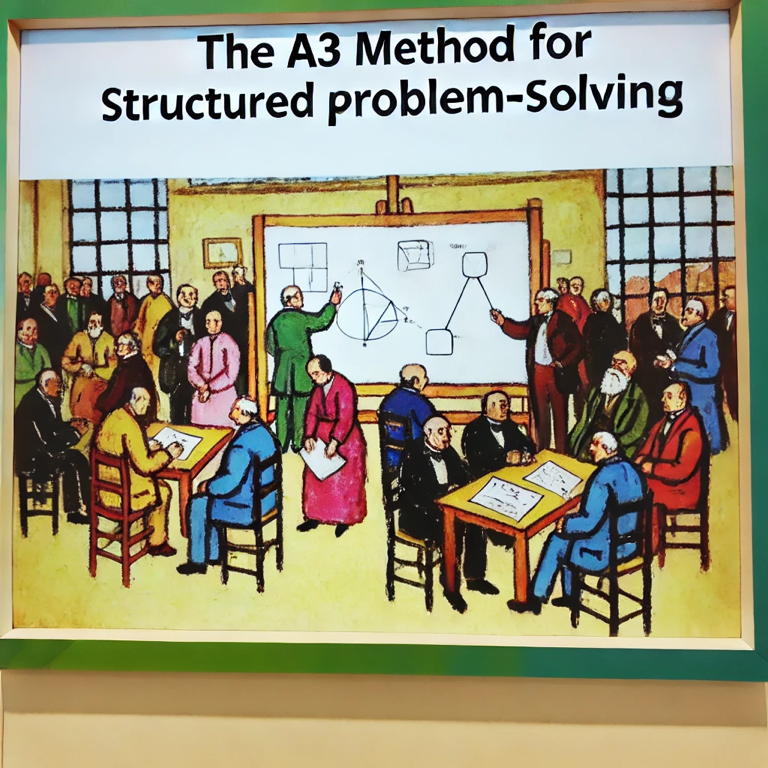
  • Post number 5 on the topic of continuous improvement and lean management: A3 – Structured and Focused Problem Solving

    The A3 is a widely used tool in lean management that integrates excellently with the PDCA cycle. A3 is a document or process for problem-solving, continuous improvement, and project planning, named after the paper size used (A3 size). The A3 is structured to contain all stages of the PDCA cycle, making it an efficient tool for continuous improvement in organizations.

    In planning, the A3 includes problem description, current state analysis, data collection, and defining improvement goals. In execution, it includes implementing proposed solutions and changes in processes. In checking, the A3 allows for evaluating results and comparing them to defined goals. In action, it enables decision-making on next steps, whether the achieved improvement is sufficient or if additional changes are needed.

    For example, a production department can use the A3 tool to address the issue of material waste in the production process. In planning, they will define the problem and analyze the current situation, collect data, and set improvement goals. In execution, they will implement proposed solutions, such as changes in the cutting process or using different materials. In checking, they will evaluate the results and verify if the achieved improvement meets the defined goals. In action, they will decide if the changes made are sufficient or if further improvements are needed.

    The A3 allows organizations to address problems in a structured and focused manner, using the PDCA cycle for continuous improvement. It is an effective tool for improving processes, reducing waste, and increasing quality in all areas of organizational activity.

  • Post number 3 on continuous improvement and lean management: Just-In-Time and Kanban – Precise production and supply timing and workflow management

    Just-In-Time is a tool for managing the flow of materials and production in an organization precisely and efficiently. The goal is to produce and supply products exactly when needed, to minimize inventory and waste. JIT integrates with the PDCA cycle at all stages: In planning, the need for precise timing is identified and a plan for implementing JIT is prepared. In execution, the plan is implemented and the flow of materials and production is managed. In checking, changes are evaluated and results are measured. In action, decisions are made on the changes required to continue implementing JIT.

    Additionally, it’s important to understand the principles of the seven wastes in lean management, also known as the eight wastes. The wastes include:

    1. Overproduction – Producing products beyond required demand.
    2. Waiting – Waiting time for workers, equipment, or materials.
    3. Transportation – Unnecessary movements of materials or products.
    4. Over-processing – Performing steps in the process that don’t add value.
    5. Inventory – Storing excess inventory.
    6. Unnecessary motion – Unnecessary body movements of workers.
    7. Defects – Defective products requiring repair or replacement.

    For example, in a manufacturing plant, a team might identify a problem with excessive inventory causing waste of space and resources. In planning, they would prepare a plan to implement JIT and reduce inventory. In execution, they would manage the flow of materials precisely. In checking, they would measure the improvement in performance and inventory. In action, they would establish procedures to maintain precise timing and minimize inventory.

    Kanban is a tool for managing workflow in the production process. The method uses cards to manage and control workflow, and incorporates lean management principles. Kanban integrates with the PDCA cycle at all stages: In planning, the need to improve workflow is identified and a plan for implementing Kanban is prepared. In execution, the method is implemented and the flow of cards is managed. In checking, changes are evaluated and results are measured. In action, decisions are made on the changes required to continue implementing Kanban.

    For example, in a manufacturing plant, a team might identify a problem in the production process where there are delays and long queues at various workstations. In planning, they would prepare a plan to implement Kanban and reduce queues. In execution, they would manage the flow of cards precisely and ensure each station receives cards on time. In checking, they would measure the improvement in performance and queue times. In action, they would establish procedures to maintain precise and efficient workflow.

  • Post Number 1 on Continuous Improvement and Lean Management: The PDCA Cycle – The Fundamental Tool for Continuous Improvement

    We believe it is important to write about the topic of continuous improvement and lean management. We have created a series of posts on this subject that connect and link the PDCA cycle to all lean management tools.

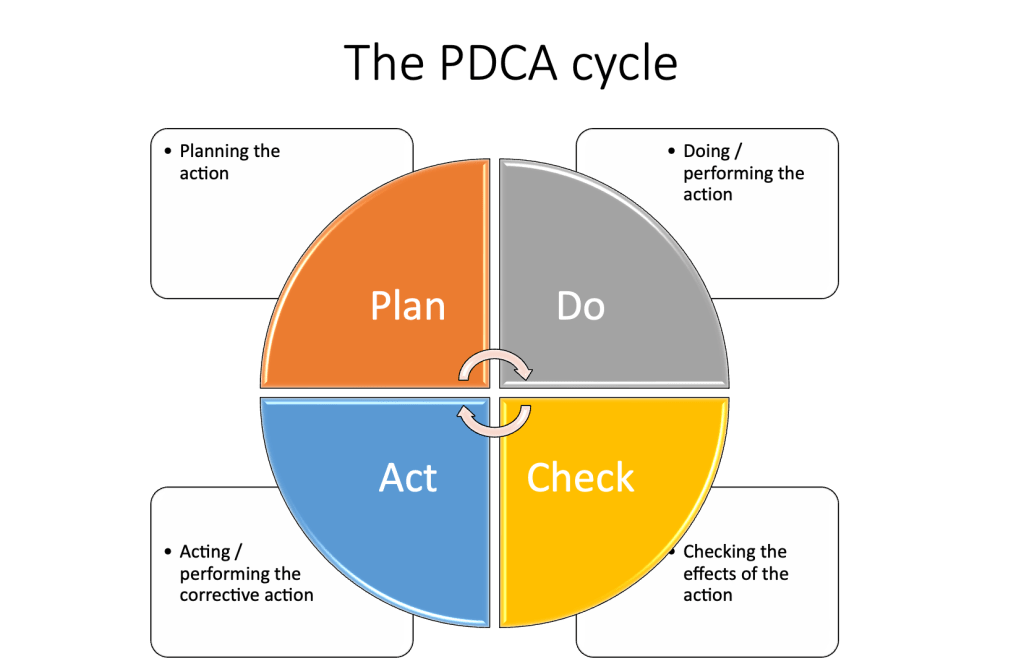
    The PDCA cycle for continuous improvement is a powerful management tool designed for continuous improvement in processes and operations within organizations. This cycle consists of four stages:

    1. Plan: In this stage, the problem or improvement opportunity is identified, the current situation is analyzed, data is collected, and an action plan is prepared. This is a critical stage where clear goals must be defined and the most suitable solutions chosen.

    2. Do: In this stage, the plan created in the planning stage is implemented. It is important to perform the actions in a controlled manner and document the entire process to allow for evaluation and follow-up later.

    3. Check: In this stage, the results of the implementation are evaluated. The actual performance is compared to the goals defined in the planning stage, and it is analyzed whether the achieved improvement meets the expectations. It is important to identify both successes and failures to learn from them and improve.

    4. Act: In this stage, decisions are made on the next steps based on the findings from the check stage. If the achieved improvement is sufficient, the changes can be embedded as part of the regular process. If not, corrections should be made, and the cycle should be repeated.

    For example, a customer service department can use the PDCA cycle to improve response times to customer inquiries. In the planning stage, they would identify the causes of delays, conduct an in-depth analysis, and prepare an improvement plan. In the doing stage, they would implement solutions such as assigning additional staff or changing the work process. In the checking stage, they would measure the new response times and check if the improvement meets the goals. In the acting stage, they would decide whether the changes made are sufficient or if further improvements are needed.

    In the upcoming posts, we will discuss additional lean management tools and how the PDCA cycle is applied to them.

  • Working plans

    Strategizing Success: The Art of Annual Work Plans

    Crafting annual work plans is a strategic art form. It’s the blueprint that aligns our company’s heartbeat with the pulse of the market. Here’s a breakdown of how marketing and operations become the twin engines propelling us towards our objectives.

    🎯 Marketing Mastery: Fueling Our Revenue Engine

    Marketing’s mission? To drive revenue while balancing the scales of investment and market impact. It’s a delicate dance between ambition and efficiency, with every campaign meticulously planned to ensure the highest ROI. Our strategy begins with an in-depth market analysis, setting clear, achievable objectives that are both ambitious and grounded in reality.

    The end goal is not just growth, but sustainable growth that aligns with our broader company vision.

    🔄 Operational Excellence: The Backbone of Efficiency

    Meanwhile, operations focus on the foundation—optimizing processes to ensure we’re not just fast, but also flawless. The mantra here is efficiency without sacrificing quality. This involves everything from leveraging lean methodologies to adopting cutting-edge tech that reduces waste and boosts productivity.

    The challenge? Ensuring these cost-saving measures never dilute the quality of our offerings or our brand reputation.

    🔗 A Unified Vision: Marketing and Operations in Harmony

    The true magic happens when marketing and operations seamlessly align. The operations plan is crafted to support and amplify the goals set by marketing, ensuring that we can meet increased demands and capitalize on new opportunities without missing a beat.

    This integrated approach ensures that every department isn’t just moving in the same direction, but also reinforcing each other’s efforts.

    The Bottom Line

    Our annual work plans are more than just documents; they’re our roadmap to achieving a delicate balance between growth and sustainability. By ensuring that marketing and operations sing from the same hymn sheet, we pave the way for not just meeting our goals, but exceeding them.

    We’re Curious…

    How do you ensure alignment and synergy between different departments in your organization? Drop your insights below. Let’s learn from each other and drive our companies to new heights!