Category: Leadership

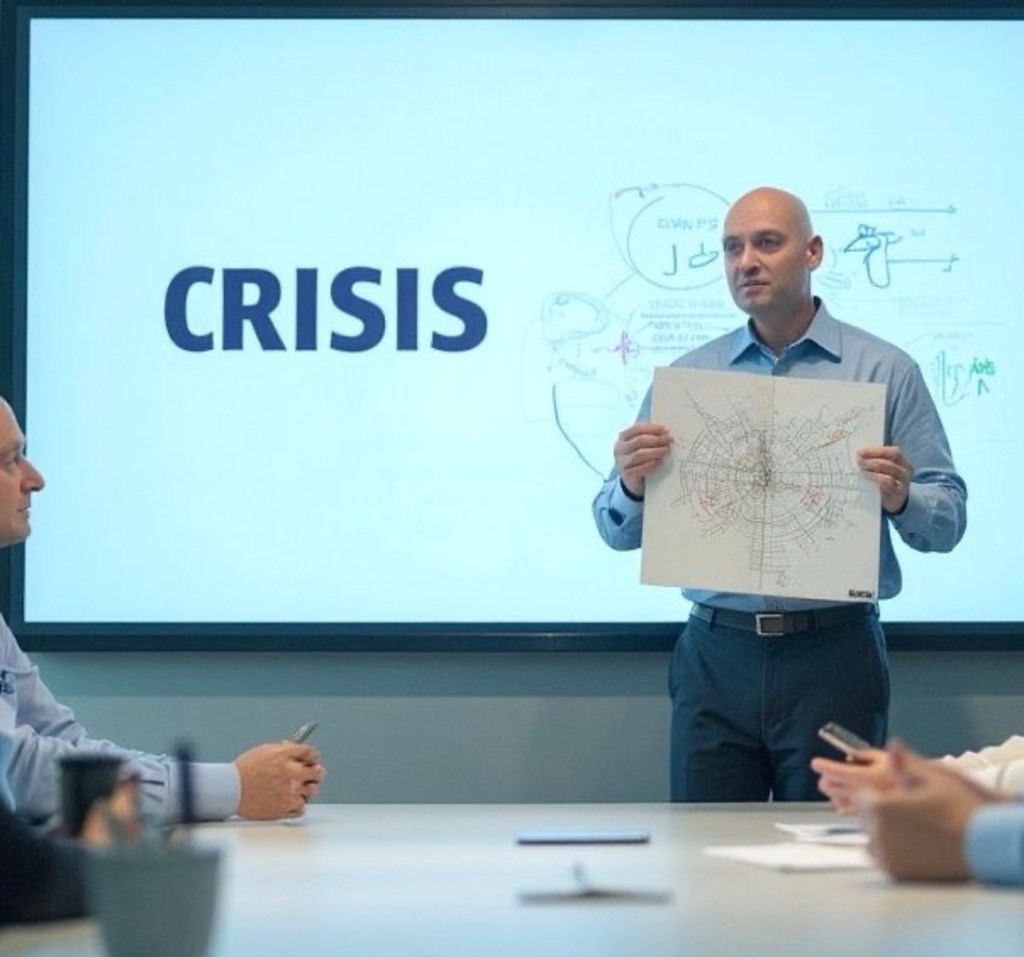
  • “We Sat. We Talked. We Almost Threw Punches.”

    Okay, not really.

    But you know that silence in a meeting

    when everyone’s eyes are screaming?

    I was leading a brand-new management team.

    Some were seasoned veterans with tons of experience.

    Others were new, sharp, hungry.

    A winning mix?

    On paper, yes.

    In practice? More like putting peanut butter on sushi—interesting, but… it doesn’t exactly go down easy.

    There were arguments.

    Drama.

    Hallway chatter.

    Small tensions that turned into big stories.

    Every discussion felt like a fight.

    Every decision, a vote of no confidence.

    Something had to give.

    And then something simple happened:

    we opened a process.

    Not a box-checking, corporate exercise.

    A real one.

    One that taught us how to give feedback.

    How to stop shooting and start talking.

    Feedback not as a reaction, but as a tool.

    Not just to vent, but to move things forward.

    Slowly, things shifted.

    The energy balanced out.

    Fights turned into conversations.

    The cynicism cooled down.

    And those eyes stopped screaming.

    The insight?

    Conflict doesn’t disappear.

    It just changes form.

    And when people learn how to argue,

    they also learn when to compromise.

    So here’s the question:

    Does your team know how to fight to get stronger?

    Or are they just fighting?

  • “But aren’t managers supposed to be cold?”

    That’s what I used to think.

    Back before I got my very first leadership role.

    I pictured them in closed rooms.

    Fluorescent lights.

    Decisions clicking into place like a keyboard.

    No emotion. No doubt. No heart.

    And me?

    I told myself:

    If that’s what it takes,

    maybe I’m not cut out for this.

    Because here’s the thing

    I’m human.

    I care.

    I second-guess myself.

    Sometimes I can’t fall asleep after a tough conversation with an employee.

    I can’t give feedback without worrying how it will land.

    I’m not a robot.

    And I was afraid maybe that would make me a bad manager.

    But the deeper I went into leadership,

    something shifted.

    I started seeing the people around me.

    The fear in their eyes before a big change.

    The hesitation in their words when they asked for feedback.

    The tremor in the voice of someone who wanted a promotion

    but didn’t dare to ask.

    And I realized something simple:

    To lead people, you don’t shut off your heart

    you learn how to use it.

    That doesn’t mean being too soft.

    That doesn’t mean avoiding hard calls.

    Yes, as a manager you sometimes cut.

    Sometimes you fire.

    Sometimes you’re the one who says the words they dreaded hearing.

    But if you do it right

    eye to eye,

    without arrogance,

    with your heart in the right place

    it doesn’t break people.

    It builds them.

    It makes both you and them stronger.

    It makes leadership simply… more human.

    There are no people without feelings.

    Only people who never learned how to use them well.

    The myth:

    “A good manager doesn’t need to be nice.”

    The truth:

    “A good manager needs to be human.”

    What do you think? Do you see it that way too?

  • As a CEO, you learn to hear the noise even when the room is quiet.

    It wasn’t a shout.

    It was a small jab.

    But the whole room felt it.

    I was sitting in a product development meeting.

    A room full of managers

    people I respect.

    Smart, committed, doing great work.

    And then, between one discussion and the next,

    came that comment.

    It wasn’t loud.

    It didn’t sound angry.

    It wasn’t dramatic.

    Just a jab

    like a drop of acid in a cup of coffee.

    Everyone went silent.

    We moved on.

    But inside, I knew it hadn’t passed.

    Because when you’re the CEO,

    you learn to recognize the silence that comes from being hurt.

    So after the meeting,

    I pulled him aside.

    I told him:

    “That doesn’t fly here. Not with me. Not in this company.”

    His reaction?

    No pushback.

    No ego.

    Just quiet listening.

    And from that day forward, it never happened again.

    Something in the tone, the attitude, the team dynamic

    shifted.

    Here’s my take:

    Organizational culture isn’t built in slide decks.

    It’s built in the little comments everyone hears,

    and in the moment they turn to see if you’ll respond.

    As a CEO, you don’t get to choose whether you notice.

    You choose whether you act.

    And that choice

    to respond or not

    is what shapes the culture.

  • A young, sharp manager sat across from me.

    “I want a promotion,” he said.

    “I’ve earned it. I work hard, I deliver results, I go above and beyond.”

    I listened. I nodded.

    Then I asked him one question:

    “Tell me, how do you think leaders actually make promotion decisions?”

    He went silent.

    Not because he didn’t know the answer

    but because he didn’t realize that was even the question.

    And that’s when I thought back to myself, years ago.

    When I wanted my very first promotion.

    And I felt like there was this glass wall I couldn’t break through.

    I was a good employee, well-regarded…

    but not “promotion material.”

    Why? I had no idea.

    So I did what most people do:

    Took another course. Worked even harder. Sacrificed more.

    And still couldn’t figure out why nothing was happening.

    Until I started asking different questions:

    Maybe I’m thinking like an employee, when I should be thinking like a leader. Maybe I’m trying to stand out in ways no one actually cares about. Maybe I’m pouring my energy into the wrong things. Or maybe, just maybe no one has ever shown me what the real path looks like.

    Since then, my work has been to uncover that path, step by step:

    How to think like the people who make the decisions. How to figure out what’s really holding you back. How to turn your everyday work into a quiet stage for influence. How to ask for a promotion, without apologizing or shrinking yourself. And how, once it happens, not to settle, but to ask, “What’s next? What’s the next level?”

    It’s not magic.

    And it’s definitely not luck.

    It’s a method. Pure and simple.

    פ

  • The Dishwasher Was Empty.

    But She Was Still Standing There.

    I was proud of myself.

    The dishwasher was empty.

    Dishes were clean. Counters wiped down.

    Just like in the commercials.

    Then my wife walked in.

    She looked around.

    Said nothing.

    Just stood there, hands on hips, eyebrows raised.

    You know the look.

    I smiled like a hero and said,

    “All done!”

    She didn’t smile back.

    She just tilted her chin toward the counter:

    “What about that?”

    And yeah…

    The counter did look like someone made a tuna sandwich in the dark.

    But in my head?

    Not my problem.

    I had a task: dishwasher.

    Mission accomplished.

    Then she hit me with this:

    “You’re not taking a math test.

    It’s not about what was assigned.

    It’s about seeing the whole picture.”

    Boom.

    Right there, holding a dish towel in one hand and a coffee cup in the other,

    I saw it all.

    My team.

    My coworkers.

    The familiar phrases:

    “That’s not my responsibility.”

    “I did my part.”

    “No one told me…”

    And it hit me

    That’s the difference between an employee and a leader.

    Employees wait for assignments.

    Leaders notice what’s needed.

    Sure, the dishwasher was empty.

    But my brain?

    It was full.

    Because I finally understood:

    It doesn’t matter how well you executed your task

    if you missed the bigger picture.

    Since that day at home and at work

    I stopped asking “What was I told to do?”

    And started asking:

    “What’s really needed right now?”

    Ever had one of those moments where you were so focused on the task,

    you forgot to look up and see the full picture?

  • After You Settle Into the New Role

    The phone calls slow down.

    Meetings fall into place.

    You even manage to get home before dark some days.

    And then it hits you:

    The silence.

    But not the peaceful kind.

    Not the “Nice, everything’s under control” kind.

    It’s the kind of quiet where you can hear the assistant closing a drawer at the end of the hallway.

    That silence reminds you of one thing:

    No one’s coming to say,

    “Wow, you make this look effortless—ready for your next big challenge?”

    That’s the moment you realize:

    The climb is over…

    But you’re not sure what the next mountain is.

    And that’s where people split into two groups:

    Those who map out their next move.

    And those who keep walking in circles at the top.

    Been there?

    Everything’s working. No drama. No noise.

    You feel like you’re in motion but is it forward? Or just around in circles?

    This is the most important moment:

    Don’t be fooled by the quiet.

    Don’t fall in love with the comfort.

    Because if you’re not asking “What’s next?”

    Someone else might decide it for you.

    So tell me

    Have you already set your sights on the next peak?

    Or are you just circling the one you’ve already conquered?

  • Quick change? That only works in a microwave.

    Consultants flew in from overseas.

    Slick slides.

    A big vision.

    A one-year plan and voilà! Operational excellence.

    Sounds impressive, right?

    But then I looked around.

    My people were barely keeping up with the day-to-day.

    Line breakdowns.

    Customers pushing hard on the phone.

    Marketing pushing discounts.

    Sales making promises we couldn’t deliver on.

    And in the middle of all that?

    Learn a whole new system?

    Change the entire workflow?

    Achieve excellence?

    I told myself:

    “They saw the plan.

    I see the people.”

    And I really saw them.

    Running from meeting to email,

    Exhausted. Confused. Stressed.

    Going through the motions of change just trying to survive the day.

    So I did something no management book teaches.

    I opened the contract.

    I scaled back the consulting.

    And I extended the timeline by a year and a half.

    Yes, a year and a half.

    Because real change doesn’t happen under pressure.

    There are no magic tricks.

    You can’t buy it in a deck of slides.

    Real change happens

    when the pace matches the heartbeat of your organization.

    Ever tried to push a change too fast

    and the system just spit it back out?

  • My best hire didn’t check a single box.

    It all started with a conversation at an event.

    I ran into someone I know who said:

    “There’s someone you have to interview.”

    I asked, “What’s his background?”

    He said, “Humanities.”

    (At that point, I had to stop myself from raising an eyebrow.)

    I gently said:

    “Listen, I manage an industrial company.

    We usually hire engineers or business graduates for roles like this,

    not liberal arts majors.”

    But he insisted.

    So I scheduled a meeting.

    Out of politeness.

    And maybe because something about the recommendation made me curious enough to say yes.

    At the very first meeting, I told him straight:

    “I honestly don’t see the fit.”

    (Maybe I wasn’t all that polite. I hope he doesn’t remember.)

    But… he didn’t flinch.

    He listened. He responded.

    He asked smart questions. He clarified. He illuminated.

    And slowly, instead of seeing a mismatch,

    I started to see… potential.

    We met again.

    I pushed him harder.

    Raised even more concerns.

    Laid out a salary that was clearly below what he could hope for.

    And still he wanted it.

    Not out of desperation.

    Not to prove something.

    He just believed it was the right place for him to grow and contribute.

    I sent him to my boss.

    The interview ended with:

    “I see why you’re excited, but this is really out there.”

    I asked, “Is it my decision, or are you vetoing it?”

    He said, “It’s your call. Just know, it’s highly unusual.”

    I hired him.

    And today?

    He’s a senior manager. One of the best we have.

    Leadership Tip:

    If you’re hiring and aiming for excellence,

    don’t settle for candidates who just fit the job description.

    Try writing a role profile that reflects what you actually need

    not just degrees or past titles,

    but real capabilities and potential.

    Look for people who align with where you’re going,

    not just where you are.

    Sometimes,

    those who have the seed of excellence

    won’t fit the mold your organization expects—

    they break it.

    And that’s exactly why they shine.

  • Five Questions Great Managers Ask — Even When They’re Uncomfortable

    Management isn’t about having all the answers.

    It’s about knowing how to ask the questions that are easiest to avoid.

    The ones that open real conversations.

    That don’t go down easy.

    That don’t start with “How’s that task going?”

    So here are five questions that changed the way I talk to my team.

    And sometimes… the way I talk to myself.

    What do you need from me that I’m probably not seeing? (It feels risky. It’s also incredibly valuable.)

    If I disappeared for a week what wouldn’t happen here? (A good answer can show you your real value or where you’re over-involved.)

    What’s hardest for you to say to me? (Not a question about weakness. A question about trust.)

    When did you give your 100% and get nothing in return? (It hurts. But it tells you what really matters to your people.)

    What am I not asking that I should be? (This is the question of managers who know that real leadership starts with what’s left unsaid.)

    This isn’t a checklist.

    It’s a key.

    Ask one this week.

    Just one.

    And see what happens when you ask not to check a box

    but to truly listen.

  • “Deafening Silence”

    It started like any regular meeting:

    I walk in.

    They’re already there.

    Everyone with open laptops and looks that say, “We’re totally with you (but also looking at someone else’s report).”

    I bring up the main topic

    a recurring issue, one that should get everyone fired up.

    And… nothing.

    Silence.

    Someone coughs.

    Someone else takes a sip of water.

    Then… someone asks what time it is, as if that matters right now.

    So I try a different angle.

    “What do you think about this solution?”

    Silence.

    More silence than when someone opens a can of tuna in the office.

    And then it hits me:

    The problem isn’t that they have nothing to say.

    The problem is they have too much to say and they’re afraid to say it.

    Maybe because it’ll offend someone.

    Maybe because it’s a sensitive dynamic.

    Or maybe because they’ve learned that telling the truth doesn’t end well.

    And that’s where the lesson came in:

    When it’s too quiet don’t assume everything’s calm.

    Sometimes silence is just a symptom of fear.

    Remember this:

    Next time there’s silence in a meeting

    Don’t move on to the next topic.

    Ask:

    “What hasn’t been said yet, that needs to be said?”

    And then…

    Wait.

    Wait a moment past the discomfort.

    Because sometimes, it’s after the silence that the truth begins.