Category: Motivating People

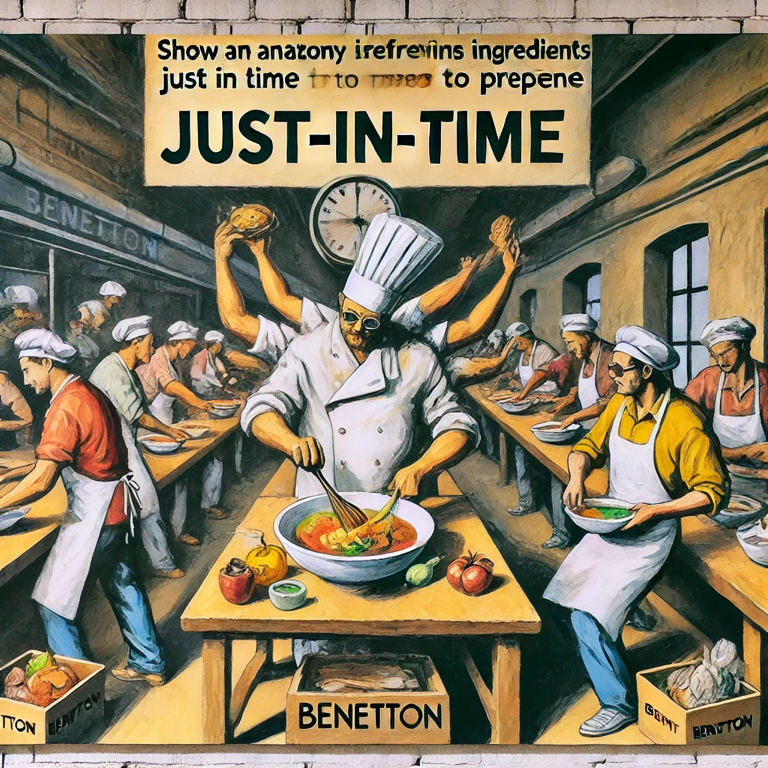
  • Post number 3 on continuous improvement and lean management: Just-In-Time and Kanban – Precise production and supply timing and workflow management

    Just-In-Time is a tool for managing the flow of materials and production in an organization precisely and efficiently. The goal is to produce and supply products exactly when needed, to minimize inventory and waste. JIT integrates with the PDCA cycle at all stages: In planning, the need for precise timing is identified and a plan for implementing JIT is prepared. In execution, the plan is implemented and the flow of materials and production is managed. In checking, changes are evaluated and results are measured. In action, decisions are made on the changes required to continue implementing JIT.

    Additionally, it’s important to understand the principles of the seven wastes in lean management, also known as the eight wastes. The wastes include:

    1. Overproduction – Producing products beyond required demand.
    2. Waiting – Waiting time for workers, equipment, or materials.
    3. Transportation – Unnecessary movements of materials or products.
    4. Over-processing – Performing steps in the process that don’t add value.
    5. Inventory – Storing excess inventory.
    6. Unnecessary motion – Unnecessary body movements of workers.
    7. Defects – Defective products requiring repair or replacement.

    For example, in a manufacturing plant, a team might identify a problem with excessive inventory causing waste of space and resources. In planning, they would prepare a plan to implement JIT and reduce inventory. In execution, they would manage the flow of materials precisely. In checking, they would measure the improvement in performance and inventory. In action, they would establish procedures to maintain precise timing and minimize inventory.

    Kanban is a tool for managing workflow in the production process. The method uses cards to manage and control workflow, and incorporates lean management principles. Kanban integrates with the PDCA cycle at all stages: In planning, the need to improve workflow is identified and a plan for implementing Kanban is prepared. In execution, the method is implemented and the flow of cards is managed. In checking, changes are evaluated and results are measured. In action, decisions are made on the changes required to continue implementing Kanban.

    For example, in a manufacturing plant, a team might identify a problem in the production process where there are delays and long queues at various workstations. In planning, they would prepare a plan to implement Kanban and reduce queues. In execution, they would manage the flow of cards precisely and ensure each station receives cards on time. In checking, they would measure the improvement in performance and queue times. In action, they would establish procedures to maintain precise and efficient workflow.

  • Post Number 2 on Continuous Improvement and Lean Management: Kaizen and 5S – Continuous Improvement and Workplace Organization

    Kaizen is one of the central tools in lean management, focusing on continuous improvement of processes and operations in an organization. The method is based on the principle of small and constant improvements and encourages all employees to take part in the improvement process. Kaizen integrates well with the PDCA cycle according to the following stages: In planning, areas requiring improvement are identified and solutions are planned. In execution, the necessary changes are implemented. In checking, the changes are evaluated and the results are analyzed. In action, decisions are made on the changes needed for further improvement.

    For example, in a manufacturing plant, a Kaizen team can identify an area in the factory where time is wasted due to inefficient work processes. In the planning stage, they will analyze the current situation and find solutions for improvement. In execution, they will implement the proposed changes. In checking, they will measure the improvement in performance. In action, they will decide if the improvement is sufficient or if additional changes are needed.

    5S is a tool for organizing and arranging the work environment to create an efficient, safe, and clean workplace. The tool includes five stages: Sort, Set in order, Shine, Standardize, and Sustain. 5S integrates with the PDCA cycle in all its stages: In planning, the need for organization and arrangement is identified and an action plan is prepared. In execution, the plan is implemented and the work environment is organized. In checking, the changes are evaluated and the results are measured. In action, decisions are made on the changes needed to maintain order and cleanliness.

    For example, in a manufacturing plant, a team can identify an area where there is an overload of unnecessary items causing waste of time in searching for tools and materials. In planning, they will prepare a plan for arranging and removing unnecessary items. In execution, they will organize the area and perform cleaning. In checking, they will measure the improvement in performance and work time. In action, they will establish procedures for maintaining order and cleanliness.

  • Post Number 1 on Continuous Improvement and Lean Management: The PDCA Cycle – The Fundamental Tool for Continuous Improvement

    We believe it is important to write about the topic of continuous improvement and lean management. We have created a series of posts on this subject that connect and link the PDCA cycle to all lean management tools.

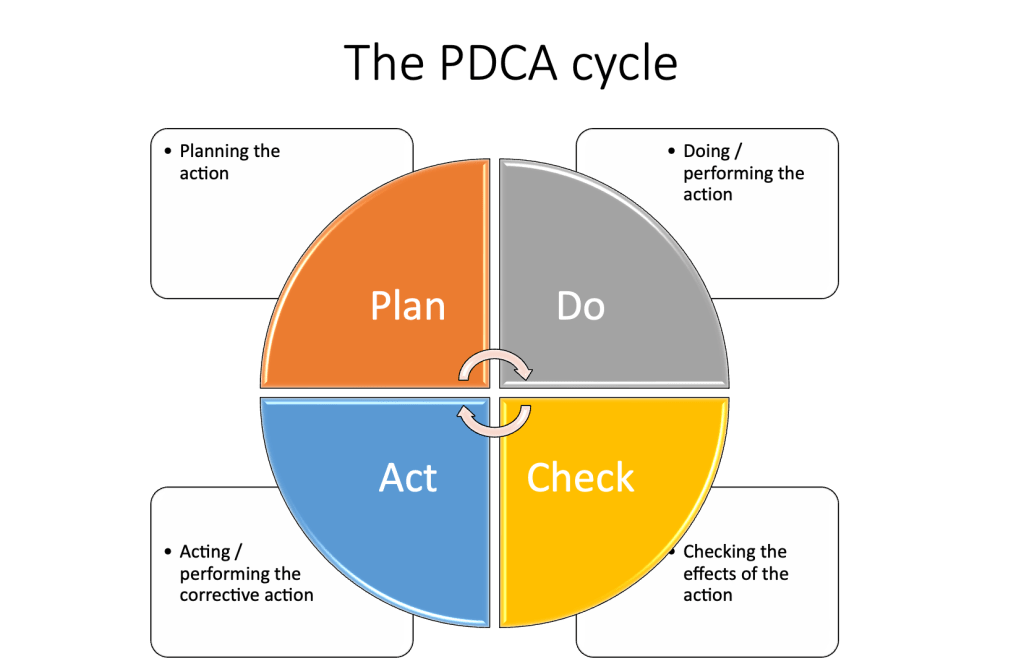
    The PDCA cycle for continuous improvement is a powerful management tool designed for continuous improvement in processes and operations within organizations. This cycle consists of four stages:

    1. Plan: In this stage, the problem or improvement opportunity is identified, the current situation is analyzed, data is collected, and an action plan is prepared. This is a critical stage where clear goals must be defined and the most suitable solutions chosen.

    2. Do: In this stage, the plan created in the planning stage is implemented. It is important to perform the actions in a controlled manner and document the entire process to allow for evaluation and follow-up later.

    3. Check: In this stage, the results of the implementation are evaluated. The actual performance is compared to the goals defined in the planning stage, and it is analyzed whether the achieved improvement meets the expectations. It is important to identify both successes and failures to learn from them and improve.

    4. Act: In this stage, decisions are made on the next steps based on the findings from the check stage. If the achieved improvement is sufficient, the changes can be embedded as part of the regular process. If not, corrections should be made, and the cycle should be repeated.

    For example, a customer service department can use the PDCA cycle to improve response times to customer inquiries. In the planning stage, they would identify the causes of delays, conduct an in-depth analysis, and prepare an improvement plan. In the doing stage, they would implement solutions such as assigning additional staff or changing the work process. In the checking stage, they would measure the new response times and check if the improvement meets the goals. In the acting stage, they would decide whether the changes made are sufficient or if further improvements are needed.

    In the upcoming posts, we will discuss additional lean management tools and how the PDCA cycle is applied to them.

  • Working plans

    Strategizing Success: The Art of Annual Work Plans

    Crafting annual work plans is a strategic art form. It’s the blueprint that aligns our company’s heartbeat with the pulse of the market. Here’s a breakdown of how marketing and operations become the twin engines propelling us towards our objectives.

    🎯 Marketing Mastery: Fueling Our Revenue Engine

    Marketing’s mission? To drive revenue while balancing the scales of investment and market impact. It’s a delicate dance between ambition and efficiency, with every campaign meticulously planned to ensure the highest ROI. Our strategy begins with an in-depth market analysis, setting clear, achievable objectives that are both ambitious and grounded in reality.

    The end goal is not just growth, but sustainable growth that aligns with our broader company vision.

    🔄 Operational Excellence: The Backbone of Efficiency

    Meanwhile, operations focus on the foundation—optimizing processes to ensure we’re not just fast, but also flawless. The mantra here is efficiency without sacrificing quality. This involves everything from leveraging lean methodologies to adopting cutting-edge tech that reduces waste and boosts productivity.

    The challenge? Ensuring these cost-saving measures never dilute the quality of our offerings or our brand reputation.

    🔗 A Unified Vision: Marketing and Operations in Harmony

    The true magic happens when marketing and operations seamlessly align. The operations plan is crafted to support and amplify the goals set by marketing, ensuring that we can meet increased demands and capitalize on new opportunities without missing a beat.

    This integrated approach ensures that every department isn’t just moving in the same direction, but also reinforcing each other’s efforts.

    The Bottom Line

    Our annual work plans are more than just documents; they’re our roadmap to achieving a delicate balance between growth and sustainability. By ensuring that marketing and operations sing from the same hymn sheet, we pave the way for not just meeting our goals, but exceeding them.

    We’re Curious…

    How do you ensure alignment and synergy between different departments in your organization? Drop your insights below. Let’s learn from each other and drive our companies to new heights!

  • Positive Attitude (renewed)

    A positive attitude seems trivial. What could be more basic than that?

    Well, as trivial as it is, having the habit of maintaining a positive attitude, even in the most demanding situations, is not that simple. We think that in order to do so, one has to clearly understand why it is so important.

    Your attitude is one of the first things people will notice about you. We guess that most people won’t start to rationally analyze your attitude, but most of them will surely remain with some sort of first emotional impression about it.

    Even more important than this is the fact that usually other people’s reactions toward you will, to some extent, reflect your attitude back to you. As simple as that, if you smile at somebody, they’ll usually smile back. If you whine to someone, they’ll usually immediately start to tell you about their troubles.

    The effect of having the right or wrong attitude is even stronger in modern-day organizations with complex, multi-dimensional matrix organizational structures. Unlike past, simple hierarchical organizations where people had the chance to know each other on a more intimate level and get past first impressions, in contemporary organizations, you might interact with people for a very brief moment, and the first impression you make, the one that is largely affected by your attitude, might just be your last one.

    Once we understand how crucial it is to maintain a positive attitude, the question that remains is how to do it?

    Maybe the first thing to do is understand your current attitude. This can be done by asking people you know about it. You can ask people you trust and think would be honest with you. It is important to also ask people with whom you might have some difficulties (we intend to write a post about feedback in the near future and we’re going to elaborate on this subject more).

    Once you understand your current attitude, you’ll probably know which parts are your strengths and which are your shortcomings. We’ve found out that the increased awareness about those behaviors immediately makes us increase the good, positive ones and decrease the bad, negative ones.

    Other things that work for us are:

    – Smiling a lot without giving up being honest
    – Being optimistic by seeing the positive side of everything. When we think about this, almost nothing is totally bad or good, you can choose which side you want to emphasize!
    – Being empathetic to others by really listening and understanding their point of view

    Good luck! Please let us know what you think and what works for you.

  • Trust (renewed post)

    In the next few posts, we plan to write about several issues which, in our opinion, are the basis of management.

    Trust:

    We believe that trust is the baseline of every relationship, thus, trust is also the basis of every managerial relationship or leadership. It doesn’t matter whether you lead a single person (a one on one connection) or a team, trust is the first thing you’ll have to build and maintain.

    We usually make a distinction between different levels of trust:
    1. At the first level stands what we call “Personal trust”, this is the basic level of trust between two people. To achieve this level of trust, people usually should at least know each other enough so they understand in the most general terms, which common values they share and which they don’t agree upon. The best way to bring people to this level of trust is to make them spend some time together. A good way to speed up the process would be to facilitate a meeting with personal introductions and activities that will make each partner expose more information about himself (his personal life, his family, hobbies, beliefs etc.). The “Personal trust” is about knowing the other person/people on a personal level and being able to authentically respect at least some of his/her personal traits.

    2. At the second level stands what we call “Professional trust”; this is the belief that the other person is capable of performing the task at hand. The best way to build trust to this level is to give the involved parties an opportunity to watch the others perform their tasks. This usually requires some time, so that each one has the chance to witness the other performing and getting the job done several times. The “Professional trust” is about believing that the other person is capable of doing his job.

    3. The third level is what we call “Mutual goal trust” or “Mutual mission trust”, this is the belief that the other person is committed to the same goal or mission that we’re committed to, and even better, that we share our views on how to achieve this mutual goal. In order to reach this level of trust, the involved parties should spend time to agree upon and clarify both the mission and the path to get it.

    Often you’ll meet groups of people that didn’t go through all the above mentioned phases of trust. You might hear a sentence like “He’s a good guy but I’m not sure he’d be capable to help me” – achieved level one of trust but not level two. Or “I don’t trust this woman but she is surely a pro” – level two achieved while level one is missing.

    We sincerely believe that in order to get the best possible performance at any given task or mission, whether it’s you with your only subordinate, Joe, or a leader with many followers, one must go through all three levels of building trust.

    As a leader, you have to ensure the high level of trust between team members, that’s one of your most important tasks.

  • Values and integrity

    One definition of values is the belief of a person or a social group in which they have an emotional investment. This definition of values doesn’t include any reference to whether the values are “good” or “bad” (of course the perception if something is good or bad is subjective). Even a criminal has values (although they might be very different from the values an ordinary man withholds). When I talk about “values”, my definition is a little more specific. For me values indeed involve a deep emotional investment, but they also include an association with a code of conduct. My values dictate the way I believe I should behave in many situations. For instance, if one of my values is honesty, it immediately dictates that I’ll do whatever I can in order to tell the truth.

    My own private definition for integrity is how much one is committed to his own values. Again a little different from the dictionary where integrity stands for “moral soundness”. According to my definition if someone’s set of values include the value of honesty and he lies occasionally, it means that his integrity is questionable.

    Having a high level of integrity is critical when leading people for these reasons:

    1. If you and the people you lead share the same values, then following you when you stand up for those values is much easier for your followers.

    2. Even if you don’t share exactly the same values, following your values consistently will make your behaviors more understandable and predictable, thus increasing both self confidence and trust of the people you lead.

    Things become more complex when there is a conflict between different values you hold. For instance, if you hold the value of being polite and the value of honesty, a conflict between those two might arise (as often happens in many cultures). Such a dilemma can be solved if you are able to understand the importance of each value, which value is more important to you, which one is higher in the values hierarchy. A conflict I encountered a few times in the past month was the dilemma between being honest (i.e. telling the truth) and causing harm to someone not only by confronting him with some inconvenient criticism but also damaging his self confidence and self esteem when he really needed those. Such conflicts between different values are common in daily life as well as in many managerial situations. It is really important to be able to identify those conflicts and to consciously determine which action should be taken according to the situation and which value prevails in that situation. Being able to do so will keep your high level of integrity and will enable you to explain your decisions and actions even in the more complex situations you encounter.

    Expecting your comments,
    HoM

  • Giving Feedback

    One of the most useful and important tools a manager can have is the ability to give and receive feedback effectively. After gaining some practice in the process it can become a habit which you will be able to utilize effectively on many different occasions with many different people. For me, the time spent on giving or getting feedback was always most effective and significant in changing the way both me and the other person involved acted in the future.

    So, what is the most effective way to do it? How is it done?

    Well, I’m sure there are many ways to do it, here’s what works for me:


    Whenever it is to your colleague, your employee or your boss, the ability to give an effective feedback may sometimes make the difference between success and failure. Giving feedback requires you to first understand what message you want to convey to the other party? What do you want the outcome of the process to be? Like almost anything in life, you should start by asking yourself, what would the end result be like? Unlike many other issues in life, giving feedback at the wrong timing, without proper preparation and to someone who is not ready or cannot contain the feedback might bring the opposite results. I like to compare the process of giving feedback to playing with fire, done properly it is can be beautiful and exciting, one wrong move and you may burn yourself. We should bear in mind that giving feedback is a very sensitive process that should be handled carefully.


    The preparation phase:


    There are many reasons to give other person feedback. Doing it for the first time with someone may be very different from the next sessions in the future. I truly believe that the most important part of the process is the preparation phase. This is also the phase where I invest most of my time in the process.


    Start thinking about some good, positive things you think or feel about the person getting the feedback from you, and write them down. Those can be things you share in common, personal traits you admire in him or her or things you trust him or her to do. Write down how those things make you feel towards the other person, what it makes you think about him or her, how it makes you act in a different way. Try to think about examples in the past, write those down as well.  Starting with this positive feedback will build the other person’s confidence and will make it much easier for him or her to listen to the negative feedback.


    Next, start to phrase the subject of the feedback, the thing you are not satisfied with, the thing that bothers you and you want to change. The subject should be very specific, well defined and down to the point. It should describe the behaviors or opinions you wish the other party to change or improve. Write down and explain how it makes you feel, think and act towards the other person and the way it will affect you if it changes.


    Setting up the feedback meeting


    Speak directly (this can be done face to face or by making a phone call, avoid setting the meeting through Email or calendar without speaking with the other person first)  with the other person and tell him that you would like to set up a meeting to discuss  some issues which bother you. It is important to let the other person understand that the meeting is about things that bother you, and you want to change – you wouldn’t want him to be surprised during the feedback session. It is also important not to get into too many details; you wouldn’t want the feedback session to be conducted on the spot. If the other person insists on getting more details just say that you are not ready yet to discuss and prefer to wait for the meeting. Schedule the meeting in a quite, private area where both of you can talk face to face without distraction.


    The feedback session


    Thank the other person for coming to the meeting and then explain that you’ve prepared for the meeting. Start with going through the positive feedback, at the end of each point, ask the other person if he understands and agrees to it. Listen carefully and write down the important parts of what he said. After this is finished, start with the negative part of the feed back. After going through the explanation and the examples stop and ask the other person if he understood and what does he think and feel towards what you just said. Listen carefully and ask questions. A very important question is how you (the one giving the feedback) can help the other person fill in the gap described in the feedback. In this part of the discussion you are as responsible as the other side for finding a solution and closing the gap. It is of utmost importance that you conduct yourself with responsibility and open mindedness without accusing the other person. You should try to reach an understanding about actions you should both take in order to close the gap introduced in your feedback.

    Summarize the discussion and agree to meet again for a follow up, after a timeframe you both agree upon.

    Thank the other person again for coming to the meeting.


    Post feedback session


    Send the other person the summary of the things you agreed upon. Track your and his behaviors according to what you agreed. In due time, schedule the follow up session. During the follow up session, discuss what happened since your last meeting. Try to find out if any actions and decisions should be revised and decide whether you should meet again.


    One thing I keep reminding myself during the process is that whole process is that giving feedback to someone, is a gift, it gives the other party an opportunity to learn something about himself, something that he is usually not aware of. Done properly it will increases the level of confidence between me and the other person.


    Awaiting and anticipating your comments and feedbacks…

    Yours,

    HoM

  • Positive Attitude

    Positive attitude. Seems trivial. What’s more basic then that?

    Well, as trivial as it is, having the habit of holding a positive attitude, even in the most demanding situations is not that simple. I think that in order to do so, one has to understand clearly why it is so important.

    Your attitude is one of the first things people will notice about you.  I guess that most people won’t start to analyze rationally your attitude, but most of them will surely remain with some sort of first emotional impression about it.

    Even more important then this is the fact that usually other people’s reactions toward you, will, to some extent, reflect your attitude back to you. As simple as that, if you smile to somebody, he’ll usually smile back, if you whine to someone, he’ll usually immediately start to tell you about his troubles.

    The effect of having the right or wrong attitude is even stronger, in modern-day organizations with complex, multi-dimensional matrix organizational structures. Unlike past, simple hierarchical organizations, where people had the chance to know each other on a more intimate level, and get past first impressions, in the contemporary organization, you might interact with people for a very brief moment, and the first impression you made, the one that is largely affected by your attitude, might just be your last one.

    Once you understand how crucial it is to maintain the positive attitude, the question that remains is how to do it?

    Maybe the first thing to do is to understand your current present attitude. This can be done by asking people you know about it. You can ask people you trust and you think would be honest with you. It is important to also ask people with whom you might have some difficulties (I intend to write a post about feedback in the near future, and I’m going to elaborate some more on this subject).

    Once you understand your current attitude you’ll probably know which parts are your strengths and which are your shortcomings. I’ve found out that the increased awareness about those behaviors immediately make me increase the good, positive ones and decrease the bad, negative ones.

    Other things that work for me are:

    • Smiling a lot without giving up being honest.
    • Being optimistic by seeing the positive side of everything. When coming to think about this, almost nothing is totally bad or good, you can choose which side you want to emphasize!
    • Being empathic to others by really listening and understanding their point of view.

    Good luck, please let me know what you think, what works for you?

    HoM

  • Trust


    In the next few posts, I plan to write about several issues which are in my opinion, the basis of management.

    I believe that trust is the baseline of every relationship, thus, trust is also the basis of every managerial relationship or leadership . It doesn’t matter whether you lead a single person (a one on one connection) or a team, trust is the first thing you’ll have to build, and maintain.

    I usually make a distinction between different levels of trust:

    1. At the first level stands what I call “Personal trust”, this is the basic level of trust between two people. To achieve this level of trust, people usually should at least know each other enough, so they understand in the most general terms, which common values they share and which they don’t agree upon. The best way to bring people to this level of trust is to make them spend some time together. A good way to speed up the process would be to facilitate a meeting with personal introductions and activities that will make each partner expose more information about himself (his personal life, his family, hobbies, beliefs etc.).
    The “Personal trust” is about knowing the other person / people on a personal level and being able to authentically respect at least some of his / her personal traits.

    2. At the second level stands what I call “Professional trust”; this is the belief that the other person is capable of performing the task at hand. The best way to build trust to this level is to give the involved parties an opportunity to watch the others perform their tasks. This usually require some time, so that each one has the chance to witness the other performing and getting the job done several times.
    The “Professional trust” is about believing that the other person is capable of doing his job.

    3. The third level is what I call “Mutual goal trust” or “Mutual mission trust”, this is the belief that the other person is committed to the same goal or mission that I’m committed to, and even better, that we share our views on how to achieve this mutual goal. In order to reach this level of the trust the involved parties should spend time to agree upon and clarify both mission and the path to get it.

    Often you’ll meet groups of people that didn’t go through all the above mentioned phases of trust. You might hear a sentence like “He’s a good guy but I’m not sure he’d be capable to help me” – achieved level one of trust but not level two. Or “I don’t trust this guy but he is surely a pro” – level two achieved while level one is missing.

    I sincerely believe that in order to get the best possible performance at any given task or mission, whether it’s you with your only subordinate Joe, or a leader with many followers, one must go through all three levels of building trust.

    That’s it for today,
    HoM (that is “Heart of Management”)