Category: Operations

  • Post Number 1 on Continuous Improvement and Lean Management: The PDCA Cycle – The Fundamental Tool for Continuous Improvement

    We believe it is important to write about the topic of continuous improvement and lean management. We have created a series of posts on this subject that connect and link the PDCA cycle to all lean management tools.

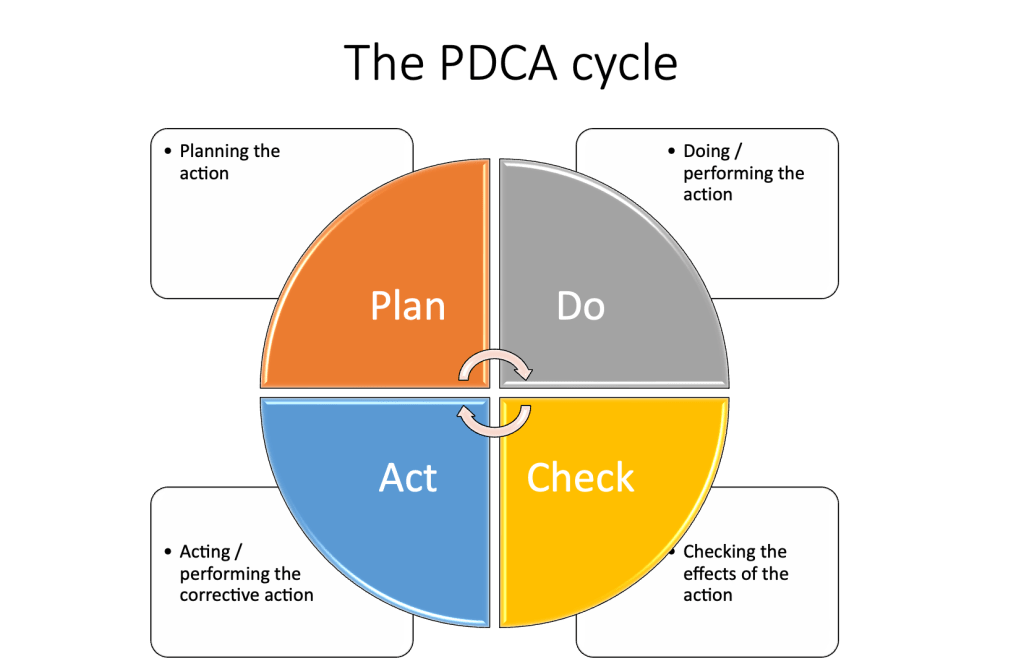
    The PDCA cycle for continuous improvement is a powerful management tool designed for continuous improvement in processes and operations within organizations. This cycle consists of four stages:

    1. Plan: In this stage, the problem or improvement opportunity is identified, the current situation is analyzed, data is collected, and an action plan is prepared. This is a critical stage where clear goals must be defined and the most suitable solutions chosen.

    2. Do: In this stage, the plan created in the planning stage is implemented. It is important to perform the actions in a controlled manner and document the entire process to allow for evaluation and follow-up later.

    3. Check: In this stage, the results of the implementation are evaluated. The actual performance is compared to the goals defined in the planning stage, and it is analyzed whether the achieved improvement meets the expectations. It is important to identify both successes and failures to learn from them and improve.

    4. Act: In this stage, decisions are made on the next steps based on the findings from the check stage. If the achieved improvement is sufficient, the changes can be embedded as part of the regular process. If not, corrections should be made, and the cycle should be repeated.

    For example, a customer service department can use the PDCA cycle to improve response times to customer inquiries. In the planning stage, they would identify the causes of delays, conduct an in-depth analysis, and prepare an improvement plan. In the doing stage, they would implement solutions such as assigning additional staff or changing the work process. In the checking stage, they would measure the new response times and check if the improvement meets the goals. In the acting stage, they would decide whether the changes made are sufficient or if further improvements are needed.

    In the upcoming posts, we will discuss additional lean management tools and how the PDCA cycle is applied to them.

  • Working plans

    Strategizing Success: The Art of Annual Work Plans

    Crafting annual work plans is a strategic art form. It’s the blueprint that aligns our company’s heartbeat with the pulse of the market. Here’s a breakdown of how marketing and operations become the twin engines propelling us towards our objectives.

    🎯 Marketing Mastery: Fueling Our Revenue Engine

    Marketing’s mission? To drive revenue while balancing the scales of investment and market impact. It’s a delicate dance between ambition and efficiency, with every campaign meticulously planned to ensure the highest ROI. Our strategy begins with an in-depth market analysis, setting clear, achievable objectives that are both ambitious and grounded in reality.

    The end goal is not just growth, but sustainable growth that aligns with our broader company vision.

    🔄 Operational Excellence: The Backbone of Efficiency

    Meanwhile, operations focus on the foundation—optimizing processes to ensure we’re not just fast, but also flawless. The mantra here is efficiency without sacrificing quality. This involves everything from leveraging lean methodologies to adopting cutting-edge tech that reduces waste and boosts productivity.

    The challenge? Ensuring these cost-saving measures never dilute the quality of our offerings or our brand reputation.

    🔗 A Unified Vision: Marketing and Operations in Harmony

    The true magic happens when marketing and operations seamlessly align. The operations plan is crafted to support and amplify the goals set by marketing, ensuring that we can meet increased demands and capitalize on new opportunities without missing a beat.

    This integrated approach ensures that every department isn’t just moving in the same direction, but also reinforcing each other’s efforts.

    The Bottom Line

    Our annual work plans are more than just documents; they’re our roadmap to achieving a delicate balance between growth and sustainability. By ensuring that marketing and operations sing from the same hymn sheet, we pave the way for not just meeting our goals, but exceeding them.

    We’re Curious…

    How do you ensure alignment and synergy between different departments in your organization? Drop your insights below. Let’s learn from each other and drive our companies to new heights!

  • The planning process (part 2)

    🚀 The Journey Continues: Unveiling S&OP and RCCP🚀

    In our last encounter, we explored the dance between demand and supply planning. Now, let’s uncover the vital connectors: S&OP (Sales and Operations Planning)and RCCP (Rough Cut Capacity Planning). Fasten your seatbelts as we dive into these essential processes that keep our operational world spinning.

    3️⃣ S&OP: Orchestrating Strategic Harmony in Two Acts

    Picture a two-act play where harmony between demand forecasts and supply capabilities is the plot. 

    Act 1: The stage is set with junior teams from both sides. They bring their notes together, seeking common ground. “We can’t meet the demand for product X, but we have surplus capacity for Y. Can we steer the demand that way?” It’s a tactical dialogue, filled with negotiations and compromises, aiming to script a solution that resonates with both.

    Act 2: Enter the senior managers, our executive producers, into the spotlight for the final S&OP meeting. Here, unresolved issues from Act 1 take center stage. With a bird’s eye view and strategic foresight, these leaders decide the direction of our operational narrative. Their decisions are pivotal, steering the company through the intricate balance of meeting market demands while optimizing resources.

    4️⃣ RCCP: Visioning Our Operational Odyssey

    Fast forward to 3-5 years from now, RCCP is our compass in the long-term expedition of operational planning. Without the luxury of accurate forecasts, we sketch the future with broad strokes, setting assumptions about market directions. What might we lack? Space, production lines, or material sources? This annual pilgrimage through our operational landscape dictates where we invest our efforts and resources to ensure our journey is not just sustained but pioneering.

    🔍 Insight: S&OP and RCCP are more than mere processes; they are the lighthouses guiding us through the tumultuous seas of market demands and operational capabilities. They underscore the essence of strategic foresight, adaptability, and collaborative decision-making in our quest for operational excellence.

    As we delve into the intricacies of these processes, we’re reminded of their critical role in weaving the fabric of our organizational success. Stay tuned for further exploration into the captivating world of operational planning.

    🔄 Found this insightful? Pass it on!🔄

    Engage with us: Have you navigated the challenges of S&OP and RCCP? Share your journey and solutions!

    #SOP #RCCP #OperationalExcellence #StrategicPlanning #SupplyChainManagement