Category: Organizational Culture

  • Post 3 out of 5: The Impact of Organizational Culture on Performance – Strong Culture = High Performance? How Does It Really Work?

    In previous posts, we discussed what organizational culture is and the hidden factors that shape it. Now, let’s dive a bit deeper – how can a strong and healthy organizational culture improve your organization’s actual performance?

    1. Employee Motivation and Engagement

    A positive organizational culture not only makes employees feel good at work, but it also increases their motivation. Why? When employees feel part of something bigger, when their work has real meaning – they give their maximum. A Gallup study shows that highly engaged employees tend to be more productive, and their engagement improves their sense of belonging and commitment to the organization. This means they’re also less likely to look for another job.

    2. Collaboration and Strengthening Community Feeling

    When there’s a culture that promotes collaboration, employees feel there’s room for real dialogue. In such organizations, there’s more openness to ask questions, share ideas, and receive feedback – leading to better performance. A good example is Spotify – one of the most successful companies in the digital music world. Their culture is based on “squads” – small teams composed of diverse individuals who support each other to achieve quick successes.

    3. Creativity and Innovation

    In an organization with a culture that values creativity and openness, employees feel comfortable raising innovative and unconventional ideas. This culture creates a space where new things can be tried, even if they don’t always succeed. Steve Jobs often said that Apple’s success stems from employees’ ability to feel free to initiate, think outside the box, and be creative.

    4. Ability to Cope with Changes and Challenges

    A strong organizational culture contributes to the organization’s ability to deal with challenges and changes. When there are clear values and good communication, it’s easier to mobilize teams to work together to handle unexpected situations. Especially in an era like ours, where changes happen faster than ever, such a culture can be the organization’s competitive advantage.

    5. Increasing Employee Loyalty

    A healthy organizational culture encourages loyalty and satisfaction. The more employees feel valued, understand the organization’s goals, and belong to a strong community – the more likely they are to stay with the company long-term. And it pays off: according to a LinkedIn study, companies with a strong organizational culture experience lower employee turnover, leading to significant savings in recruitment and training costs for new employees.

    Examples from the World

    An excellent example is HubSpot. This company emphasizes values like “being change makers” and “collaboration”. The result? Employees are more engaged, satisfied, and loyal, and the company enjoys excellent performance and amazing business results.

    In the next post, we’ll talk about the less positive side of organizational culture – when organizational culture can actually be harmful, and how to identify the early signs of this.

    Sources:

    1. Gallup’s State of the Global Workplace report – https://www.gallup.com/workplace/349484/state-of-the-global-workplace-2021-report.aspx

    2. HubSpot Culture Code – https://www.hubspot.com/culture

  • Post 2 of 5: The Impact of Organizational Culture on Performance – The Hidden Factors that Shape Organizational Culture

    In the previous post, we discussed what organizational culture is and why it’s so important. But wait, have you ever stopped to think about what really influences organizational culture? Sometimes there are hidden factors, ones that we might not consciously notice, that significantly shape the culture in an organization.

    What are the hidden factors in organizational culture?

    There are several factors that we sometimes forget about, but they are an integral part of how our organization operates:

    1. Management’s perceptions and beliefs

    The way senior managers view the organization directly affects the culture. If managers believe in promoting innovation and giving freedom to employees, it’s likely that employees will feel more comfortable coming up with new ideas and acting independently. On the other hand, if management focuses only on results and the bottom line – this will affect the pressure and cause employees to work in a more tense manner.

    2. Communication patterns

    How do people talk to each other in the organization? Is communication open and flowing or does it go through many “filters” and bureaucratic processes? Research from the Journal of Business Communication shows that open and directed communication allows employees to be more involved, and ultimately improves organizational performance.

    3. Daily behavior

    It can be easy to miss the impact of daily actions on organizational culture, but they are an integral part of it. From how we deal with failure to how we praise successes – all of these affect employees’ feelings and values. An interesting example is Amazon, which maintains a culture of constant striving for improvement, bringing employees to always think about how processes can be improved.

    4. Hidden assumptions

    Hidden assumptions are those ideas and perceptions that have become so deeply ingrained that they’ve become almost invisible. This can be anything from a perception of “how a good employee should behave” to certain ideas about “what success is”. Once these assumptions are understood, it’s possible to start implementing changes that affect the entire culture.

    Why does it matter?

    Understanding these hidden factors is critical. Since organizational culture is more than just nice words or slogans, these are the factors that actually shape it and influence how everything operates in the organization – and ultimately business performance as well.

    In the next post, we’ll delve deeper into how a positive organizational culture can improve performance, and how you can identify and influence these hidden factors in your organization.

    Sources:

    1. Journal of Business Communication – Articles on the impact of communication on employee engagement.

    2. Amazon Leadership Principles – Amazon’s organizational culture and values: Amazon’s Leadership Principles

  • Post 1 of 5: The Impact of Organizational Culture on Performance – What is Organizational Culture and Why is it So Important?

    So what’s the deal with organizational culture? It’s a topic that’s talked about a lot, but how does it really affect your organization? Organizational culture isn’t just nice phrases on office walls or on the company website. It’s about what happens day-to-day – how we communicate with each other, how decisions are made, and how we generally conduct ourselves.

    So what exactly is organizational culture?

    In simple terms, organizational culture is all the values, behaviors, and norms that guide our organization. It sets the tone of the organization, from how we welcome new employees to the way we handle challenges.

    Edgar Schein, one of the leading researchers in organizational culture, says that organizational culture consists of three layers:

    1. Visible level – This is the part we can see, like office design, dress code, and symbols.

    2. Hidden level – Social norms and behaviors that we don’t always see, but we all feel.

    3. Basic underlying assumptions – Our deepest perceptions, which are quite difficult to pinpoint, but dictate much of our conduct.

    Why is it so important?

    When we have a healthy and supportive organizational culture, employees feel they belong and are more connected to their work. They feel they have a place to come up with ideas and express themselves without fear. In fact, a Gallup study found that employees who feel connected to their organizational culture show higher engagement at work, and such engagement increases productivity by about 17%! So yes, it’s quite important.

    Examples from the field

    Many companies have succeeded thanks to a strong organizational culture. One of them is Netflix, known for its work culture that allows freedom and personal responsibility. Netflix manages to create an atmosphere that leads to excellent results because employees feel they have autonomy and influence.

    In the next post in the series, we’ll talk about the hidden factors that shape organizational culture – and how they affect organizational performance.

    Sources:

    1. Gallup’s State of the Global Workplace report – https://www.gallup.com/workplace/349484/state-of-the-global-workplace-2021-report.aspx

    2. Netflix Culture Deck – https://jobs.netflix.com/culture

  • Final post (6) in the series on motivation, where we find the common denominators among all theories.

    These are things that, if we do them, will undoubtedly increase the motivation of the employees we manage.

    After examining five central motivation theories, we can identify several shared principles that interconnect and complement each other. Understanding the common ground between these theories can help managers create effective management strategies that promote motivation, satisfaction, and a sense of meaning in employees’ work.

    Meaning and Self-Actualization

    All theories emphasize the importance of meaning and self-actualization at work:

    • Viktor Frankl: Searching for meaning as a central component of motivation.

    • Maslow: Self-actualization as the highest need in the hierarchy of needs.

    • Herzberg: Motivators such as achievements and recognition that lead to satisfaction.

    • Deci and Ryan: Autonomy, competence, and relatedness as promoters of intrinsic motivation.

    • Schein: Behaviors that create a supportive and meaningful organizational culture.

    Personal Development and Growth

    The need for personal development and learning recurs in all theories:

    • Maslow: The need for self-actualization includes growth and development.

    • Herzberg: Personal development as an important motivator.

    • Deci and Ryan: Sense of competence and opportunities for professional growth.

    • Schein: Creating an organizational culture that promotes continuous learning and development.

    Human Connections and Belonging

    A sense of belonging and meaningful human connections are central components:

    • Maslow: The need for belonging and love.

    • Deci and Ryan: Relatedness as a basic need for intrinsic motivation.

    • Schein: Creating an organizational culture that promotes connections and collaboration.

    Working Conditions

    Creating proper and healthy working conditions:

    • Maslow: Satisfying physiological needs and safety.

    • Herzberg: Hygiene factors such as working conditions and adequate pay.

    • Schein: Behaviors that promote a supportive and safe work culture.

    Implementing the Common Ground in Management

    To create a work environment that promotes motivation and satisfaction, managers should integrate the various insights:

    1. Meaning and self-actualization: Provide employees with interesting and challenging work and help them find meaning in their work.

    2. Personal development: Encourage continuous learning and professional development, and offer training and advancement opportunities.

    3. Human connections and belonging: Create a positive and supportive organizational culture, and encourage collaboration and open communication.

    4. Proper working conditions: Ensure safe and comfortable working conditions, provide adequate pay, and maintain good relationships between all levels of the organization.

    Summary

    Finding the common ground among leading theories of work motivation offers a broad and comprehensive management framework. By combining these insights, managers can create a work environment that promotes motivation, satisfaction, and a sense of meaning. Understanding the different theories and implementing them in a balanced way allows managers to lead teams more successfully and efficiently.

    If you have questions or would like to hear more about ways to improve management and lead your teams, contact us. We are here to help you find meaning in your work and lead your organization to success.

  • Post 5 in the series on motivation:

    Edgar Schein’s Organizational

    Culture – Behavior Creates Culture

    Edgar Schein, an American organizational psychologist, developed the three-layer model of organizational culture, describing how individuals’ behaviors in an organization influence the overall culture of the organization. Organizational culture is a combination of values, beliefs, norms, and behaviors that shape how people in an organization communicate, work, and make decisions. Understanding Schein’s model can help managers create a positive organizational culture that promotes motivation and satisfaction.

    Three Layers of Organizational Culture

    1. Artifacts: The visible and obvious things like office design, employee dress code, and organizational rituals. These are the external signs of organizational culture.

    2. Values: The principles and standards that guide behavior in the organization. These values represent what the organization sees as important and central.

    3. Basic Assumptions: The deep-seated beliefs and perceptions that are taken for granted within the organization and are not easily discernible. These are the deepest foundations of organizational culture.

    How Behavior Creates Culture

    Schein suggests that the visible behaviors of managers and employees directly influence the organization’s basic assumptions, and ultimately create the organizational culture. These behaviors include:

    • Transparency: Managers who share decisions and developments with employees convey trust and inspire trust. This creates a culture of openness.

    • Listening: Managers who dedicate time to listen to their employees’ needs and suggestions promote a culture of collaboration.

    • Mutual Respect: Managers who treat every employee with respect and equality contribute to a culture of mutual respect and appreciation.

    Creating a Positive Organizational Culture

    To create a positive organizational culture that promotes motivation and satisfaction, managers should focus on the following points:

    1. Personal Example: Managers need to set a personal example and act according to the values they want to see in the organization. Managers’ behavior will directly influence employee behavior.

    2. Effective Communication: Encourage open and transparent communication at all levels of the organization. When communication is open, employees feel more connected to the organization’s goals and their sense of belonging strengthens.

    3. Team Development: Create opportunities for professional and personal development of employees. Workshops, courses, and training can improve employees’ abilities and increase their sense of competence.

    4. Recognition and Appreciation: Regularly recognize employees’ contributions and achievements. Recognition and appreciation not only improve satisfaction but also increase motivation.

    5. Fostering Empathy and Respect: Ensure respectful and empathetic treatment towards every employee. Empathy and respect are foundations for a positive organizational culture that contributes to satisfaction and a sense of meaning.

    Summary

    Edgar Schein offers us a deep understanding of how behavior creates culture in an organization. By creating a positive organizational culture that promotes values such as transparency, listening, and mutual respect, managers can increase employee motivation and satisfaction. Understanding and implementing Schein’s insights can improve leadership and contribute to the organization’s success.

    If you have questions or would like to hear more about ways to improve management and lead your teams, contact us. We are here to help you find meaning in your work and lead your organization to success.

  • Post 4 in the series on motivation:

    Self-Determination Theory by Deci and Ryan – Autonomy, Competence, and Relatedness

    The Self-Determination Theory by Ryan and Deci suggests that intrinsic motivation is created when three basic needs are met: autonomy, competence, and relatedness. When these needs are satisfied, employees experience high intrinsic motivation and a sense of meaning in their work. Understanding and implementing this theory can help managers create a work environment where employees feel driven, connected, and meaningful.

    Autonomy

    Autonomy is the employee’s feeling of control over their work and ability to make independent decisions:

    • Freedom of action: Allow employees to choose how to perform their work and offer their own solutions.

    • Flexibility: Provide flexibility in work times and location, according to organizational possibilities.

    • Participation in decision-making: Encourage employees to participate in decision-making processes that affect their work.

    Competence

    Competence is the feeling that the employee is capable of performing their work successfully and contributing significantly:

    • Training and professional development: Provide employees with training, courses, and workshops to improve their abilities and skills.

    • Feedback and constructive criticism: Offer constant feedback and constructive criticism that helps employees improve their performance and feel skilled.

    • Setting appropriate challenges: Offer employees tasks and challenges that match their skill level and allow them to grow and develop.

    Relatedness

    Relatedness is the employee’s feeling of being part of a group and having meaningful social connections at work:

    • Supportive organizational culture: Create an organizational culture where every employee feels part of a supportive and committed community.

    • Social activities: Organize social activities and team-building days that allow employees to connect with each other.

    • Listening and support: Listen to employees’ needs and concerns and provide emotional and personal support.

    Implementing the Theory in Management

    To create a work environment that promotes high intrinsic motivation, managers should emphasize the three basic needs:

    1. Nurturing autonomy: Provide employees with freedom of action and opportunities for independent decision-making.

    2. Empowering competence: Provide training and constant feedback, and encourage employees to take on appropriate challenges.

    3. Strengthening relatedness: Create a supportive organizational culture and social activities that strengthen the sense of belonging.

    Summary

    Ryan and Deci’s Self-Determination Theory offers a well-founded approach to intrinsic motivation at work. By satisfying the basic needs of autonomy, competence, and relatedness, managers can create a work environment where employees experience high motivation, satisfaction, and a sense of meaning in their work.

    If you have questions or would like to hear more about ways to improve management and lead your teams, contact us. We are here to help you find meaning in your work and lead your organization to success.

  • Post 3 in the series on motivation 

    Herzberg’s Two-Factor Theory – Motivators and Hygiene Factors

    Frederick Herzberg, an American psychologist and educator, developed the Two-Factor Theory, which separates motivators from hygiene factors. The theory suggests that different factors influence job satisfaction and motivation at work. Understanding the difference between these factors can help managers improve the work environment and motivate employees more effectively.

    Hygiene Factors

    Hygiene factors are related to basic working conditions. When these factors are lacking, employees may be dissatisfied, but their presence doesn’t necessarily lead to high motivation:

    • Salary and financial conditions: Pay employees adequately and provide good financial terms.

    • Job security: Ensure a safe and protected work environment.

    • Relationships with supervisors: Create good working relationships between employees and managers, maintain open and empathetic communication.

    • Organizational policy: Ensure that organizational policies are clear and fair, and implement them transparently and efficiently.

    • Physical working conditions: Provide adequate working conditions and physical facilities that allow for comfortable and safe work.

    Motivators

    Motivators are related to achievements, recognition, and a sense of meaning at work. These are the factors that lead to high satisfaction and intrinsic motivation:

    • Recognition of achievements: Recognize employees’ contributions and achievements, provide positive feedback, and encourage professional pride.

    • Interesting work: Ensure that employees perform interesting, challenging work that provides a sense of meaning.

    • Responsibility: Give employees more responsibility and provide opportunities to lead projects and influence the organization.

    • Personal growth: Encourage employees’ professional development and provide opportunities for advancement and continuous learning.

    How to Apply the Theory in Management

    To create a work environment that promotes high motivation and satisfaction, managers should emphasize both hygiene factors and motivators in a balanced way:

    1. Identify and improve hygiene conditions: Check if there are hygiene factors that may cause dissatisfaction among employees and work to improve them. This includes reviewing working conditions, salary, safety, and interpersonal relationships.

    2. Increase motivators: Focus efforts on creating interesting and challenging work, provide constant recognition of achievements, encourage employees to take responsibility, and offer opportunities for professional development.

    Summary

    Frederick Herzberg’s Two-Factor Theory provides a framework for understanding motivation and job satisfaction. By balancing hygiene factors and motivators, managers can create a positive work environment that promotes high motivation and personal and professional satisfaction of employees. The theory emphasizes the importance of creating adequate working conditions alongside encouraging achievements and a sense of meaning at work.

    If you have questions or would like to hear more about ways to improve management and lead your teams, contact us. We are here to help you find meaning in your work and lead your organization to success.​​​​​​​​​​​​​​​​

  • Post 2: In the series on motivation:

    Maslow’s Hierarchy of Needs – From the Bottom to Self-Actualization

    Abraham Maslow developed the Hierarchy of Needs, detailing five stages of human needs: physiological, safety, belongingness and love, esteem, and self-actualization. The theory suggests that when more basic needs are met, people can aspire to higher needs like self-actualization and meaning. Understanding this model can help managers create a work environment that supports employee motivation and personal fulfillment.

    Physiological and Safety Needs

    The first stages of Maslow’s pyramid focus on the most basic needs of employees:

    • Physiological needs: Ensure that employees receive adequate pay and proper working conditions.

    • Safety: Ensure a safe and stable work environment, provide job security, and reduce uncertainty.

    Belongingness and Love

    After basic needs are met, employees seek belongingness and love:

    • Positive organizational culture: Create an environment where employees feel part of a community, encourage collaboration and a sense of belonging.

    • Open communication: Encourage open and fair communication between all levels of the organization.

    Esteem

    The next stage focuses on the need for esteem:

    • Recognition of achievements: Recognize employees’ contributions and achievements and provide positive feedback.

    • Opportunities for professional development: Provide opportunities for professional development and career advancement.

    Self-Actualization

    At the top of the pyramid is the need for self-actualization:

    • Providing meaningful challenges: Encourage employees to take on new projects and challenges that provide a sense of fulfillment.

    • Creative freedom and autonomy: Provide employees with the freedom to act creatively and autonomously.

    Summary

    Maslow’s theory of needs offers a useful framework for understanding human needs and motivation at work. By understanding the different needs of employees and meeting them in a gradual manner, managers can create a work environment that promotes motivation, satisfaction, and self-actualization. In an era where employees seek not only salary but also a sense of meaning and fulfillment in their work, Maslow’s model provides important tools for improving management and leading teams to success.

    If you have questions or would like to hear more about ways to improve management and lead your teams, contact us. We are here to help you find meaning in your work and lead your organization to success.​​​​​​​​​​​​​​​​

  • First post in the series on motivation

    In the next five posts, we will review 5 different theories of motivation. In the last post, the sixth, we will be practical and find the common denominators among all the theories – things that, if implemented correctly, will greatly increase the motivation of the people we manage.

    “Man’s Search for Meaning” by Viktor Frankl – Motivation in Meaning

    Viktor Frankl, a Jewish-Austrian psychiatrist and neurologist, wrote the famous book “Man’s Search for Meaning” after surviving Nazi concentration camps. The book presents Frankl’s theory, logotherapy, which focuses on the search for meaning in life as a means to overcome difficulties and challenges. Although the book mainly focuses on extreme situations of personal suffering, its insights are very relevant to the world of management and business.

    Meaning as a Driver for Success.

    One of Frankl’s central insights is that the search for meaning is a basic human need. In the modern era, where people seek not only income but also a sense of meaning in their work, managers must understand and address this need to lead successful and happy teams. Employees who feel their work is meaningful are more committed, more creative, and more highly motivated.

    How can we provide meaning at work?

    1. Clear and inspiring vision: A clear and long-term vision allows employees to understand the general direction of the organization and feel part of something bigger. Such a vision can motivate employees and give them a sense of purpose.

    2. Meaningful roles: Ensure that each employee understands their personal contribution to the organization’s success. Explaining the importance of each role, providing positive feedback, and recognizing achievements can improve employees’ sense of meaning.

    3. Encouraging personal growth: Encourage employees to learn and develop. Courses, workshops, and professional training not only improve employees’ skills but also give them a sense of personal development and growth.

    4. Supportive environment: Create an environment where employees feel supported and valued. Empathetic behavior and understanding the personal needs of employees can create a deeper sense of connection to the organization and meaning in work.

    Dealing with Challenges

    Frankl talks about the ability to find meaning even in difficult times. In the business world, managers need to know how to lead their teams through periods of uncertainty, failures, and challenges. Meaningful leadership allows employees to see every challenge as an opportunity for growth and learning. This includes:

    • Open and transparent communication: Share with employees the challenges and difficulties the organization faces, and show how dealing with these challenges contributes to growth and learning.

    • Personal support: Provide personal support to employees during difficult periods, and encourage them to stay focused on their long-term meaning and goals.

    • Learning from challenges: See every failure as an opportunity for learning and growth, and encourage employees to do the same.

    Empathy and Compassion

    Frankl emphasizes the importance of empathy and compassion in difficult times. Managers who show empathy towards their employees build deeper trust and connection. Empathy and compassion are not only moral values but effective tools for managing teams more successfully. For example:

    • Active listening: Be attentive to employees’ needs and concerns and respond empathetically.

    • Emotional support: Provide emotional support in difficult times and help employees cope with personal and professional difficulties.

    In conclusion

    Viktor Frankl’s “Man’s Search for Meaning” provides us with deep insights that are also relevant to the world of management. In an era where meaning is the key to success, we as managers must incorporate these insights into our daily work. By providing opportunities for employees to find meaning in their work, we not only improve performance but also contribute to their personal and professional well-being.

    If you have questions or would like to hear more about ways to improve management and lead your teams, contact us. We are here to help you find meaning in your work and lead your organization to success.​​​​​​​​​​​​​​​​

  • Post number 6 on the topic of continuous improvement and lean management: Lean Management – Additional Tools for Continuous Improvement

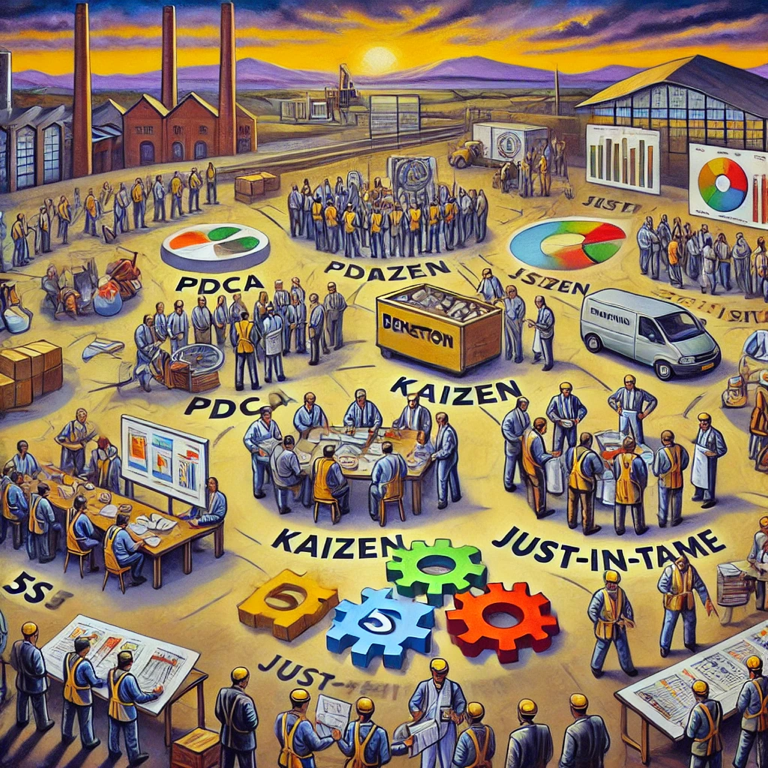
    Lean management includes a variety of tools and methods designed to improve efficiency, quality, and value in organizations. Tools such as Kaizen, 5S, Just-In-Time, Kanban, Value Stream Mapping, and A3 all integrate with the PDCA cycle and create a system of continuous improvement.

    For example, Kaizen allows employees at all levels to participate in the continuous improvement process by identifying problems and implementing small but significant solutions. 5S helps maintain an organized and clean work environment, contributing to efficiency and safety. Just-In-Time ensures precise production and delivery on time, reducing inventory and waste. By implementing Kanban, organizations can improve workflow and ensure that each station receives the necessary materials on time. Value Stream Mapping identifies waste in the process and allows for continuous improvement. The A3 tool enables organizations to address problems in a structured and focused manner.

    By using these tools, organizations can improve the efficiency, quality, and value they provide to their customers. Lean management is based on the principles of continuous improvement, identifying and removing waste, and collaboration between all parts of the organization. When these tools are integrated with the PDCA cycle, an integrated and effective system for continuous improvement is created in all areas of organizational activity.

    For instance, a clothing manufacturing company can use Kaizen to improve cutting and sewing processes by identifying problems in the process and implementing small but significant solutions. Simultaneously, they can use 5S to organize and clean work stations, contributing to efficiency and safety. Through Just-In-Time, they can ensure that the required materials arrive at exactly the right time, reducing inventory and waste. By implementing Kanban, they can improve workflow and ensure that each station receives the necessary materials on time. Through Value Stream Mapping, they can identify waste in the process and improve the flow and added value for their customers.

    Lean management and the PDCA cycle are powerful tools that allow organizations to continuously improve their processes and achieve optimal results. With the right combination of these tools, it’s possible to create a culture of continuous improvement and reach new levels of efficiency and quality.

    #ContinuousImprovement #LeanManagement #PDCA #Kaizen #5S #JustInTime #Kanban #ValueStreamMapping #A3 #Efficiency #Quality #ProcessImprovement