Category: Self Improvement

  • The Courage to Change

    (The fourth kind: quiet, elusive, and the most revolutionary)

    It didn’t happen in a dramatic moment.

    There was no background music, no soul-stirring “leadership monologue.”

    I was just sitting in a room. The kettle was still whispering.

    The smell of the day’s first coffee was gently negotiating with half-open eyes.

    Then someone joined the conversation.

    And three minutes in, I could already feel the energy in the room shifting back and forth.

    Every second sentence began with:

    “I’m disappointed that…”

    “They should have…”

    “She was supposed to…”

    It wasn’t angry.

    More like a scented cloud , the kind that fills the air before you even notice it,

    and creates a sense of heaviness before you know where it came from.

    So I asked her a simple, almost innocent question:

    “Forget them for a moment.

    What can you do differently?”

    And boom.

    Silence.

    The kind of silence that feels like someone pressed Pause on the whole world.

    The AC stopped humming. The chair stopped creaking.

    Even the coffee in the room seemed to be waiting for an answer.

    And in that silence…

    this sentence rose very clearly:

    Before we change a habit, we need the courage to change.

    Because real change doesn’t feel like “I started something new.”

    It feels like “I’m choosing differently.”

    A habit?

    That’s just the after-effect.

    Choice = change.

    Consistency in choice = habit.

    For example:

    Stopping the habit of blaming others?

    That’s change.

    Starting to ask “What’s actually mine to do?”  without playing the victim in a soap opera?

    That’s a habit.

    Stopping saying “I don’t have time” and starting to say “It’s not a priority”?

    That’s change.

    Continuing to stand behind that choice even when everyone pulls you in different directions?

    That’s a habit.

    That’s the fourth kind of courage:

    The courage to change.

    No fireworks.

    No motivational speech.

    No LinkedIn “career update.”

    Just one moment

    where you decide you no longer want to stay the version of yourself you were yesterday.

    And when that happens?

    The other three kinds of courage

    (speaking up, trusting, experimenting)

    open like automatic doors in a mall.

    They just start moving.

    Because when your inner version shifts,

    the outer world begins to move differently.

    That’s it.

    Four kinds of courage, complete.

    No drama.

    No special effects.

    Just a small, honest, everyday truth.

    And you know what’s beautiful?

    It always starts with one choice.

    Small.

    Accessible.

    Possible.

    So…

    What one quiet choice

    are you willing to make today?

  • The Courage to Trust

    (Or: Why You’re Still Doing 327 Tasks Yourself)

    Following last week’s post 

    the one about the courage to speak up 

    today we move to one of the quietest challenges in leadership:

    The courage to trust.

    Yes. Quiet.

    Because unlike “the courage to speak,” which you feel in your body,

    the courage to trust happens in your head 

    before a single word is spoken.

    And that’s exactly what makes it so deceptive.

    Let’s step into a real moment.

    Middle of the day.

    Your screen is full of spreadsheets.

    Your phone is buzzing like an unbalanced washing machine.

    The room smells like yesterday’s workday never got a chance to breathe.

    One of your team members stops at your door:

    “Want me to take this?”

    And you answer, almost automatically:

    “It’s okay,  I’ll just do it myself. It’s faster.”

    The moment the words leave your mouth,

    there’s a brief, quiet second

    where you can almost hear the truth hit the wall.

    Faster? Maybe.

    Better? Almost never.

    So why don’t we trust?

    Not because they’re not capable.

    And not because you’re a perfectionist (even if that’s a comforting story to tell yourself).

    But because of habit.

    The habit that feels good in your hands,

    like holding a cup of coffee even after it’s gone cold.

    The small fear that they won’t do it exactly like you would.

    The slight tightening in your back when you imagine a possible mistake.

    The mind that starts working overtime, running scenarios of “and then I’ll have to fix it.”

    So one task… and another… and another…

    stay with you.

    But here’s the truth no one says out loud:

    The trust you give your team

    is first and foremost trust you give yourself.

    Not in their ability 

    in your ability to let go without falling apart.

    To guide without suffocating.

    To support without carrying the whole world on your shoulders.

    Authority is common.

    Responsibility is everywhere.

    But letting go?

    That’s where the courage hides.

    So what happens to a leader who doesn’t trust?

    Three things, almost always:

    1. They become a super-doer.

    Working instead of leading.

    Surviving instead of shaping.

    2. Their team learns:

    “If I try, they’ll just take it back, so why bother?”

    3. And that feeling…

    like a weight on your chest.

    A constant load.

    The smell of a workday that never gets enough oxygen.

    And what happens when trust begins?

    Suddenly there’s movement.

    Suddenly there’s initiative.

    People start moving forward, not because you told them to,

    but because they want to.

    They discover they can.

    You discover you were never meant to do everything alone.

    And leadership?

    It starts to feel like leadership 

    not like swimming upstream all day.

    Before you scroll on,

    Pause for ten seconds.

    Breathe.

    And ask yourself:

    Which task are you holding onto

    only because you didn’t have the courage to let go?

    And what thought jumps into your mind

    the moment you imagine giving it to someone else?

    That’s where courage begins.

    That’s where growth begins.

    Next week, we’ll move into the third kind:

    the courage to experiment.

    And that’s a whole different world 

    the world where leaders stop only preserving,

    and start creating.

  • The courage to speak up… smells very different when you do it right

    Following last week’s post

    the one about how the opposite of courage isn’t fear, but avoidance

    today we’re diving into the first kind of courage.

    There are moments in management

    when the room feels filled with the distinct scent of

    “I want to say something… but maybe this isn’t the right time.”

    It’s a familiar smell.

    A subtle mix of lukewarm coffee,

    an air conditioner working a little too hard,

    and papers shuffling not because anyone needs them,

    but just to fill the silence.

    And then the classic lines appear:

    “Well… only if that’s okay…”

    “I don’t want to interrupt, but…”

    “I just have a small point… really small…”

    (And if you’re anything like me,

    you recognize those sentences in yourself too.

    Yes, I’m looking at you. And at me.)

    And here comes the truth,

    the kind that sometimes stings

    like a metal chair in a conference room:

    The courage to speak up isn’t about raising your volume.

    It’s about raising your intent.

    You don’t need to shout.

    You don’t need to demand.

    You don’t need to give a speech.

    Sometimes courage sounds like a short sentence,

    said calmly,

    at the exact moment everyone was hoping

    someone would be willing to say

    what everyone else was already feeling.

    And sometimes courage sounds like this instead:

    “Let’s talk about this one-on-one.”

    Because here’s the truth:

    the courage to speak up isn’t about

    who spoke the loudest,

    but about who chose the right arena.

    When you say the right thing,

    in the right way,

    to the right person,

    in the right room

    your message passes through layers of defense

    as if they were a thin curtain,

    not a fortified wall.

    And then something beautiful happens:

    Your team doesn’t just hear you.

    They feel you.

    In their chest. In their gut.

    In the place where real change is born.

    And this

    this is the first kind of courage

    that separates

    a manager who gets work done

    from a leader who actually moves people.

    Before you scroll on, pause for a moment and ask yourself:

    If today you removed just one

    “only if that’s okay…”

    and replaced it with one clear sentence of truth

    what would you talk about?

    (Don’t answer me.

    Answer yourself.

    That’s where the courage muscle starts to grow.)

    Next post, we’ll move on to the second kind of courage:

    the courage to trust.

    The one that decides whether you keep holding

    357 tasks by yourself,

    or finally start building a team

    that actually walks with you.

    (Hint: it takes more courage than it looks.)

  • 💔 Turns out the opposite of courage… isn’t fear at all

    (Yes, and I learned this from a woman with a tattoo.)

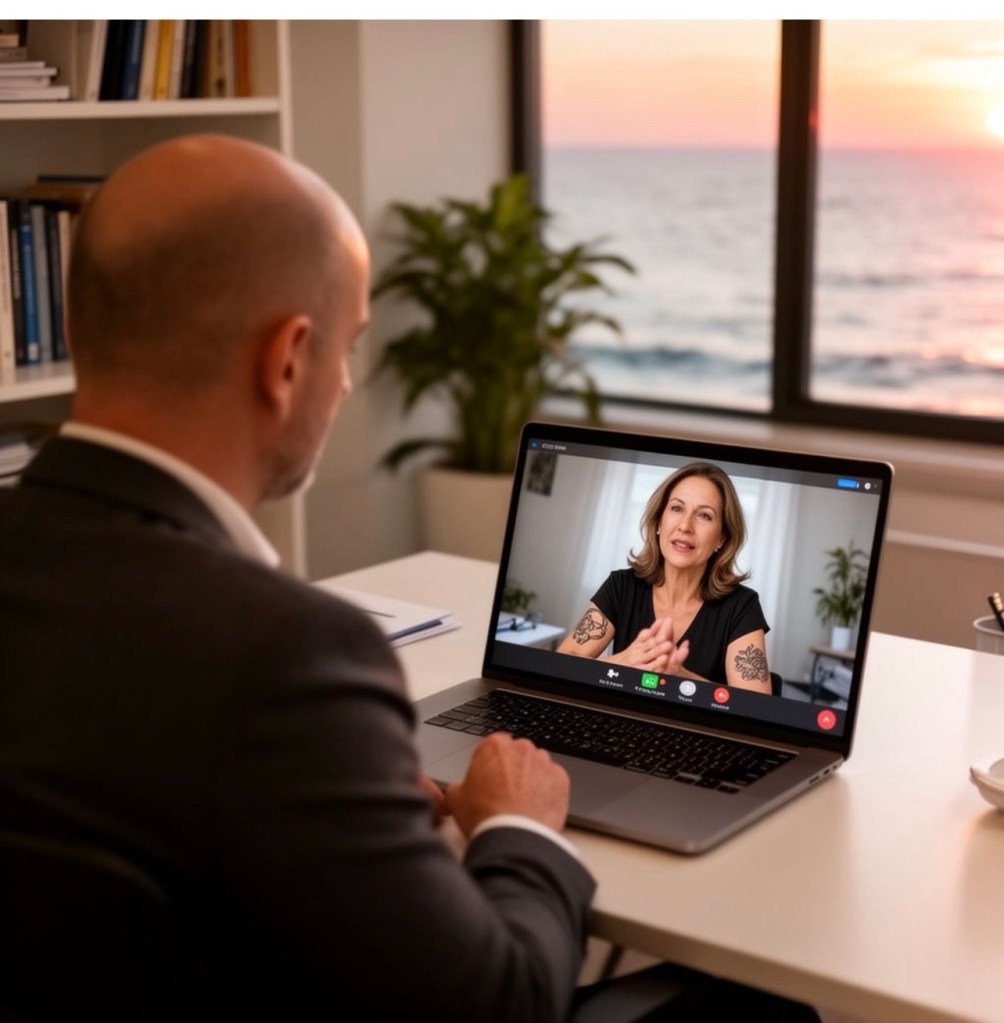
    The Zoom call started like any other one.

    Camera on.

    Hot coffee in hand.

    And then she appeared on screen.

    A senior education leader.

    Responsible for the professional development of over 6,000 teachers.

    And from the very first moment, it was clear:

    this was someone you couldn’t ignore.

    Sharp presence. Big smile.

    A tattoo on her arm (and that’s where I paused, I didn’t ask what it said).

    And a feeling in the room like

    someone had just opened a window after a very long day.

    She didn’t raise her voice.

    But she was the kind of person who walks into a room

    and the noise instinctively pulls up a chair.

    We talked about leadership. About change.

    About what actually holds people together from the inside.

    And then she said something simple:

    “The opposite of courage?

    It’s not fear.

    It’s avoidance.”

    One of those sentences that makes you stop mid-sip.

    Fear is loud.

    You can feel it. You can name it.

    Avoidance is quiet.

    It slips under the radar.

    It doesn’t shout, it whispers.

    And it shows up in a manager’s life

    long before they realize what’s happening…

    stealing years of growth and effectiveness along the way.

    Then she added one more thing:

    “There are three kinds of courage.”

    And that’s where the connection became mine.

    Managerial.

    Deep.

    She only named them.

    My mind filled in the rest:

    🩵 The courage to speak up

    Truth. Authenticity. Navigating organizational politics

    without paying unnecessary prices.

    🩵 The courage to trust

    Letting go. Delegating.

    Stopping yourself from holding 357 tasks with two hands.

    🩵 The courage to experiment

    Innovation. Mistakes. Learning. Change.

    Actually moving reality—not just moving the cursor.

    And suddenly it all snapped into focus:

    “Managerial stuckness” isn’t personality.

    It’s not workload.

    It’s not character.

    It’s usually one form of courage

    that’s been left unattended for too long.

    So before you scroll on

    Do a quick internal audit:

    Which kind of courage

    are you most actively avoiding?

    Because right there

    exactly there

    your next big leadership shift begins.

    📌 Next week, I’ll open up the first one: the courage to speak up.

    And I promise it will change how you see your team, your boss,

    and yourself.

    📌 And by the way… there’s one more kind of courage.

    Just as deep.

    The courage to change.

    That one deserves a post of its own.

    (Hint: it’s the habits managers pay the highest price for.)

  • How to tell your trigger has kicked in, before it starts running you

    I’m going to say something that might be uncomfortable to hear.

    But if you stay with me until the end, you’ll understand why this is pure managerial gold.

    Most people think a trigger means anger, hurt feelings, being offended.

    But honestly?

    Your trigger shows up long before you notice it.

    It starts in your body language, your tone, your eyes, your breathing—

    before your thought even fully forms.

    And then this thing happens:

    It’s not what you’re expressing.

    It’s what you’re trying to hide.

    And that’s the part the room picks up first.

    That’s why you say, “I’m calm,”

    and the team hears, “I’m about to blow.”

    That’s why you smile politely,

    and the feeling in the room is, “Something’s boiling underneath.”

    And that’s why you’re trying to be professional, measured, statesmanlike

    while your pulse is screaming,

    “Don’t tell me how to do my job.”

    I remember a conversation with a senior executive who told me:

    “I’m calm. Everything’s fine. I’m just stating a fact…”

    And her tone said everything except “calm.”

    It was like watching a whistling kettle say:

    “I’m not boiling it’s just steam. Relax.”

    So how do you catch a trigger in real time?

    1) Pay attention to your body—it reacts before you do

    Shoulders tighten.

    Breathing gets shallow.

    Eyes narrow by a millimeter.

    Hands move just a little too fast.

    The body doesn’t know how to lie.

    2) Notice the “acceleration moment”

    Right before you speak,

    there’s that split second when your mind starts racing ahead.

    That’s the second to catch.

    It’s the difference between a manager who reacts

    and a leader who leads.

    3) Listen to the voice in your head

    “How dare he?”

    “I won’t rest until…”

    “Not this again…”

    These aren’t thoughts.

    They’re sirens.

    Why does this matter so much?

    Because managers don’t fail because of mistakes.

    They fail because of automatic reactions.

    The trigger itself doesn’t wreck you.

    The unnoticed trigger does.

    And the moment you learn to catch that second before

    you’re not just seen as calmer, clearer, more confident, more influential.

    You become the person

    the room trusts.

    Without you having to say a word.

  • Got a “good” question? Ask it.

    Even if you’re the manager.

    Especially if you’re the manager.

    You know that moment in a meeting when someone drops a term…

    And your whole body signals:

    “Of course. Of course I know what CAC is. I’m the manager, after all.”

    But your mind goes:

    “If someone shouts at me right now ‘What’s CAC?’ – I’ll just head out for a coffee break and never come back.”

    So you smile, jot something down in your notebook (even though you have no idea what you wrote),

    And later that evening, you ask Google.

    Or your kid.

    Or ChatGPT.

    And that’s exactly the moment you missed the chance to be a more human manager.

    Because the gap wasn’t in knowledge it was in the courage to ask.

    A simple question like:

    “Could you explain that for a second?”

    Can change the entire dynamic of a meeting.

    It shows you’re not projecting authority based on bravado – but trust.

    And it gives others permission to ask too.

    And in an age where even a dishwasher can define “digital marketing,”

    What sets you apart isn’t what you know.

    It’s your willingness to keep learning.

    And by the way? I have no idea what CAC is either.

    But I’m going to ask the chat.

    What’s worth remembering?

    The one who asks doesn’t look less smart.

    They just look like a sane manager.

  • A management tip (that I learned the hard way):

    If you start feedback with a “but” – you’ve already lost the conversation.

    I used to jump straight into feedback.

    Direct. Sharp.

    “Not accurate enough,”

    “I expected more,”

    “There’s a gap that needs to be closed.”

    From my side, it was just being straightforward.

    From their side?

    It felt like the end of the world.

    Then it hit me:

    Wait a second.

    I hate it when people start with that tone too.

    No one likes feeling like they have to defend themselves before they’ve even had their coffee.

    So I started differently.

    Something small.

    A sentence like:

    “I want to start with what worked well.”

    And that changed the whole tone.

    Not because I gave up on the feedback –

    But because I started with an open heart, not a pointing finger.

    It sounds simple,

    But it completely shifts the energy of the conversation.

    What’s worth remembering?

    The sharpest feedback is the kind that doesn’t feel like a knife.

    A good start leads to an ending someone can actually take with them.

    Good feedback is the kind the other person can truly absorb.

  • A visit to the production lines

    Once, during a routine visit to one of the production lines, I saw that the workers were struggling with a simple measurement.

    I stood on the side, noticed the confusion – and then stepped in.

    I showed them exactly how to measure.

    We solved it in two minutes.

    At the end of the day, I asked the consultant who was accompanying me:

    “So, how was I?”

    He looked at me and said:

    “Terrible.”

    I was shocked.

    “What do you mean? I solved the problem!”

    Then he said a sentence that changed everything I thought I knew about management:

    “You’re not supposed to solve problems.

    You’re supposed to teach others how to solve them.”

    And from that day on – I stopped being the hero who saves everyone.

    And started being the one who asks:

    “What do you think?” “How would you handle this?” “What did you learn from it?”

    At first, it took restraint.

    But later – it freed me.

    And it lifted them.

    A good manager isn’t measured by how much they know –

    But by how much they help others believe that they do.

  • What’s My Real Contribution, Anyway?

    When I was a young engineer, I managed projects.

    I saw things happen.

    Concrete moved, structures rose, plans became reality.

    Every progress?

    I knew exactly where I made it happen.

    Then I got promoted.

    I started managing people.

    And suddenly…

    Everyone was doing the work.

    And me?

    I was just… talking about it.

    Reviewing. Coordinating. Calming. Pushing. Holding things together.

    And in the middle of all that –

    one small, stubborn question kept whispering:

    “What am I actually contributing?”

    “Is anything happening because of me?”

    Because let’s be honest –

    Managers don’t really do anything, right?

    We just… make things happen.

    And that hurt.

    For a while.

    I carried that question inside, quietly.

    Outside, I looked like a leader.

    Inside, I felt… replaceable.

    But over time, something shifted.

    Not because reality changed – but because my perspective did.

    I began to notice:

    The goals I had set – were the ones moving forward.

    The tone I brought – echoed through the team.

    The effort I invested – enabled everyone else’s effort.

    I didn’t do the work.

    But it happened – because of me.

    Management isn’t about ticking off tasks.

    It’s about setting direction, holding the space, and moving things forward.

    If you’ve ever asked yourself “What am I even worth here?” –

    just know: it means you’re a manager who feels.

    And not just performs.

  • About a decade ago – life pressed “Pause” on me.

    And not a small click.

    A long pause.

    I got sick.

    Badly.

    It was clear I’d need surgery.

    Complex. Long.

    Thirteen hours.

    When I woke up —

    I was hooked up to tubes.

    Machines.

    Getting treatments.

    I didn’t wake up like a fairy tale prince…

    More like a rough version of RoboCop on a bad day.

    But in the middle of all that?

    I felt in control.

    From the first moment I was awake —

    I felt I was in charge.

    Even though I wasn’t.

    Even though I had no strength.

    But something in me radiated presence.

    The atmosphere around me felt respectful.

    I felt authoritative — without effort.

    And then, on the fifth day,

    the head nurse came to me with an unusual request:

    “There’s a patient here.

    He’s afraid to go through the same surgery you had.

    Would you talk to him?

    Explain?”

    Imagine the scene:

    I can barely move.

    Tubes coming out of me in every direction…

    And she wants me

    to give someone else strength.

    So I talked to him.

    Explained.

    He went into surgery.

    And he made it.

    But the truth?

    I wasn’t always like that.

    That sense of authority —

    so natural in that hospital room —

    didn’t come out of nowhere.

    It’s not some inborn trait.

    It’s not a “gift” you’re born with.

    It came from years of managing.

    Mistakes.

    Listening.

    Growth.

    Moments where I learned

    not just to manage —

    but to be present.

    So if you’re thinking:

    “I’m not the authoritative type. That’s just not me…”

    Pause for a second.

    Authority isn’t about muscles.

    Or rank.

    It’s about the quiet you bring with you.

    And yes —

    it can be learned.

    Even when you’re hooked up

    to every monitor in the ward.