We believe it is important to write about the topic of continuous improvement and lean management. We have created a series of posts on this subject that connect and link the PDCA cycle to all lean management tools.
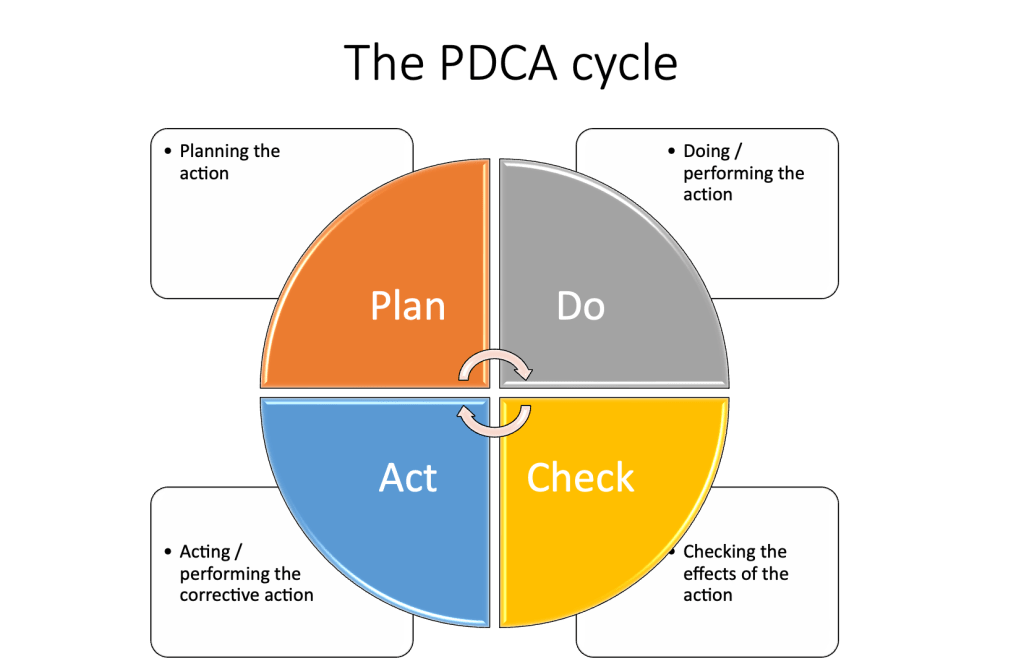
The PDCA cycle for continuous improvement is a powerful management tool designed for continuous improvement in processes and operations within organizations. This cycle consists of four stages:
1. Plan: In this stage, the problem or improvement opportunity is identified, the current situation is analyzed, data is collected, and an action plan is prepared. This is a critical stage where clear goals must be defined and the most suitable solutions chosen.
2. Do: In this stage, the plan created in the planning stage is implemented. It is important to perform the actions in a controlled manner and document the entire process to allow for evaluation and follow-up later.
3. Check: In this stage, the results of the implementation are evaluated. The actual performance is compared to the goals defined in the planning stage, and it is analyzed whether the achieved improvement meets the expectations. It is important to identify both successes and failures to learn from them and improve.
4. Act: In this stage, decisions are made on the next steps based on the findings from the check stage. If the achieved improvement is sufficient, the changes can be embedded as part of the regular process. If not, corrections should be made, and the cycle should be repeated.
For example, a customer service department can use the PDCA cycle to improve response times to customer inquiries. In the planning stage, they would identify the causes of delays, conduct an in-depth analysis, and prepare an improvement plan. In the doing stage, they would implement solutions such as assigning additional staff or changing the work process. In the checking stage, they would measure the new response times and check if the improvement meets the goals. In the acting stage, they would decide whether the changes made are sufficient or if further improvements are needed.
In the upcoming posts, we will discuss additional lean management tools and how the PDCA cycle is applied to them.



 Heart of Management