Tag: mindset

  • First post in the series on motivation

    In the next five posts, we will review 5 different theories of motivation. In the last post, the sixth, we will be practical and find the common denominators among all the theories – things that, if implemented correctly, will greatly increase the motivation of the people we manage.

    “Man’s Search for Meaning” by Viktor Frankl – Motivation in Meaning

    Viktor Frankl, a Jewish-Austrian psychiatrist and neurologist, wrote the famous book “Man’s Search for Meaning” after surviving Nazi concentration camps. The book presents Frankl’s theory, logotherapy, which focuses on the search for meaning in life as a means to overcome difficulties and challenges. Although the book mainly focuses on extreme situations of personal suffering, its insights are very relevant to the world of management and business.

    Meaning as a Driver for Success.

    One of Frankl’s central insights is that the search for meaning is a basic human need. In the modern era, where people seek not only income but also a sense of meaning in their work, managers must understand and address this need to lead successful and happy teams. Employees who feel their work is meaningful are more committed, more creative, and more highly motivated.

    How can we provide meaning at work?

    1. Clear and inspiring vision: A clear and long-term vision allows employees to understand the general direction of the organization and feel part of something bigger. Such a vision can motivate employees and give them a sense of purpose.

    2. Meaningful roles: Ensure that each employee understands their personal contribution to the organization’s success. Explaining the importance of each role, providing positive feedback, and recognizing achievements can improve employees’ sense of meaning.

    3. Encouraging personal growth: Encourage employees to learn and develop. Courses, workshops, and professional training not only improve employees’ skills but also give them a sense of personal development and growth.

    4. Supportive environment: Create an environment where employees feel supported and valued. Empathetic behavior and understanding the personal needs of employees can create a deeper sense of connection to the organization and meaning in work.

    Dealing with Challenges

    Frankl talks about the ability to find meaning even in difficult times. In the business world, managers need to know how to lead their teams through periods of uncertainty, failures, and challenges. Meaningful leadership allows employees to see every challenge as an opportunity for growth and learning. This includes:

    • Open and transparent communication: Share with employees the challenges and difficulties the organization faces, and show how dealing with these challenges contributes to growth and learning.

    • Personal support: Provide personal support to employees during difficult periods, and encourage them to stay focused on their long-term meaning and goals.

    • Learning from challenges: See every failure as an opportunity for learning and growth, and encourage employees to do the same.

    Empathy and Compassion

    Frankl emphasizes the importance of empathy and compassion in difficult times. Managers who show empathy towards their employees build deeper trust and connection. Empathy and compassion are not only moral values but effective tools for managing teams more successfully. For example:

    • Active listening: Be attentive to employees’ needs and concerns and respond empathetically.

    • Emotional support: Provide emotional support in difficult times and help employees cope with personal and professional difficulties.

    In conclusion

    Viktor Frankl’s “Man’s Search for Meaning” provides us with deep insights that are also relevant to the world of management. In an era where meaning is the key to success, we as managers must incorporate these insights into our daily work. By providing opportunities for employees to find meaning in their work, we not only improve performance but also contribute to their personal and professional well-being.

    If you have questions or would like to hear more about ways to improve management and lead your teams, contact us. We are here to help you find meaning in your work and lead your organization to success.​​​​​​​​​​​​​​​​

  • Post number 6 on the topic of continuous improvement and lean management: Lean Management – Additional Tools for Continuous Improvement

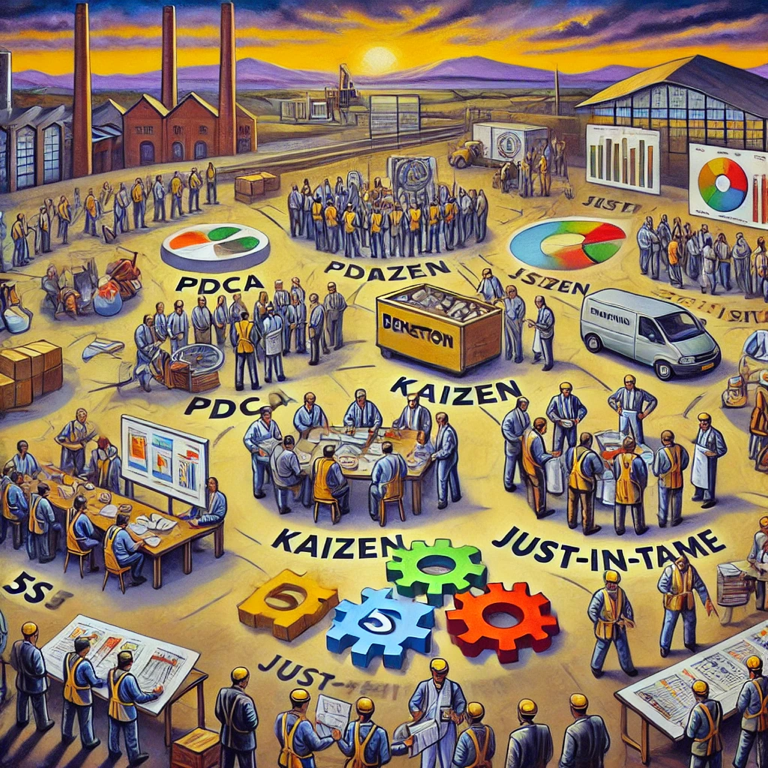
    Lean management includes a variety of tools and methods designed to improve efficiency, quality, and value in organizations. Tools such as Kaizen, 5S, Just-In-Time, Kanban, Value Stream Mapping, and A3 all integrate with the PDCA cycle and create a system of continuous improvement.

    For example, Kaizen allows employees at all levels to participate in the continuous improvement process by identifying problems and implementing small but significant solutions. 5S helps maintain an organized and clean work environment, contributing to efficiency and safety. Just-In-Time ensures precise production and delivery on time, reducing inventory and waste. By implementing Kanban, organizations can improve workflow and ensure that each station receives the necessary materials on time. Value Stream Mapping identifies waste in the process and allows for continuous improvement. The A3 tool enables organizations to address problems in a structured and focused manner.

    By using these tools, organizations can improve the efficiency, quality, and value they provide to their customers. Lean management is based on the principles of continuous improvement, identifying and removing waste, and collaboration between all parts of the organization. When these tools are integrated with the PDCA cycle, an integrated and effective system for continuous improvement is created in all areas of organizational activity.

    For instance, a clothing manufacturing company can use Kaizen to improve cutting and sewing processes by identifying problems in the process and implementing small but significant solutions. Simultaneously, they can use 5S to organize and clean work stations, contributing to efficiency and safety. Through Just-In-Time, they can ensure that the required materials arrive at exactly the right time, reducing inventory and waste. By implementing Kanban, they can improve workflow and ensure that each station receives the necessary materials on time. Through Value Stream Mapping, they can identify waste in the process and improve the flow and added value for their customers.

    Lean management and the PDCA cycle are powerful tools that allow organizations to continuously improve their processes and achieve optimal results. With the right combination of these tools, it’s possible to create a culture of continuous improvement and reach new levels of efficiency and quality.

    #ContinuousImprovement #LeanManagement #PDCA #Kaizen #5S #JustInTime #Kanban #ValueStreamMapping #A3 #Efficiency #Quality #ProcessImprovement

  • Post number 5 on the topic of continuous improvement and lean management: A3 – Structured and Focused Problem Solving

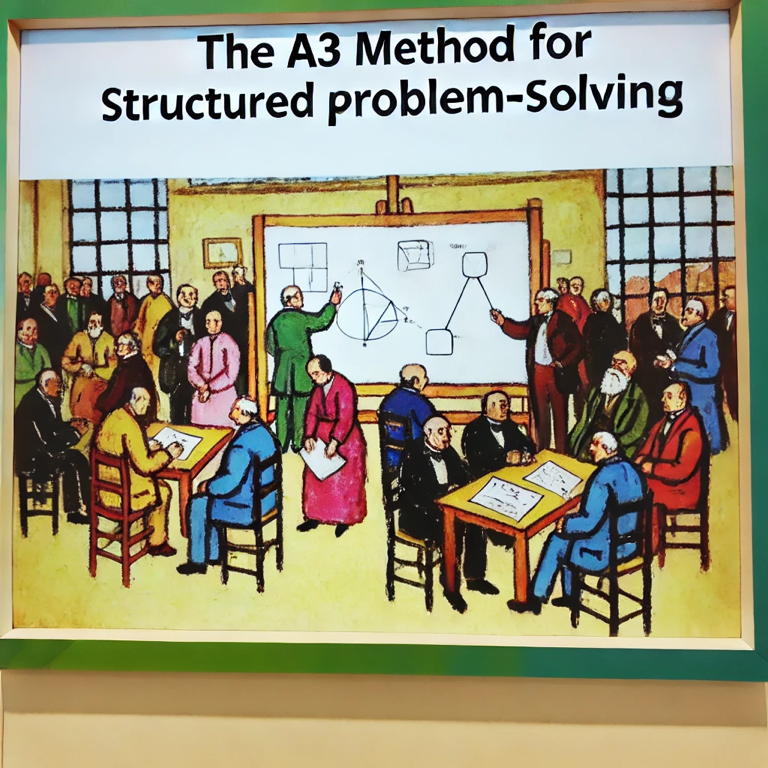
    The A3 is a widely used tool in lean management that integrates excellently with the PDCA cycle. A3 is a document or process for problem-solving, continuous improvement, and project planning, named after the paper size used (A3 size). The A3 is structured to contain all stages of the PDCA cycle, making it an efficient tool for continuous improvement in organizations.

    In planning, the A3 includes problem description, current state analysis, data collection, and defining improvement goals. In execution, it includes implementing proposed solutions and changes in processes. In checking, the A3 allows for evaluating results and comparing them to defined goals. In action, it enables decision-making on next steps, whether the achieved improvement is sufficient or if additional changes are needed.

    For example, a production department can use the A3 tool to address the issue of material waste in the production process. In planning, they will define the problem and analyze the current situation, collect data, and set improvement goals. In execution, they will implement proposed solutions, such as changes in the cutting process or using different materials. In checking, they will evaluate the results and verify if the achieved improvement meets the defined goals. In action, they will decide if the changes made are sufficient or if further improvements are needed.

    The A3 allows organizations to address problems in a structured and focused manner, using the PDCA cycle for continuous improvement. It is an effective tool for improving processes, reducing waste, and increasing quality in all areas of organizational activity.

  • Practical Guide to Managing Workplace Conflicts (part 1)

    Recent insights reveal that 50% of managers are keenly interested in conflict management. This post aims to equip you with actionable strategies to navigate workplace conflicts effectively.

    1. Pinpointing Conflict Origins: Start by understanding the diverse backgrounds and viewpoints involved. This foundational step sheds light on the reasons behind the conflict, enabling a more informed approach to resolution.

    2. Classifying the Conflict: Determine if the conflict is task-related, personal, stems from cultural differences, or arises from misaligned values. Identifying the nature of the conflict is crucial for choosing the right resolution strategy.

    3. Strategy Selection: Develop a nuanced understanding of each party’s needs and objectives through active listening. This insight will guide you in selecting the most appropriate resolution strategy, whether collaborative or otherwise.

    4. Promoting Open Dialogue: Foster an environment where all parties feel safe to share their perspectives. Employ active listening techniques to ensure everyone feels heard and understood—a key step towards finding common ground.

    5. Crafting Solutions: Use the insights gained from thorough listening to identify a resolution that all parties can accept. Look for compromises or creative solutions that honor everyone’s values and needs.

    6. Solution Implementation and Monitoring: Keep cultural and value-based sensitivities in mind even after a resolution is reached. Successful implementation and ongoing monitoring are essential to prevent the recurrence of conflicts.By integrating these practical steps into your conflict management approach, you can navigate workplace disagreements with greater efficacy and empathy, leading to more harmonious and productive team dynamics

  • Positive Attitude (renewed)

    A positive attitude seems trivial. What could be more basic than that?

    Well, as trivial as it is, having the habit of maintaining a positive attitude, even in the most demanding situations, is not that simple. We think that in order to do so, one has to clearly understand why it is so important.

    Your attitude is one of the first things people will notice about you. We guess that most people won’t start to rationally analyze your attitude, but most of them will surely remain with some sort of first emotional impression about it.

    Even more important than this is the fact that usually other people’s reactions toward you will, to some extent, reflect your attitude back to you. As simple as that, if you smile at somebody, they’ll usually smile back. If you whine to someone, they’ll usually immediately start to tell you about their troubles.

    The effect of having the right or wrong attitude is even stronger in modern-day organizations with complex, multi-dimensional matrix organizational structures. Unlike past, simple hierarchical organizations where people had the chance to know each other on a more intimate level and get past first impressions, in contemporary organizations, you might interact with people for a very brief moment, and the first impression you make, the one that is largely affected by your attitude, might just be your last one.

    Once we understand how crucial it is to maintain a positive attitude, the question that remains is how to do it?

    Maybe the first thing to do is understand your current attitude. This can be done by asking people you know about it. You can ask people you trust and think would be honest with you. It is important to also ask people with whom you might have some difficulties (we intend to write a post about feedback in the near future and we’re going to elaborate on this subject more).

    Once you understand your current attitude, you’ll probably know which parts are your strengths and which are your shortcomings. We’ve found out that the increased awareness about those behaviors immediately makes us increase the good, positive ones and decrease the bad, negative ones.

    Other things that work for us are:

    – Smiling a lot without giving up being honest
    – Being optimistic by seeing the positive side of everything. When we think about this, almost nothing is totally bad or good, you can choose which side you want to emphasize!
    – Being empathetic to others by really listening and understanding their point of view

    Good luck! Please let us know what you think and what works for you.